
 Aura Kasih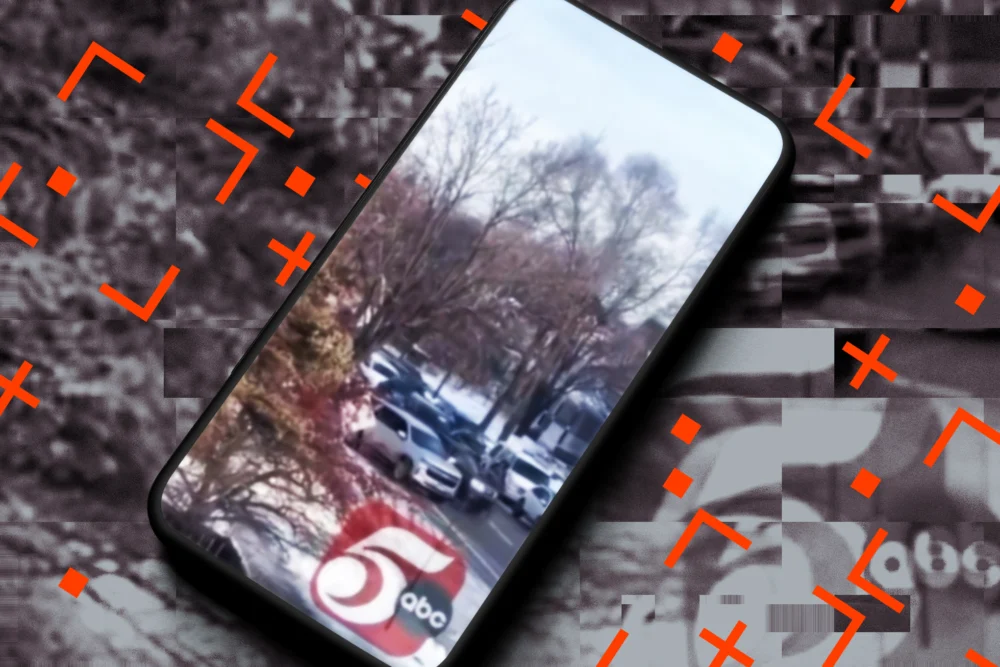
A controversial video capturing the fatal shooting of a woman by an Immigration and Customs Enforcement (ICE) agent in Minneapolis has become a focal point of partisan narrative construction, particularly within the MAGA movement, highlighting a disturbing trend of exploiting tragic events for political gain. This analysis delves into the dissemination of this footage, the competing interpretations it has generated, and the broader implications for public discourse and the understanding of critical incidents.
The circulating footage, often fragmented, digitally altered, and presented with accompanying commentary, depicts a violent confrontation that resulted in the death of 37-year-old Renee Good. The videos, captured from various vantage points and at different temporal speeds, consistently feature the unmistakable sounds of gunfire and the distressed reactions of bystanders. While the visual clarity varies significantly, with some clips being heavily pixelated due to zooming or low-resolution capture, the core event remains the same: an ICE agent discharging a firearm, leading to Good’s death.
This incident unfolded in the wake of a federal announcement regarding the deployment of thousands of immigration agents to Minnesota. This deployment was reportedly triggered by a viral online video that alleged fraud within the state’s social services system, though the evidence presented in that initial video was notably scant. Even before a comprehensive understanding of the Minneapolis shooting could be established, official narratives began to emerge, shaped by political agendas. Department of Homeland Security Secretary Kristi Noem swiftly characterized the event as "an act of domestic terrorism" perpetrated by Good. Her account, presented publicly, stated that ICE agents were attempting to extricate their vehicle from snow when Good allegedly "attacked them" and attempted to "run them over" with her car.

This official pronouncement was amplified and further framed by former President Donald Trump on his Truth Social platform. Trump asserted, without providing substantiating evidence, that a screaming individual in the video was a "professional agitator" and that Good had "violently, willfully, and viciously ran over the ICE Officer, who seems to have shot her in self defense." The specific video Trump shared, a grainy 13-second clip presented in slow motion, appears to have been filmed from an elevated perspective, partially obscured by a tree. The footage focuses on the passenger side of Good’s vehicle, with an ICE agent positioned near the driver’s side headlight. As Good’s car moves and shots are fired, the agent’s movement is visible, leaving ambiguity as to whether he was struck by the vehicle or reacting to its proximity.
Despite the existence of numerous visual records from the scene, the particular video disseminated by Trump has been elevated to a position of paramount importance within far-right circles. Influential figures such as Megyn Kelly have repeatedly shared variations of this clip on social media platforms, and accounts like "Libs of TikTok" have promoted it with captions such as "the video the Democrats don’t want you to see!" The very clip featured in Trump’s social media post bears the watermark of a local television station, indicating its origin from a conventional news source. However, its subsequent propagation through screen recording, editing, slow-motion playback, cropping, and zooming has resulted in a degraded visual quality, often described as "deep-fried." This transformation, rather than diminishing its impact, seems to have enhanced its perceived authenticity within a hyper-partisan media ecosystem where visual evidence is frequently reinterpreted or manufactured to align with pre-existing narratives. The article points out the unsettling trend of users on platforms like X turning to AI tools, such as Grok, to "explain" complex or controversial content, even in cases involving non-consensual deepfake pornography, illustrating a profound erosion of critical discernment. In this context, the MAGA movement appears to have seized upon this particular low-quality, obstructed video as irrefutable proof, a tangible artifact to bolster their version of events.
However, a more comprehensive examination of available footage often contradicts the MAGA-aligned narrative. Multiple videos, filmed from different angles, offer a starkly different depiction of the moments preceding the fatal shots. One such video, recorded by a bystander, shows two additional ICE agents approaching Good’s vehicle. One agent is seen attempting to open the driver’s side door and issuing commands for Good to exit the car. A neighbor present at the scene corroborated that agents had instructed Good to leave. The footage then shows Good engaging her vehicle in reverse, moving away from the ICE agent positioned at the front of the car. An analysis conducted by The New York Times of multiple video angles suggests that the agent who fired the shots was not directly in the path of Good’s vehicle when the shots were discharged. Further examination of slowed-down clips indicates that this agent may have been recording Good with a personal device before drawing his weapon. As the shots are fired, Good’s car accelerates, ultimately colliding with parked vehicles. The agent who fired the shots is then seen walking towards the crashed vehicle and departing the scene shortly thereafter.
The proliferation of manipulated and selectively edited visual content in the aftermath of this shooting raises significant concerns about the erosion of a shared reality, particularly in an era increasingly influenced by artificial intelligence. While AI tools have been employed in attempts to identify the ICE agent involved, such as the use of Grok on X to "unmask" the shooter, these efforts have largely focused on creating speculative AI-generated likenesses of the agent, whose face was partially concealed by a neck gaiter in the available footage. These fabricated images, alongside unverified names that gained traction on platforms like TikTok, Instagram, and Facebook, exemplify how digital manipulation can distort public perception. The Trump administration’s insistence on the veracity of a single, compromised video clip, despite a growing body of contradictory evidence, illustrates a deliberate attempt to override objective observation with politically expedient interpretations. This phenomenon underscores the notion that in an environment saturated with partisan media, the manufactured narrative can often supersede factual accuracy, rendering advanced AI manipulation almost redundant when a selective perspective suffices.

The incident in Minneapolis inevitably draws parallels to another seminal event that occurred approximately a mile from the shooting site five years prior: the murder of George Floyd. The widely circulated video of former Minneapolis police officer Derek Chauvin kneeling on Floyd’s neck, captured by then-17-year-old Darnella Frazier, ignited one of the largest protest movements in American history. Chauvin was convicted of Floyd’s murder in 2021. However, even in the face of such stark visual evidence, the aftermath saw continued debate and skepticism regarding the victim’s character, the justification for the ensuing racial reckoning, and the perceived dignity of the public response. This historical context suggests a recurring pattern of challenging and reinterpreting traumatic events, particularly those involving law enforcement and marginalized communities, through a lens of partisan skepticism.
In a striking visual captured by The New York Times during an extensive interview with Donald Trump, an aide is seen holding a laptop displaying the now-infamous, MAGA-endorsed grainy video of Renee Good’s shooting. When directly questioned about the administration’s claims regarding the incident, Trump’s response was characterized by deflection, implicitly suggesting that his political base will interpret the events according to their pre-existing biases. This highlights a strategic reliance on confirmation bias, where visual evidence is less about establishing objective truth and more about reinforcing existing political allegiances. The manipulation and selective presentation of visual media in such high-profile incidents present a profound challenge to journalistic integrity and the public’s ability to form informed opinions based on verified facts. The weaponization of these tragic moments underscores a critical juncture in contemporary media consumption, where the line between authentic documentation and politically motivated fabrication is increasingly blurred, demanding a more discerning and critical engagement from audiences. The ability to leverage fragmented and digitally altered footage to shape public perception serves as a potent tool for political actors seeking to control narratives, potentially overshadowing due process and the pursuit of objective justice.




 Lisa Mariana
 Ridwan Kamil
 Safa Marwah