
 Aura Kasih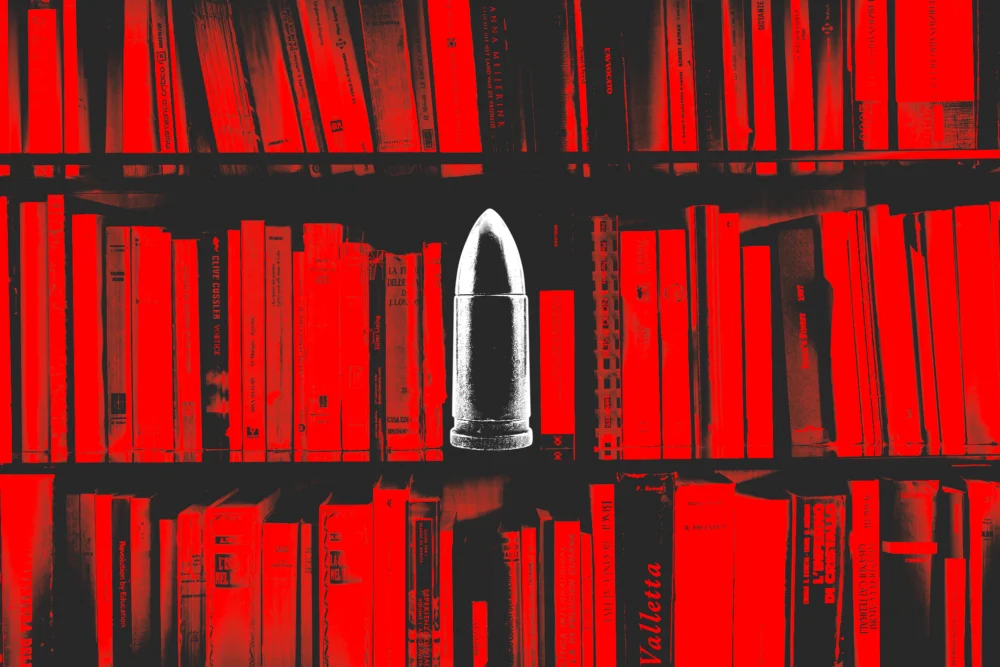
The violent end of prominent conservative commentator Charlie Kirk in 2025 did not usher in an era of national mourning or sober reflection, but rather plunged the United States into a surreal maelstrom of meme-driven outrage, performative grief, and a chilling descent into political incoherence. This event, far from being an isolated tragedy, served as a stark illustration of a society increasingly detached from reasoned discourse, where political communication has devolved into a cacophony of ephemeral digital artifacts and symbolic gestures, rendering even acts of extreme violence inscrutable.
In the immediate aftermath of Kirk’s assassination, a fleeting attempt at solemnity permeated the national consciousness. The President of the United States ordered flags to be flown at half-staff, and a torrent of condolences poured in from politicians, celebrities, and public figures across the ideological spectrum. Notably, even those not aligned with Kirk’s conservative viewpoints offered tributes that painted him as an exceptionally effective communicator. Ezra Klein, a prominent liberal pundit, eulogized Kirk in The New York Times, describing him as "one of the era’s most effective practitioners of persuasion," a sentiment that, in retrospect, underscored the profound disconnect between the perceived nature of political engagement and the volatile reality it masked.
Kirk’s memorial service, held at a megachurch, was a large-scale event. However, the solemnity was juxtaposed with a disturbing trend of professional repercussions for those who expressed dissenting or flippant sentiments online. A subsequent Reuters investigation revealed that over 600 individuals faced termination, suspension, or investigation due to social media posts made in response to Kirk’s death. Some of these individuals were penalized for merely quoting Kirk, a figure known for promoting divisive ideologies such as the "great replacement" theory and myths of "white genocide." This mass reprisal highlighted a chilling enforcement of ideological purity, where even tangential engagement with a deceased political figure could lead to severe consequences.
The fallout extended to mainstream media personalities. Comedian Jimmy Kimmel found himself at the center of a storm after a seemingly mild joke on his late-night show, which touched upon former President Trump’s perceived lack of immediate grief over Kirk’s death. The actual substance of Kimmel’s quip was largely ignored, overshadowed by accusations of insufficient solemnity. This public outcry, amplified by conservative media, led to an intervention by the Federal Communications Commission chair, Brendan Carr, who successfully pressured Disney to remove Kimmel from the airwaves. However, this move was met with public backlash, ultimately forcing Disney to reinstate Kimmel’s show, demonstrating a complex interplay between corporate interests, public opinion, and political pressure.
The events surrounding Kirk’s death exemplified a society teetering on the brink of a significant erosion of civil liberties. The swiftness with which a national mood of somberness was manufactured, followed by immediate tone-policing and punitive actions, suggested a society primed for systemic authoritarianism. This dynamic was further amplified by the media and political establishment’s willingness to participate in the performative mourning, seemingly attempting to leverage the event for their own agendas.
However, beneath the veneer of orchestrated grief and partisan maneuvering, a fundamental shift in American communication was becoming apparent. The initial indications of this profound change emerged not from official statements or mainstream media reports, but from an unvarnished TikTok video captured at the event where Kirk was shot. A user, identifying himself as "Elder TikTok," gleefully announced "Shots fired!" moments after the incident, encapsulating a disturbing detachment from the gravity of the situation.
Despite the subsequent wave of professional reprisals against Kirk’s detractors, the phenomenon of online memefication and conspiratorial thinking surrounding the assassination continued unabated. Influential figures on the right fringe, such as Candace Owens and Nick Fuentes, rapidly disseminated unsubstantiated theories, quickly settling on Israel as the perpetrator. This immediate pivot to conspiracy, even within the MAGA movement, demonstrated the difficulty of maintaining a consistent, somber narrative when confronted with the pervasive influence of online subcultures. Vice President JD Vance attempted to maintain a serious tone, but even he was eventually drawn into the meme-driven cultural landscape, becoming the subject of a viral AI-generated musical tribute to Kirk on TikTok, with its ostentatious hook "We are Charlie Kiiiiiiiiiiirk" becoming a popular target for mockery.
The year 2025, in many respects, was defined not by Charlie Kirk’s ideology, his personal life, or the narratives propagated by his allies, but by the sheer hysteria, inanity, and profound incoherence that enveloped his death. This spectacle became a microcosm of America’s fractured societal fabric. While it took years for jokes about 9/11 to gain widespread traction, Kirk’s assassination was already being transformed into a meme before the fatal bullet had even found its mark. This indicated a nation fully immersed in a post-literate era, where political discourse and even political violence had become increasingly illegible.
The official narrative surrounding the shooting began to unravel shortly after the arrest of the alleged killer. In a press conference, the governor of Utah, in an attempt to convey the gravity of the situation, read aloud a series of internet memes that had been inscribed onto bullet casings recovered from the scene. These inscriptions, ranging from a reference to furry online sexual roleplay ("notices bulge OWO what’s this?") to a video game command sequence ("Hey fascist, catch," followed by Helldivers 2 button inputs) and a snippet of the antifascist anthem "Bella ciao," culminated in a juvenile taunt ("if you read this you are gay lmao"). This public disclosure, while intended to be informative, represented a profound humiliation for the nation, as its leaders were forced to engage with such deeply trivializing and absurd content in the context of a homicide investigation.
The governor’s decision to read these inscriptions was, paradoxically, the most responsible act he could undertake, given the preceding chaos and misinformation. Mere hours earlier, an internal bulletin from law enforcement, leaked to right-wing influencer Steven Crowder, had stated, "All cartridges have engraved wording on them, expressing transgender and anti-fascist ideology." This leak fueled rampant speculation that the shooter was transgender, a narrative that threatened to further stigmatize a vulnerable community already facing significant political persecution. By publicizing the actual inscriptions, the governor, perhaps inadvertently, provided a more nuanced, albeit bizarre, portrayal of the alleged shooter’s motivations, potentially mitigating the damage of the earlier leak.
The right-wing ecosystem, however, attempted to co-opt these inscriptions to frame the shooting as an act of antifa terrorism, citing the "Hey fascist, catch" and "Bella ciao" messages. This narrative gained traction, leading former President Trump to issue an executive order designating antifa as a domestic terror organization—a designation without legal precedent—and launching a broad governmental crackdown. This war on antifa, as the article suggests, became inextricably linked with Trump’s broader assault on reasoned discourse, as opposition to anti-fascism inherently raises questions about the nature of Trumpism itself for those who are literate.
On a memorial episode of Kirk’s podcast, Stephen Miller, appearing alongside JD Vance, vowed retribution against the "networks" supporting antifa, declaring, "With God as my witness, we are going to use every resource we have… to identify, disrupt, dismantle, and destroy these networks and make America safe again… and we will do it in Charlie’s name." This rhetoric underscored the way Kirk’s death was being weaponized to justify further political repression.
Despite the inflammatory rhetoric and the attempts to cast the alleged shooter, Tyler Robinson, as an antifa operative, concrete evidence of such affiliation remained elusive. An affidavit suggested a romantic relationship as a potential motive, a detail largely obscured by the meme-laden inscriptions on the bullets. Robinson’s alleged text message to a friend, "remember how I was engraving bullets? The fuckin messages are mostly a big meme, if I see ‘notices bulge uwu’ on fox new I might have a stroke," further emphasized the role of online subcultures and the blurring lines between genuine political expression and internet-based irony.
The practice of inscribing messages onto ammunition, while unusual, is not entirely unprecedented and carries the risk of inspiring copycat acts. This concern was realized just two weeks after Kirk’s death, when a gunman opened fire at an ICE field office in Dallas, killing a detainee and wounding others before taking his own life. The alleged shooter, Joshua Jahn, left no manifesto, but an unused bullet bore the inscription "ANTI-ICE," written in what appeared to be pen or marker. This act echoed the bizarre and performative nature of the Kirk assassination’s inscriptions, drawing immediate comparisons online to the notorious "Blacks Rule" graffiti from a 2015 hate crime. The superficial similarity between these disparate inscriptions—both jarring and seemingly out of sync with conventional language—highlighted a shared characteristic: a descent into nonsensical or ironic messaging as a form of political statement.
The Dallas incident further fueled online speculation, particularly given the limited casualties and the shooter’s own death. Jahn’s brother indicated that his sibling had no strong political leanings. Independent journalist Ken Klippenstein reported that one of Jahn’s gaming handles was "#Impeachment," a potential nod to the political climate, though sources close to Jahn suggested this was an "ironic" mockery of earnest political activism, albeit with an element of "half irony – where you’re half-kidding, half-serious, just in case." This ambiguity underscored the difficulty in discerning genuine political motivation from the pervasive influence of ironic detachment and meme culture.
The political motivations of individuals like Robinson and Jahn, both born in the late 1990s and early 2000s, remain largely opaque, a stark contrast to the verbose manifestos of earlier political killers. Luigi Mangione, accused of assassinating a healthcare executive the previous year, allegedly left a multi-page missive. This trend of declining written articulation in political violence is striking when compared to figures like Anders Breivik, whose 2011 manifesto exceeded 1,500 pages, or the Christchurch shooter’s 74-page document. Even more recent perpetrators, such as the Buffalo shooter in 2022, produced lengthy, albeit plagiarized, manifestos.
This shift towards laconicism in political violence may be linked to a broader decline in literacy and engagement with complex texts. Global literacy rates have been declining, and studies in the United States have revealed alarming deficits in reading comprehension among college students, even English majors. The stresses of the COVID-19 pandemic and the rise of remote learning have exacerbated these issues, impacting an entire generation’s educational development. Furthermore, anecdotal evidence suggests a declining interest in reading among younger parents, with studies indicating a significant drop in reading for pleasure.
Concurrently, politics has become increasingly divorced from reality and reason. The confluence of the Trump administration’s often nonsensical rhetoric and a judiciary still operating under the assumption that words possess tangible meaning has created a dizzying paradox. The incoherence that has become a hallmark of contemporary politics, coupled with a rise in seemingly nonsensical acts of violence—such as ICE raids, extraterritorial deportations, and drone strikes—suggests that such actions are becoming integral rather than incidental to the political system. In this context, the subliterate perpetrators of violence are not anomalies on the fringes of society but rather embodiments of its prevailing ethos.
The media’s persistent efforts to extract meaning, motive, and manifestos from the trivial inscriptions on bullets highlight the struggles of a literati grappling with its own obsolescence in a post-literate society. The most egregious example of this disconnect was Ezra Klein’s eulogy for Charlie Kirk, which framed Kirk as a fellow "Debate Guy," a practitioner of reasoned discourse within the marketplace of ideas. Klein, an artifact of a fading era of literate politics, failed to grasp that Kirk’s persona, while superficially resembling intellectual engagement, was a carefully constructed meme layered over a sophisticated apparatus for real-world action. Kirk’s organizations, such as Turning Point USA and Professor Watchlist, were instruments of tangible influence, with Kirk himself claiming to have mobilized "80+ buses full of patriots" for the January 6th insurrection.
Kirk’s podcast served as a critical piece of media infrastructure, directly controlled by him and bypassing traditional gatekeepers like The New York Times. The parasocial relationships he cultivated with his audience granted him direct access to political power, including that of former President Trump. Kirk understood that his non-violent public engagement was a form of entertainment, a mechanism for audience acquisition and revenue generation, imbued with the ephemeral significance of a daily crossword puzzle.
Kirk’s legacy is not one of abhorrence for violence, but of strategically legitimizing it and profiting from the enthusiasm it generated. Even before his death, he had significantly shaped the political landscape, calling for the use of whips against migrants, advocating for the Insurrection Act to quell protests, and suggesting the deployment of tanks and the military to federalize Washington D.C. His close ties to the Commander-in-Chief transformed him from a mere commentator into an architect of political action, deeply embedded in the real world in a way that intellectuals like Klein often are not.
Kirk, and a significant portion of contemporary society, understood that the future of politics resided in "aura farming and shitposting." His pronouncements shifted fluidly between calls for "massive indictments" against political opponents and admonishments to public figures like Taylor Swift to "submit to your husband." For Kirk and many others, words ceased to be expressions with referents and instead became performative speech acts, designed to elicit specific reactions, primarily "owning the libs."
The most significant resistance to Trumpism, too, appears to be abandoning the realm of literate politics, recognizing the futility of reasoned arguments in the face of escalating aggression. In Portland, Oregon, inflatable frog costumes, symbols devoid of inherent political meaning, became ubiquitous protest attire. In Chicago and New York, resistance to ICE operations manifested not in slogans but in whistles and car honks, signaling a shift away from verbal communication as the primary mode of political expression.
The call for civil debate as the "right way" to engage in politics has become an anachronism; politics has transcended the limitations of words. When words are employed, they function as conduits for memes, vibes, and aesthetics, channeling "brainrot" much like any other communication medium. The expectation that words should possess literal meaning, refer to concrete objects, and adhere to logical consistency is now considered archaic, a relic destined to fade alongside the older generation’s communication patterns.
The rise in political violence is thus understood as existing on the same wavelength as the illegible politics that currently govern society. It is action for the sake of action, as crass and consequential as a "Pokémon deportation meme," mirroring the absurdity of bombing shipwrecked sailors in the name of combating drug trafficking. In this new paradigm, a post, a podcast, a screenshot, a meme, a whistle, or a bullet all serve as mediums, and in this context, the medium itself has become the sole message.




 Ridwan Kamil
 Safa Marwah
 Lisa Mariana