Lisa Mariana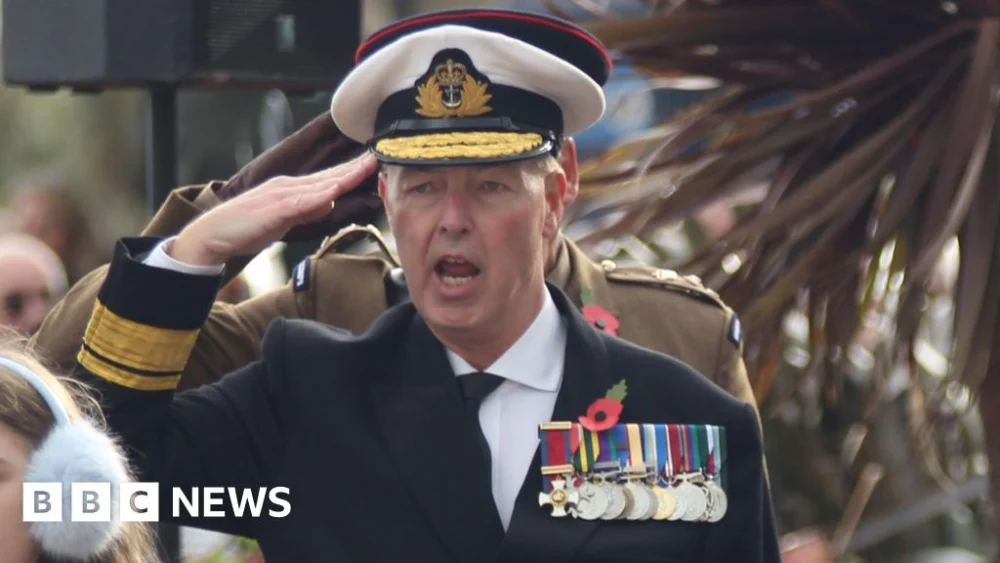
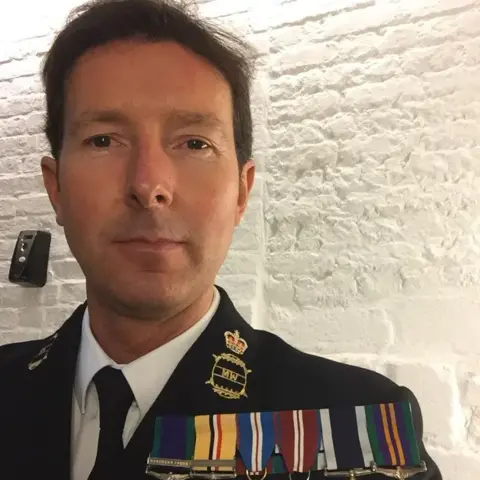
The meticulously constructed facade of a senior Royal Navy officer crumbled for former history teacher Jonathan Carley, whose elaborate impersonation was ultimately exposed by the discerning eyes of military veterans scrutinizing his ceremonial sword and an exceptionally rare medal. For years, Carley had projected an image of high-ranking naval service, participating in solemn commemorative events across North Wales, seemingly unchallenged. However, a series of increasingly conspicuous appearances culminated in his apprehension, revealing a deep-seated desire for "belonging and affirmation" through an elaborate deception that profoundly disrespected genuine military service.
The elaborate charade began to unravel definitively when law enforcement arrived at the clifftop residence of 65-year-old Jonathan Carley in Harlech, Gwynedd. Acting on credible reports of a Royal Navy imposter, officers entered to discover a pristine military uniform, an array of medals, and a ceremonial sword – the very accoutrement that had initially sparked profound suspicion among those with authentic service records. The subsequent investigation confirmed Carley’s fraudulent claims, leading to his recent conviction and a £500 penalty for unlawfully wearing military attire. This incident casts a stark light on the persistent issue of military impersonation and the nuanced legal challenges associated with prosecuting such deceptions.
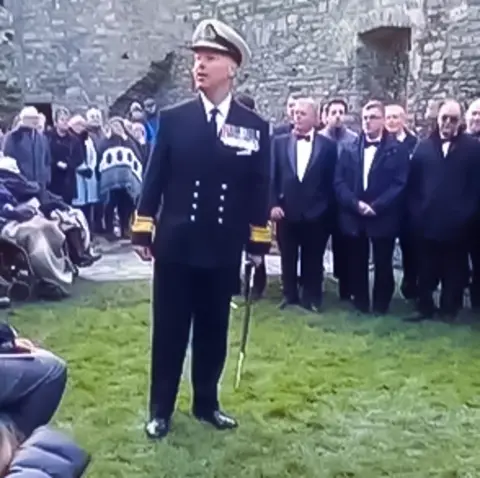
The pivotal moment of exposure occurred during a Remembrance Sunday ceremony in Llandudno in November, where Carley presented himself as a Rear Admiral, the third-highest rank within the Royal Navy. His participation, which included laying wreaths and saluting the war memorial, drew the attention of both active and retired service personnel. Seasoned veterans, attuned to the subtle indicators of legitimate military service, quickly identified discrepancies in Carley’s presentation. The sheer presence of a ceremonial sword, combined with a particular medal, the Distinguished Service Order (DSO), raised immediate red flags.
Rear Admiral Dr. Chris Parry, a former Royal Navy officer who retired in 2008, articulated the gravity of Carley’s choice of decoration. He described the DSO as an "easy spot" for those in the know, an award of such exceptional rarity and prestige that it stands "one down from the Victoria Cross." The DSO is bestowed for highly successful command and leadership during active operations, a commendation reserved for extraordinary acts of gallantry and strategic acumen. Its appearance on the chest of an unfamiliar Rear Admiral, a rank attained by only a minute fraction of those who enter naval service, was profoundly incongruous. As Dr. Parry highlighted, reaching the rank of Rear Admiral places an individual eight ranks above entry level and just two below the head of the entire Royal Navy, underscoring the extraordinary career trajectory required for such an elevation. The combination of this illustrious, yet unearned, medal and the presence of a ceremonial sword suggested not merely an amateur enthusiast, but a deliberate attempt to project a fabricated history of distinguished service.
The genesis of the suspicions can be traced back to an earlier Remembrance Day parade in Llandudno in 2024. Photographer Tony Mottram, a former Territorial Army member with Royal Air Force experience, observed Carley for the first time. Mottram noted the "massive sword" Carley carried, an item he had never witnessed at previous events. Beyond the ostentatious weapon, Mottram found Carley’s general demeanor unusual; he appeared isolated, "a bit of a loner," and kept his distance from other veterans who typically shared camaraderie and recognition. This social detachment, coupled with the lavish, yet unfamiliar, uniform and medals, fueled Mottram’s unease. He attempted to gather photographic evidence that day, but Carley vanished before more comprehensive documentation could be secured.
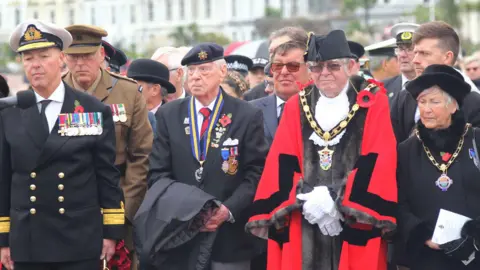
The outrage among the authentic veteran community was palpable, leading to an unspoken consensus: if the bogus Rear Admiral were to reappear, they would be ready. True to form, Carley returned to the 2025 Remembrance Sunday service, albeit without his ceremonial sword this time. This omission, however, did not deter the now-vigilant observers. Mottram, scrutinizing Carley more closely, noticed telling imperfections in the uniform itself – "the hemming wasn’t right, the length wasn’t right." Such minute details, often overlooked by the general public, are immediately apparent to those intimately familiar with the precision and standards of military dress. As Mottram succinctly put it, "You either go on parade right or you don’t go at all."
The critical confrontation arrived when Chief Petty Officer Terry Stewart, forewarned by the previous year’s incident and possessing 27 years of Royal Navy experience, decided to act. Stewart, who had removed himself from the official parade line to observe Carley, approached the imposter. After rendering a formal salute and introducing himself, Stewart directly questioned Carley’s presence and identity, noting that "the ex-Royal Navy Veterans were not aware of him." Carley, in a display of remarkable composure, returned the salute, provided his full name, and claimed to have been invited by the Lord Lieutenant’s office. Despite Carley’s outward confidence, Stewart remained convinced of the deception, recognizing the tell-tale signs of a fabricated identity.

Carley’s deception was not an isolated incident confined to Remembrance Day. Evidence, including photographs and videos disseminated online, revealed a pattern of appearances in full admiral’s uniform at various commemorative events across North Wales since approximately 2018, shortly after his presumed relocation to the area. A particularly striking instance involved Carley delivering a speech at a Rorke’s Drift memorial event in 2019, complete with his ceremonial sword, ironically paying tribute to military reenactors present at the gathering. Andy Gittens, a former fireman and member of a male voice choir that Carley briefly joined, recounted his surprise. Gittens initially recalled Carley mentioning naval service, but not a specific rank. However, at the 2019 Harlech Castle memorial, Carley unexpectedly "appears in this uniform… came bounding out larger than life… dressed to the nines with his sword. He then proceeds to take over." Gittens noted Carley’s "completely believable" and "very nice" demeanor, which likely contributed to the longevity of his masquerade.
The legal framework under which Carley was charged dates back to the 1800s, specifically prohibiting the unauthorized wearing of military uniforms. This antiquated statute highlights a significant gap in current British law: while wearing a uniform without permission is an offense, there is no equivalent legislation directly addressing the fraudulent display of military medals or the fabrication of service histories without accompanying uniform. This contrasts with "stolen valour" laws in other jurisdictions, such as the United States, which specifically criminalize the false claim of military decorations or service with intent to obtain money, property, or other tangible benefits. The absence of such comprehensive legislation in the UK means that individuals can often fabricate elaborate military backstories, or even display unearned medals, without facing legal repercussions, provided they do not don the full uniform. Carley’s case, being only the eighth prosecution under this specific law in the UK over the past decade, underscores the rarity of such charges and the limitations of the existing legal instruments in combating broader forms of military impersonation.
When questioned about his motivations during his police interview, Carley expressed a desire for a "sense of belonging and affirmation." This statement offers a glimpse into the psychological underpinnings of such deceptive acts. For individuals like Carley, the allure of military prestige, the respect afforded to high-ranking officers, and the perceived heroism associated with distinguished service can be overwhelmingly powerful. Lacking genuine military experience to achieve these feelings, some individuals resort to fabricating an identity, seeking to fill a void or compensate for perceived shortcomings in their own lives. The uniform and medals become a powerful symbol, a shortcut to an imagined status and social acceptance.
Ironically, Carley possessed a genuinely respectable professional background. Records confirm he taught history and politics at Cheltenham College between 1988 and 1992, a period during which he did have a legitimate, albeit limited, connection to the military through the college’s Combined Cadet Force, as noted in the London Gazette in 1991. Following his tenure at Cheltenham, Carley transitioned into a successful career as a rowing coach at Christ Church College, University of Oxford. Former students recalled him as a "warm, witty, fun" and "very good at motivating" coach, earning their respect. One former student expressed being "absolutely flabbergasted" by the news, unable to reconcile the image of their respected coach with that of a military imposter. This contrast between Carley’s confirmed, admirable past and his fabricated naval persona adds another layer of complexity to his case, raising questions about the drivers behind such a significant departure from his established identity.
The Carley case serves as a poignant reminder of the vigilance required to protect the integrity of military service and the sacrifices it entails. While the current legal framework in the UK has its limitations, the collective efforts of observant veterans like Tony Mottram and Chief Petty Officer Terry Stewart proved instrumental in unmasking this deception. Their commitment to upholding the honour of those who genuinely serve highlights the crucial role played by the veteran community in identifying and challenging such falsehoods. The incident also reignites discussions about the adequacy of existing laws to address contemporary forms of "stolen valour," advocating for a more comprehensive approach that encompasses not just the unauthorized wearing of uniforms, but also the fraudulent claim of medals and service. Ultimately, the exposure of Jonathan Carley underscores the enduring respect commanded by authentic military service and the imperative to safeguard its symbols from exploitation and misrepresentation.




 Ridwan Kamil
 Safa Marwah
 Aura Kasih
 Ayu Aulia