
 Aura Kasih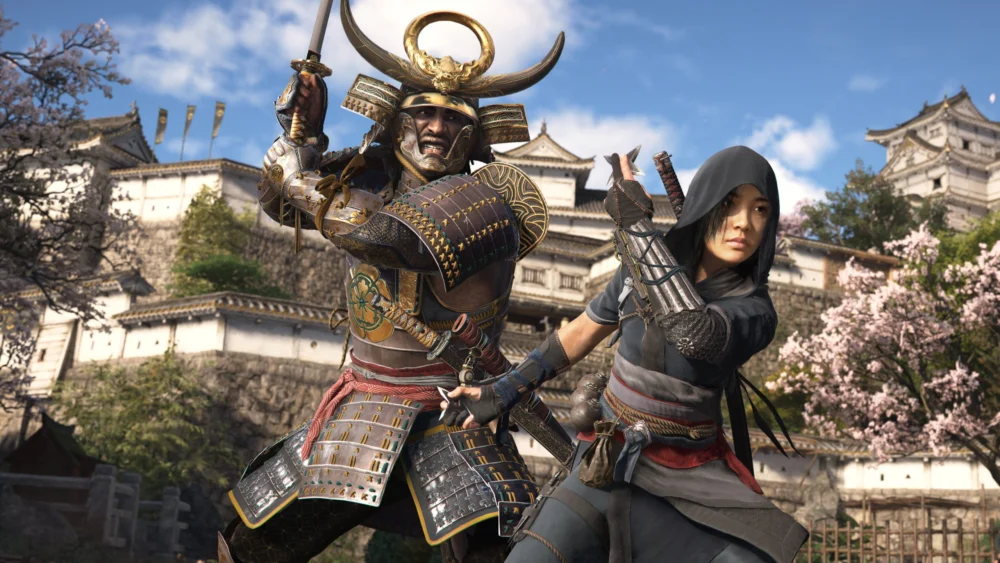
In a significant strategic pivot, major game development studios are increasingly consolidating their resources and creative output towards fewer, yet substantially larger, gaming experiences, a trend exemplified by Ubisoft’s recent sweeping organizational overhaul and content strategy recalibration. This industry-wide phenomenon reflects a calculated response to escalating development costs, heightened market competition, and a palpable desire to mitigate the inherent risks associated with launching entirely new intellectual properties in an environment where blockbuster success is paramount.
Ubisoft’s repositioning signifies a deliberate shift away from a broad portfolio of diverse projects towards a concentrated focus on its most iconic open-world franchises and ambitious live-service endeavors. This strategic redirection has led to the discontinuation of six in-development titles, notably including the long-awaited remake of Prince of Persia: The Sands of Time. This move aligns with a broader industry pattern observed among leading publishers such as Electronic Arts and Sony, who are actively curating their development pipelines to prioritize fewer, more impactful releases designed to maximize return on investment and solidify their market dominance.
The company’s restructured operational framework will see its development efforts channeled through five distinct "Creative Houses," each dedicated to specific genres and established franchises. A prime example is the newly formalized Vantage Studios, which is tasked with elevating flagship franchises like Assassin’s Creed, Far Cry, and Rainbow Six into perennial, billion-dollar brands. Complementing this, other studios will hone their expertise in areas such as competitive shooters, ongoing live-service titles, immersive fantasy and narrative-driven universes, and accessible casual gaming experiences. This specialization aims to foster deeper expertise and more efficient development cycles within each domain.
The press release detailing these changes explicitly lists a multitude of beloved series that will continue to be nurtured under these new strategic umbrellas. Familiar names such as The Division, Ghost Recon, Splinter Cell, Just Dance, and even Prince of Persia (despite the Sands of Time cancellation) are set to receive continued attention. The enduring legacy of Beyond Good & Evil, a title whose sequel has been in development for over a decade, is also acknowledged within this framework. Significantly, Ubisoft has indicated that only four entirely new franchises are currently in active development, alongside the cancellation of three previously conceived franchises, underscoring a clear preference for leveraging existing, proven intellectual property over venturing into uncharted creative territory. This strategic consolidation, while potentially streamlining operations, has also necessitated the closure of several development studios and signals an increased likelihood of further workforce reductions as the company aligns its talent pool with its redefined priorities.
This intensified focus on a select few flagship titles inherently elevates the pressure for each to achieve monumental success. The cautionary tale of Sony’s Concord serves as a stark reminder of the potential repercussions of underperforming live-service games. Developed over approximately eight years and reportedly incurring substantial production costs, Concord failed to gain significant traction following its release. Sony’s swift response, which saw the game taken offline merely two weeks post-launch, followed by its permanent discontinuation and the subsequent shutdown of developer Firewalk Studios, highlights the unforgiving nature of the current market for titles that do not immediately capture player engagement. Ubisoft’s strategic pivot, by concentrating resources on established franchises with demonstrable player bases, aims to preemptively mitigate such high-profile commercial failures. Consequently, projects like the Sands of Time Remake, which had been in development for an extended period, are likely being de-prioritized as they do not align with this new, risk-averse growth model.
Joost van Dreunen, a seasoned games industry analyst and professor at New York University, characterizes this industry trend as a "classic risk-aversion strategy." He elaborates, stating, "When markets become volatile, large publishers tend to retreat to what they know has historically performed well: their established franchises. This is a rational response to uncertainty, but it carries significant costs." These costs, he notes, include a potential stagnation of creative innovation through the recycling of proven formulas rather than the cultivation of entirely new player experiences. Furthermore, publishers may resort to price increases to justify the escalating budgets of these blockbuster sequels. Van Dreunen posits that while this strategy might offer a temporary reprieve for companies with extensive libraries of beloved intellectual property, it does not inherently guarantee long-term sustainability. "It’s more akin to buying time rather than building a truly sustainable future," he concludes.
Ubisoft’s strategic realignment mirrors a broader industry evolution. Electronic Arts, even prior to its potential privatization, had been increasingly emphasizing its core tentpole franchises with robust online communities, such as Battlefield, EA Sports FC (formerly FIFA), and The Sims. Following a challenging launch for Battlefield 2042, the subsequent installment, Battlefield 6, represented a critical juncture for both the series and EA. This ambitious undertaking, involving the collaborative efforts of multiple internal studios, appears to have yielded significant returns, with EA proclaiming it as the best-selling shooter of 2025. Like Ubisoft, EA has also scaled back its less established franchises, including the cancellation of a Black Panther game from Cliffhanger Studios.
Sony’s approach to its gaming portfolio also reflects a discernible pattern of focusing on fewer, yet more impactful, releases across two primary categories. While the company has publicly adjusted its ambitions for live-service titles and navigated some high-profile setbacks in this domain, these games remain a strategic cornerstone. The establishment of a new studio, spun out from Destiny developer Bungie, underscores this continued commitment. Concurrently, Sony is doubling down on the high-budget, single-player narrative experiences that have become synonymous with the PlayStation brand. Its pipeline includes highly anticipated titles that build upon the successes of their predecessors: Housemarque’s Saros, following the critical acclaim of Returnal; Insomniac Games’ Marvel’s Wolverine, the next project from the creators of the Spider-Man series; and Naughty Dog’s Intergalactic: The Heretic Prophet, the latest endeavor from the acclaimed The Last of Us developer.
In a recent statement, Ubisoft co-founder and CEO Yves Guillemot articulated the fundamental challenges confronting the AAA gaming market. He highlighted an increasingly competitive landscape, escalating development expenditures, and a heightened degree of complexity in bringing large-scale projects to fruition. Despite these obstacles, Guillemot acknowledged that successful games now possess "more financial potential than ever." Consequently, Ubisoft, in common with many of its industry peers, is placing its strategic bets on the consistent delivery of established franchises and the regular cadence of their releases as a pathway to a more stable and predictable business model. While this strategy may prove effective in the short to medium term, it is not without its inherent drawbacks, including potential job displacement and a discernible reduction in the exploration of novel gameplay mechanics and narrative concepts. The future trajectory of blockbuster gaming is undoubtedly in flux, but it appears increasingly likely to be dominated by familiar intellectual properties, suggesting a future where franchises like Assassin’s Creed will continue to be central to the industry’s landscape.




 Lisa Mariana
 Ridwan Kamil

 Safa Marwah