Aura Kasih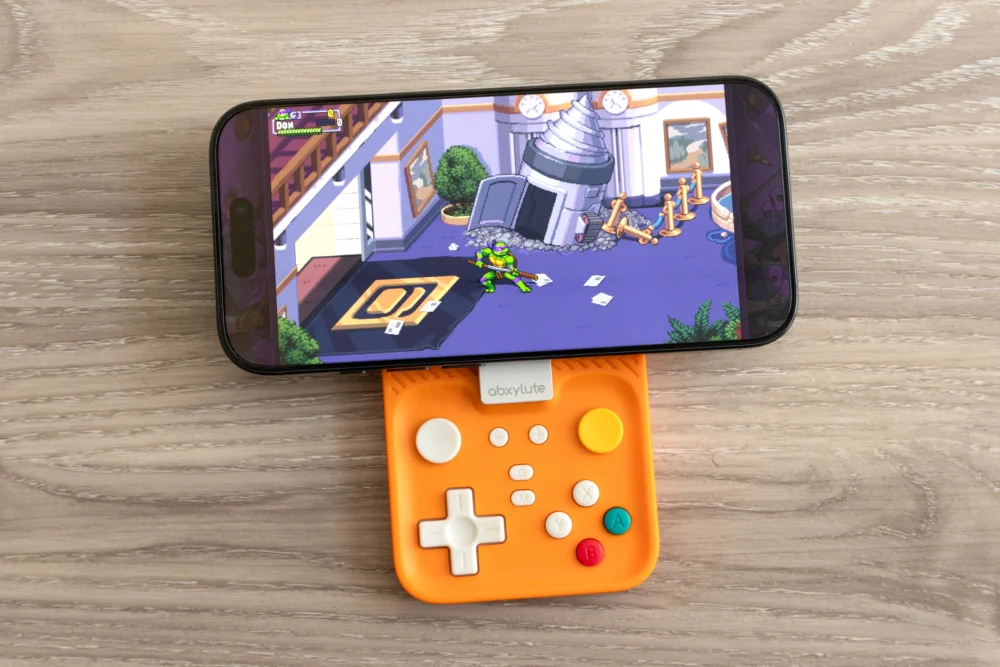
The burgeoning mobile gaming landscape, now invigorated by platforms embracing emulation, presents a compelling opportunity for hardware innovation. Abxylute’s M4 controller, a compact, magnetically attaching gamepad, attempts to capitalize on this trend by offering a streamlined solution for transforming a smartphone into a dedicated gaming device. However, despite its promising design and accessible price point, the M4 falters in crucial areas, raising significant concerns about its reliability and user experience, particularly regarding the security of the user’s valuable mobile device.

The appeal of retro gaming on mobile devices has surged, particularly with the recent embrace of emulators by major app stores. This shift has spurred a demand for peripherals that can enhance the tactile experience, moving beyond the limitations of on-screen controls. Early attempts at such solutions, like clamp-on controllers, often proved cumbersome and detracted from the portability that makes smartphones so attractive. The Abxylute M4 emerged as a potential answer, touting a sleek, minimalist design that magnetically adheres to compatible smartphones, aiming to replicate the feel of a native handheld console. This magnetic attachment, a key selling point, promises a wire-free, unified gaming experience.
The M4’s core design revolves around two primary components: a retro-inspired, rectangular Bluetooth gamepad and a specialized Q-shaped magnetic mount. This mount is engineered to seamlessly integrate with devices featuring MagSafe technology, such as newer iPhones, and is also compatible with the Google Pixel 10 Series, indicating an effort to capture a broader market. For users with non-compatible devices, Abxylute includes an adhesive metal ring, a thoughtful addition that extends the controller’s reach across a wider spectrum of smartphones. This adaptability is a significant advantage, allowing a broad range of users to explore the M4’s potential. The reviewer primarily utilized an iPhone 16 Pro for testing, a device representing a substantial financial investment for most consumers, thus amplifying the importance of the controller’s security and stability.

The magnetic mount itself exhibits a commendable level of adherence, comparable to established MagSafe accessories and Qi2 chargers. It firmly attaches to the rear of compatible devices, ensuring it remains in place under normal operational conditions. A notable design feature is the smooth finish of the mount, which allows for rotational adjustment. This enables the gamepad to be positioned either to the side, extending the phone’s footprint, or concealed entirely behind the device when not in use. However, this clever concealment comes at the cost of added bulk. The combined thickness of the phone and attached controller renders the ensemble too substantial for comfortable pocketability, often necessitating its removal when transitioning between gaming sessions and general mobile use. This design choice compromises the immediate portability it aims to enhance.
A significant limitation inherent in the M4’s magnetic attachment design is its restriction to landscape orientation for gameplay. In portrait mode, the controller does not extend sufficiently from the bottom of the device to allow for the comfortable or practical use of all its input controls. While many mobile games are optimized for landscape play, this constraint may alienate users who prefer or are accustomed to vertical gaming experiences, a common paradigm in the history of handheld gaming, exemplified by the enduring appeal of devices like the Game Boy. Emerging competitors, such as the GameSir Pocket Taco and the 8BitDo FlipPad, have demonstrated an awareness of this preference by incorporating support for vertical gameplay.

The critical junction where the magnetic mount connects to the gamepad itself is another area of concern. While the initial magnetic snap into place feels robust, the long-term security of this connection, especially when supporting the weight of a smartphone, is questionable. Under certain angles of manipulation or during unexpected impacts, the mount can become dislodged from the controller. A particularly concerning scenario arises when the entire assembly is inadvertently inverted. The force of gravity, combined with a potentially insufficient magnetic hold, can lead to the phone and its attached mount separating from the gamepad, resulting in a freefall. Anecdotal evidence from other reviewers corroborates this issue, highlighting a shared experience of the mount disconnecting under moderate stress. While lighter smartphones might mitigate this risk to some extent, the substantial financial investment represented by contemporary flagship smartphones makes such potential failures particularly unnerving. The prospect of a valuable device falling due to a controller malfunction is a significant deterrent for many users.
Beyond its magnetic attachment, the M4 can also function as a standalone Bluetooth controller, offering compatibility with a wide array of devices, including consoles and other Bluetooth-enabled platforms. In this mode, the controller’s ergonomics are surprisingly accommodating, even for users with larger hands. Its distinct, square-like form factor facilitates comfortable access to the shoulder buttons without requiring unnatural finger contortions. The overall build quality in this standalone configuration is robust and reassuring.

However, the M4’s primary input mechanisms present a mixed bag. The controller features four action buttons, which are compact but provide a satisfying tactile response with adequate resistance. These are complemented by a rather large D-pad. While its size is comfortable, its performance is less impressive. The D-pad exhibits a degree of mushiness and a tendency to register inputs from adjacent directions, rendering it less than ideal for precision-oriented gaming or competitive play where split-second accuracy is paramount. For casual gaming sessions, it may suffice, but users seeking to achieve high scores or engage in demanding titles might find its responsiveness lacking.
A distinctive, albeit problematic, feature of the M4 is its inclusion of two analog joysticks. This is a relatively uncommon inclusion for controllers of this compact size. These joysticks employ a sliding disc mechanism, reminiscent of those found on the Nintendo 3DS. However, their execution on the M4 falls short of expectations. The sliding joysticks are characterized by a notable stiffness and an uncomfortable user experience. Executing subtle or precise analog movements proves challenging, if not impossible. Extended use, such as in a racing game, can lead to thumb fatigue and discomfort. The design choice appears to prioritize a unique aesthetic over practical functionality, hindering nuanced control and potentially detracting from the gaming experience for titles that rely heavily on analog input.

The Abxylute M4 is positioned as an affordable entry point into the realm of mobile gaming controllers, retailing at $49. This price point, coupled with its innovative magnetic design, undoubtedly contributed to the company’s crowdfunding success, raising over $300,000 from a significant backer base on Kickstarter. However, the inherent risks associated with the controller’s magnetic attachment system raise questions about its overall value proposition. For a substantial portion of its user base, the potential for damage to their expensive smartphones may outweigh the cost savings and convenience offered by the M4. The trust required to attach a high-value mobile device to a product with demonstrated stability issues represents a significant gamble for consumers. The market for mobile gaming accessories is evolving rapidly, with consumers increasingly prioritizing reliability and robust engineering, especially when their primary computing and communication devices are involved. Future iterations of such magnetic controllers will need to address these fundamental concerns to gain widespread adoption and consumer confidence. The Abxylute M4, while ambitious, serves as a cautionary tale about the critical importance of security and dependable performance in the design of mobile peripherals.




 Ridwan Kamil
 Safa Marwah
 Lisa Mariana
 Ayu Aulia