Lisa Mariana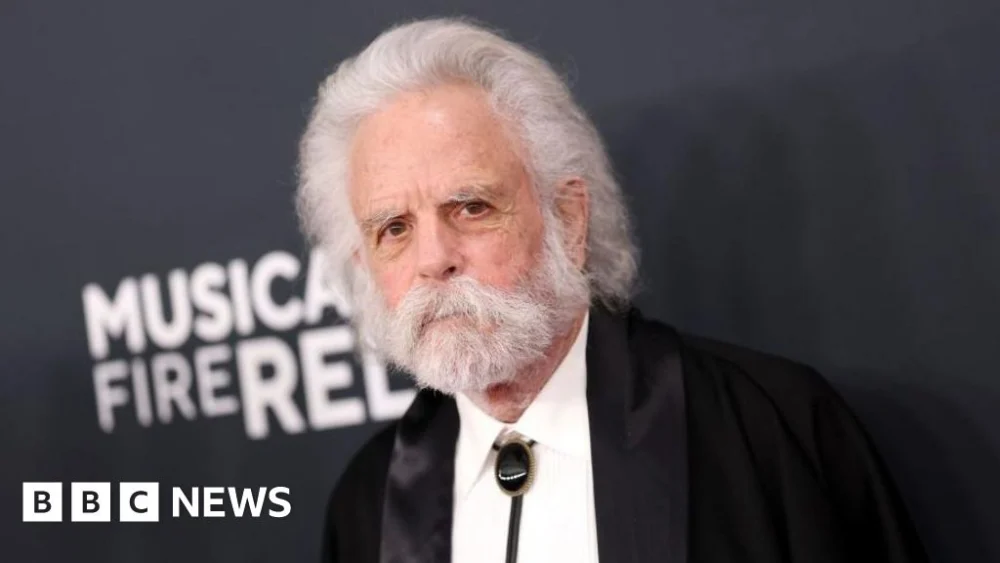
Robert "Bob" Weir, the seminal rhythm guitarist and vocalist who co-founded the legendary Grateful Dead, has passed away at the age of 78, leaving an indelible mark on the landscape of modern music. Weir, a foundational pillar of the iconic California psychedelic rock ensemble and its numerous subsequent iterations, concluded his remarkable journey following a period of grappling with cancer and complex lung conditions, a poignant announcement conveyed through his official social media channels.
The dispatch, imbued with a philosophical resonance, stated, "There is no final curtain here, not really. Only the sense of someone setting off again," underscoring Weir’s profound aspirations for his extensive musical catalog and enduring legacy to transcend temporal boundaries. It further detailed that his transition was peaceful, occurring amidst the comforting presence of his cherished family and closest companions. Emphasizing his long-held vision, the message continued, "He often spoke of a three-hundred-year legacy, determined to ensure the songbook would endure long after him. May that dream live on through future generations of Dead Heads." This sentiment encapsulates Weir’s deep-seated commitment to the perpetual life of the Grateful Dead’s unique sonic universe and the vibrant community it fostered.
Weir’s illustrious career, a tapestry woven over six decades, found its pivotal genesis in 1965 with the formation of the Grateful Dead. Emerging from the vibrant, experimental crucible of mid-1960s San Francisco, the band rapidly ascended to become a formidable cultural and musical force, intimately entwined with the city’s burgeoning counterculture movement. Their distinctive aesthetic swiftly began to reshape the contours of rock music, masterfully fusing the mind-expanding textures of psychedelia and the cultural narratives of the 1960s with the organic, deeply rooted sonic palettes of folk and Americana. This innovative synthesis cemented their status as preeminent pioneers of the "jam band" genre, a designation that would come to define an entire lineage of improvisational, live-performance-centric groups.
The Grateful Dead’s unique approach to music, characterized by extended improvisational passages, dynamic interplay, and a refusal to be confined by conventional genre boundaries, cultivated an unparalleled live experience. Their concerts were not merely performances but communal gatherings, ritualistic explorations of sound and consciousness that forged an unbreakable bond with their devoted following, affectionately known as "Dead Heads." This symbiotic relationship between band and audience became a hallmark of their enduring legend, transforming live music from a spectator event into an interactive, transformative journey. The band’s profound impact was formally recognized with their induction into the Rock and Roll Hall of Fame in 1994, a testament to their revolutionary influence. Further acknowledging their monumental contributions to music, they were bestowed with a Lifetime Achievement Award by the Grammy Awards in 2007.
The Grateful Dead’s original touring incarnation formally concluded in 1995, a profound cessation precipitated by the untimely passing of Jerry Garcia, the band’s beloved lead guitarist and fellow co-founder. Garcia’s death marked the end of an era, leaving a void that many believed could never be truly filled. However, Weir’s unwavering dedication to the music and its spirit ensured that the Grateful Dead’s sonic explorations would continue in various forms. He remained a central figure in a multitude of spin-off projects and successor bands, tirelessly working to keep the rich repertoire and improvisational ethos alive. These ventures included RatDog, The Other Ones, The Dead, Furthur, and, most recently, Dead & Company.
Dead & Company, which featured Weir alongside other luminaries such as John Mayer, proved to be a particularly successful continuation of the Grateful Dead’s legacy, captivating new generations of fans while retaining the loyalty of long-time Dead Heads. The band’s extensive touring schedule and recent high-profile residency at the state-of-the-art Las Vegas Sphere in 2024 and 2025 served as a powerful testament to the enduring vitality of the Grateful Dead’s music and Weir’s sustained artistic relevance. His commitment to performing, even in the face of significant health challenges, underscored his profound connection to his craft and his audience.
Weir’s journey through his final illness was marked by a remarkable display of resilience and artistic devotion. Diagnosed with cancer in July of the previous year, he continued to grace stages, delivering performances that, according to the official announcement, were "emotional, soulful, and full of light." These engagements were not framed as farewells but rather as "gifts," embodying "another act of resilience," an artist’s resolute choice to persist in his creative endeavors on his own terms. The announcement clarified that he had successfully overcome his cancer diagnosis prior to his passing, though the specific nature of the cancer was not disclosed, indicating that his death was ultimately attributed to the complex lung issues that accompanied his health struggles. This revelation highlights the immense strength and determination Weir exhibited in his final months, performing with an intensity that belied his personal battle.
Beyond his instrumental prowess, Weir’s distinct vocal stylings and songwriting contributions were integral to the Grateful Dead’s diverse sound. Often working alongside lyricist John Perry Barlow, Weir penned or co-wrote numerous beloved tracks that became staples of the band’s live shows and studio albums. His rhythm guitar work, characterized by its intricate counterpoint to Garcia’s lead melodies, was far from merely supportive; it was a dynamic, often complex, and indispensable component of the band’s improvisational architecture, providing both structure and unexpected sonic textures. His unique approach to rhythm guitar helped define the Grateful Dead’s sound, creating a polyrhythmic tapestry that allowed for expansive musical exploration.
The Grateful Dead’s cultural footprint extended far beyond music. They were pioneers in fan engagement, notably allowing and even encouraging the taping of their live performances by fans, a revolutionary concept at a time when most artists fiercely guarded their intellectual property. This policy fostered an extraordinary sense of community and shared ownership, transforming fans into active participants in the band’s ongoing artistic project. This innovative approach to audience interaction, coupled with their genre-defying sound and countercultural ethos, solidified their status as cultural icons. Their influence can be traced through countless bands and artists who have followed in their wake, both musically and in their approach to the business of music.
The announcement of Weir’s passing triggered an immediate and widespread outpouring of grief and tribute from across the globe. The iconic Empire State Building in New York City honored the rock legend by illuminating its spire in a vibrant display of tie-dye colors, a visual homage to the Grateful Dead’s psychedelic aesthetic. Musicians from various genres shared their condolences and reflections. Slash, the legendary guitarist of Guns N’ Roses, posted a simple yet poignant "RIP" accompanied by a broken-heart emoji, acknowledging the profound loss. Don Felder, former guitarist for the Eagles, offered a more expansive tribute, recalling his awe at first witnessing the Grateful Dead at Woodstock and expressing his gratitude for Weir’s collaboration on his own album. "I feel so blessed to have been able to have him sing on ‘Rock You’ from American Rock and Roll. Until we meet again, amigo," Felder wrote, encapsulating the camaraderie and mutual respect within the music community.
Dennis McNally, Weir’s former publicist and the Grateful Dead’s long-time historian, shared personal anecdotes with the BBC, painting a picture of a man deeply committed to his art. McNally fondly recalled Weir’s "very off-kilter, unusual sense of humor that was dry and funny," revealing a glimpse into the personality behind the public persona. He emphasized that for Weir, "The road was his life, and music was his life," a testament to his unwavering dedication to touring and performing. McNally concluded by stating that playing and serving the music was what "he was put on Earth for and he did it to the end," a powerful summation of a life wholly devoted to the pursuit of sonic expression.
Bob Weir’s departure leaves an immeasurable void in the musical landscape, yet his legacy is assured to resonate for generations to come. His pioneering spirit, his unique musical contributions, and his steadfast commitment to the Grateful Dead’s enduring "songbook" have left an indelible imprint on countless lives. His vision of a "three-hundred-year legacy" is not merely a wish but a testament to the timeless appeal and adaptive nature of the music he helped create. The future of Grateful Dead-related projects, including Dead & Company, will undoubtedly evolve, but the foundation laid by Weir and his bandmates ensures that the music will continue to be discovered, interpreted, and celebrated by new audiences, ensuring that the long, strange trip of the Grateful Dead’s sonic universe will indeed continue indefinitely. His profound influence as an innovator, a performer, and a cultural icon will undoubtedly be the subject of ongoing analysis and appreciation by scholars, musicians, and fans alike, cementing his place as a true titan of 20th and 21st-century music. His family, including his wife Natascha and their children Shala and Chloe, have requested privacy during this difficult time, expressing their gratitude for the overwhelming "outpouring of love, support, and remembrance" from around the world, a testament to the global reach of Bob Weir’s extraordinary life and artistry.




 Ridwan Kamil
 Safa Marwah
 Aura Kasih
 Ayu Aulia