Aura Kasih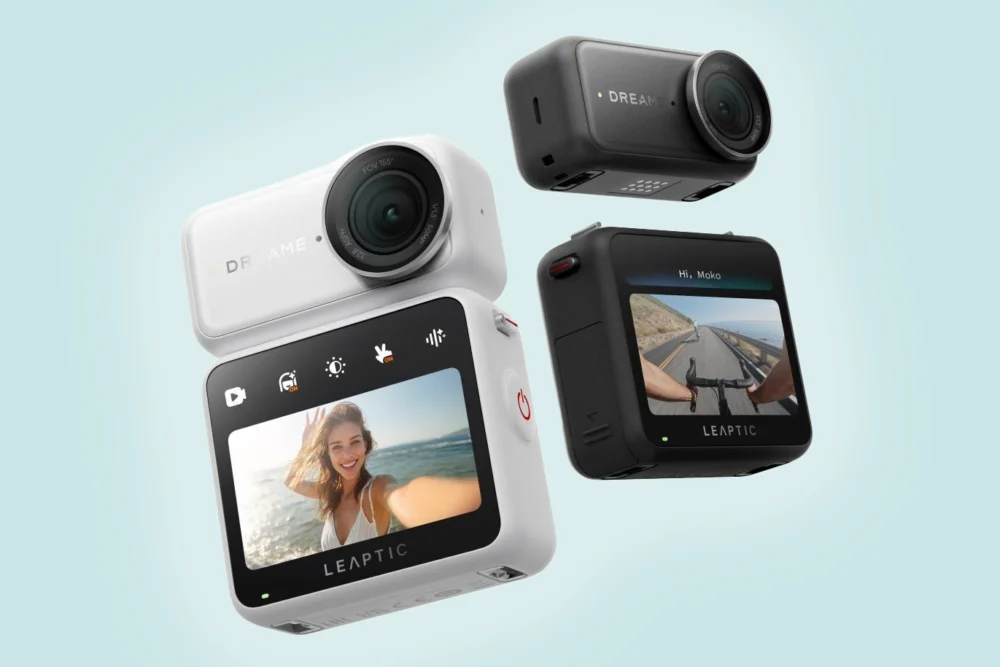
Dreame, a brand increasingly recognized for its innovative consumer electronics, has made a significant splash at CES 2026 with the introduction of its first action camera, the Leaptic Cube, a device poised to disrupt the market by bringing unprecedented 8K video recording capabilities to a remarkably compact form factor. This groundbreaking release challenges existing industry standards, which typically cap high-end action cameras at 4K resolution, signaling a potential paradigm shift in how dynamic visual content can be captured and produced.
The Leaptic Cube distinguishes itself with a modular design that echoes successful precedents like DJI’s Osmo Nano and Insta360’s Go Ultra series. This allows users to detach the primary camera module from its integrated screen, enabling flexible mounting options in diverse scenarios where a traditional, larger camera might be cumbersome or impractical. This versatility is crucial for action camera users who demand the ability to capture perspectives from unique vantage points, whether it’s strapped to a helmet, embedded in a vehicle, or positioned discreetly on specialized gear. However, Dreame’s ambition extends beyond mere convenience; the true marvel lies in its internal imaging prowess.
At the heart of the Leaptic Cube is a substantial 1/1.3-inch sensor, a component size comparable to that found in DJI’s Osmo Nano, which is known for its superior light-gathering capabilities. This larger sensor, coupled with a wide 155-degree field-of-view lens, is instrumental in achieving exceptional video quality, particularly in challenging lighting conditions, including low-light environments that often plague action camera footage. The ability to capture stunning detail even after sunset opens up a new realm of possibilities for nocturnal adventurers and low-light cinematographers.

The headline feature, 8K resolution recording, operates at a respectable 30 frames per second (fps). While this frame rate might seem modest compared to lower resolutions, the sheer pixel density of 8K offers significant advantages. Creators gain immense flexibility in post-production, allowing for extensive cropping, reframing, and digital zooming without substantial loss of detail. This capability is also a critical enabler for the camera’s sophisticated built-in stabilization system, which can intelligently analyze and correct for motion with greater precision due to the surplus of image data. For users prioritizing fluid motion and extreme slow-motion capabilities, the Leaptic Cube offers compelling alternatives. Stepping down to 4K resolution unlocks a smoother 60fps with High Dynamic Range (HDR) support, further enhancing visual fidelity and color depth. For those seeking the ultimate in slow-motion capture, the camera can record at an impressive 120fps in 4K, providing ample opportunity to dissect rapid movements with remarkable clarity.
Beyond its core imaging capabilities, the Leaptic Cube boasts a suite of advanced features designed to enhance user experience and creative control. Battery life is a perennial concern for action cameras, and Dreame has addressed this with an innovative solution: a magnetically attachable external battery dock. This accessory promises to extend the Leaptic Cube’s operational time to an impressive 220 minutes, a significant boost for extended filming sessions where frequent battery swaps would be disruptive. The dual-orientation screen, measuring 2.27 inches, can be positioned to face either forward or backward, facilitating effortless selfie framing and vlogging.
Connectivity and intelligent control are also key components of the Leaptic Cube’s appeal. The camera features a proprietary wireless transmission system with an operational range of approximately 98 feet, ensuring a stable connection between the camera module and its control unit or a paired mobile device. This extended range is vital for scenarios where the camera is mounted in hard-to-reach locations. Furthermore, the integration of AI-powered tracking and auto-framing technology means the Leaptic Cube can intelligently follow subjects and maintain them within the frame, reducing the need for constant manual adjustments. Complementing these visual aids is an AI assistant capable of responding to voice commands, allowing users to control camera functions remotely, even when the camera is connected to a mobile application. This hands-free operation is invaluable for athletes and adventurers who need to keep their hands free and focused on their activity.
The introduction of the Leaptic Cube by Dreame signifies more than just a new product; it represents a strategic move by a company known for its prowess in home robotics and appliances into the competitive and rapidly evolving action camera market. Dreame’s previous innovations, such as its unique robot vacuums and the intriguing floor lamp-hair dryer hybrid, demonstrate a commitment to pushing the boundaries of what’s possible with consumer technology. This foray into high-resolution action cameras suggests a broader ambition to capture a larger share of the enthusiast and professional content creation market.

The implications of an 8K-capable, compact action camera are far-reaching. For professional filmmakers and videographers, it offers a powerful and highly portable tool for capturing high-resolution footage in situations where traditional cinema cameras would be impractical. This could democratize high-fidelity content creation, making 8K capture more accessible to independent creators and smaller production houses. For content creators on platforms like YouTube, TikTok, and Instagram, the ability to shoot in 8K and leverage post-production cropping means they can achieve a more polished and professional look without sacrificing the dynamic, in-the-moment feel of action camera footage. The enhanced stabilization, powered by the high pixel count, will also lead to smoother, more watchable content, even in the most demanding environments.
The competitive landscape of action cameras has long been dominated by a few key players. The Leaptic Cube’s arrival, with its impressive 8K specification, is likely to intensify competition and potentially drive other manufacturers to accelerate their own development cycles for higher-resolution capture. The modular design also poses an interesting challenge to existing ecosystems, offering a compelling alternative for users seeking greater flexibility in how they deploy their cameras.
While specific pricing and an official launch date for the Leaptic Cube are yet to be announced, its unveiling at CES 2026 has undoubtedly generated significant anticipation within the tech and creative communities. The market will be keenly watching Dreame’s next steps, as the Leaptic Cube has the potential to redefine expectations for what a compact action camera can achieve, setting a new benchmark for visual fidelity and creative freedom in dynamic video capture. The company’s track record of delivering well-executed and innovative products suggests that the Leaptic Cube could be a formidable contender, capable of carving out a significant niche in a market hungry for next-generation imaging solutions. The future of action-packed storytelling may very well be captured in breathtaking 8K.




 Ridwan Kamil
 Safa Marwah
 Lisa Mariana
 Ayu Aulia