Lisa Mariana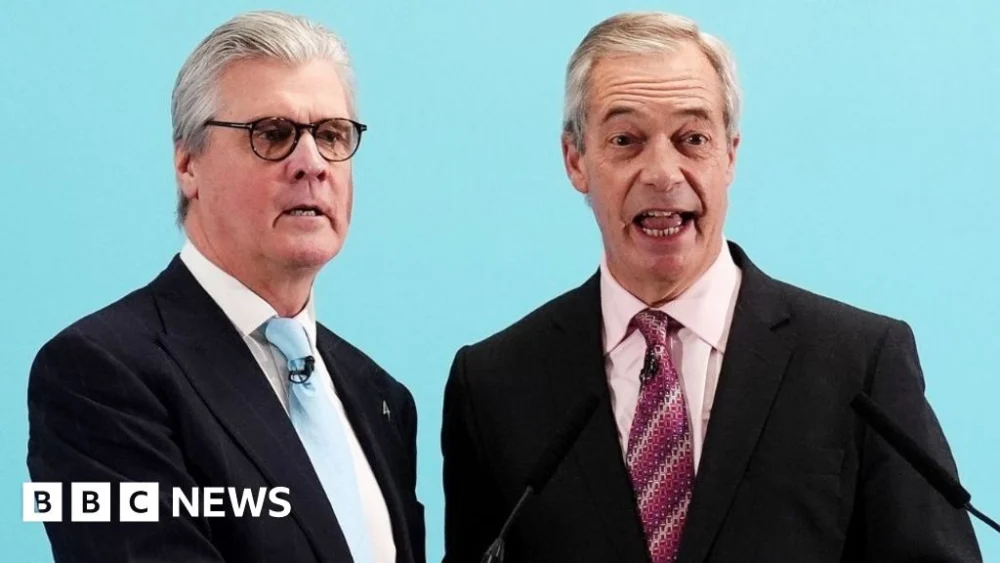
In a significant strategic maneuver aimed at reshaping the political landscape north of the border, Reform UK has officially named Lord Malcolm Offord, a former Conservative minister and life peer, as its inaugural leader for Scotland, signaling an intensified challenge to established parties ahead of the upcoming Scottish Parliament election. This pivotal announcement, orchestrated by Reform UK’s national figurehead Nigel Farage at a high-profile event in Fife, underscores the party’s ambitious intent to cultivate a substantial electoral presence in a region traditionally dominated by the Scottish National Party (SNP) and, to a lesser extent, Labour and the Scottish Conservatives. The move not only provides Reform UK with a recognizable and experienced political figure at its helm in Scotland but also sends a clear message of intent regarding its national expansion strategy.
Lord Offord’s unveiling marks a critical juncture for Reform UK, which has been steadily building momentum across the United Kingdom. His appointment is a calculated effort to leverage disillusionment with mainstream political offerings, particularly among voters who feel unrepresented by the current trajectory of Scottish and UK governance. Farage, known for his ability to tap into populist sentiment, emphasized the party’s belief that a significant segment of the Scottish electorate is actively seeking an alternative to the status quo. This sentiment, he suggested, stems from a perceived decline under successive SNP administrations, creating fertile ground for a party positioning itself as a radical departure from conventional politics.
The former Scottish Tory treasurer’s transition to Reform UK, widely anticipated following his defection from the Conservative Party in December, brings a wealth of political and business experience to the nascent Scottish branch. Lord Offord, a seasoned entrepreneur who founded the investment firm Badenoch and Co, is no stranger to high-stakes political campaigns, having directed the "Vote No Borders" campaign during the 2014 Scottish independence referendum. His history as a substantial donor to the Conservative Party—contributing nearly £150,000—and his subsequent elevation to a life peerage by Boris Johnson in 2021, followed by ministerial roles in the Scotland Office and as Minister of Exports, lend a degree of establishment credibility to Reform UK’s operations in Scotland. This background is crucial for a party often characterized as anti-establishment, allowing it to appeal to a broader demographic, including disaffected traditional conservative voters.

At the Fife event, Lord Offord articulated a bold vision for Reform UK in Scotland, declaring the forthcoming election a "two-horse race" between his party and the SNP. This assertion, while ambitious given Reform UK’s relatively recent emergence as a significant force, reflects the party’s confidence, fueled by recent polling data suggesting a growing challenge to Labour for second place behind the SNP. He highlighted the party’s reported membership of over 12,000 in Scotland and a "really talented group of candidates," suggesting a grassroots foundation is already taking shape. Farage corroborated this, noting that approximately 100 Scottish candidates had undergone rigorous vetting and training in London, underscoring the party’s methodical approach to candidate selection and preparedness.
The strategic importance of Lord Offord’s defection and subsequent leadership role cannot be overstated. It represents more than just an individual changing allegiance; it symbolizes a potential fracturing within the broader Unionist political spectrum in Scotland. The Scottish Conservatives have long struggled to gain significant traction against the SNP, and Reform UK’s entry, led by a former Tory grandee, threatens to further dilute their vote share. This internal pressure on the Conservatives was underscored by Farage’s revelations regarding his discussions with Robert Jenrick, who had just been dismissed from the Conservative frontbench amidst allegations of "plotting to defect." Farage’s confirmation of talks with Jenrick and "a number of very senior Conservatives" highlights the internal anxieties and divisions within the Tory party, particularly concerning their electoral prospects in May across England, Wales, and Scotland, where Farage predicted an "obliteration." While denying any signed agreement with Jenrick, Farage strongly implied that a move to Reform UK had been considered by the former frontbencher, signaling a potential trend of high-profile defections.
Reform UK’s recent electoral successes, though modest, provide tangible evidence of its burgeoning appeal. The defection of Graham Simpson, a former Conservative MSP, to Reform UK in August provided the party with its first representative in the Scottish Parliament. More tellingly, the party secured its first victory at the ballot box in Scotland by winning a council by-election in West Lothian last month. These early wins, coupled with promising poll numbers, indicate a nascent but growing electoral force capable of translating public disaffection into tangible political gains.
The decision by Lord Offord to step down from the House of Lords to contest a Holyrood seat under the Reform UK banner is a symbolic act, signifying a full commitment to the party’s Scottish ambitions. While a life peerage cannot be entirely relinquished, his application to retire as a member of the House of Lords from January 30th, signed publicly with Farage, underscores his dedication to the Scottish project. This move is designed to resonate with voters seeking authentic representation and a departure from the perceived remoteness of Westminster politics.
From a policy perspective, Reform UK Scotland is expected to align with the national party’s core tenets, which generally advocate for lower taxes, reduced immigration, a critical stance on net-zero policies, and a robust defense of individual liberties and free markets. In the Scottish context, this would likely translate into a strong unionist platform, potentially more assertive than that of the Scottish Conservatives, coupled with criticisms of the SNP’s economic and public service management. The party’s rhetoric, as echoed by Farage, suggests a focus on addressing the "decline this country has seen under SNP government," likely targeting issues such as healthcare waiting lists, educational standards, and economic growth.
The rise of Reform UK in Scotland poses complex implications for the broader political landscape. For the SNP, it introduces another significant challenger from the right, potentially fracturing the anti-independence vote further. For the Scottish Labour Party, which has been attempting a resurgence, Reform UK’s appeal to working-class voters disillusioned with traditional left-leaning parties could complicate their path to power. Most acutely, for the Scottish Conservatives, Offord’s move represents a direct threat, as Reform UK seeks to occupy a similar ideological space but with a more populist and often anti-establishment appeal. This could lead to a significant realignment of conservative and unionist votes in Scotland, with unpredictable consequences for future elections.
Looking ahead, Reform UK’s strategy in Scotland appears multifaceted: to establish a foothold in Holyrood, to act as a significant spoiler in Westminster elections, and to fundamentally reshape the dialogue around Scottish governance and the future of the Union. Lord Offord’s leadership provides a figure with both insider knowledge and an outsider’s willingness to challenge the status quo. The party’s ability to sustain its momentum, translate polling figures into actual votes, and build a robust, localized party structure will be critical to its long-term success. The upcoming Scottish Parliament election will serve as a crucial test of Reform UK’s burgeoning influence and its capacity to disrupt the established political order in one of the UK’s most distinct electoral battlegrounds. The political establishment in Scotland, already grappling with shifting allegiances and persistent challenges, now faces an additional, formidable contender determined to carve out a new political identity.


 Ridwan Kamil
 Safa Marwah
 Aura Kasih