Ayu Aulia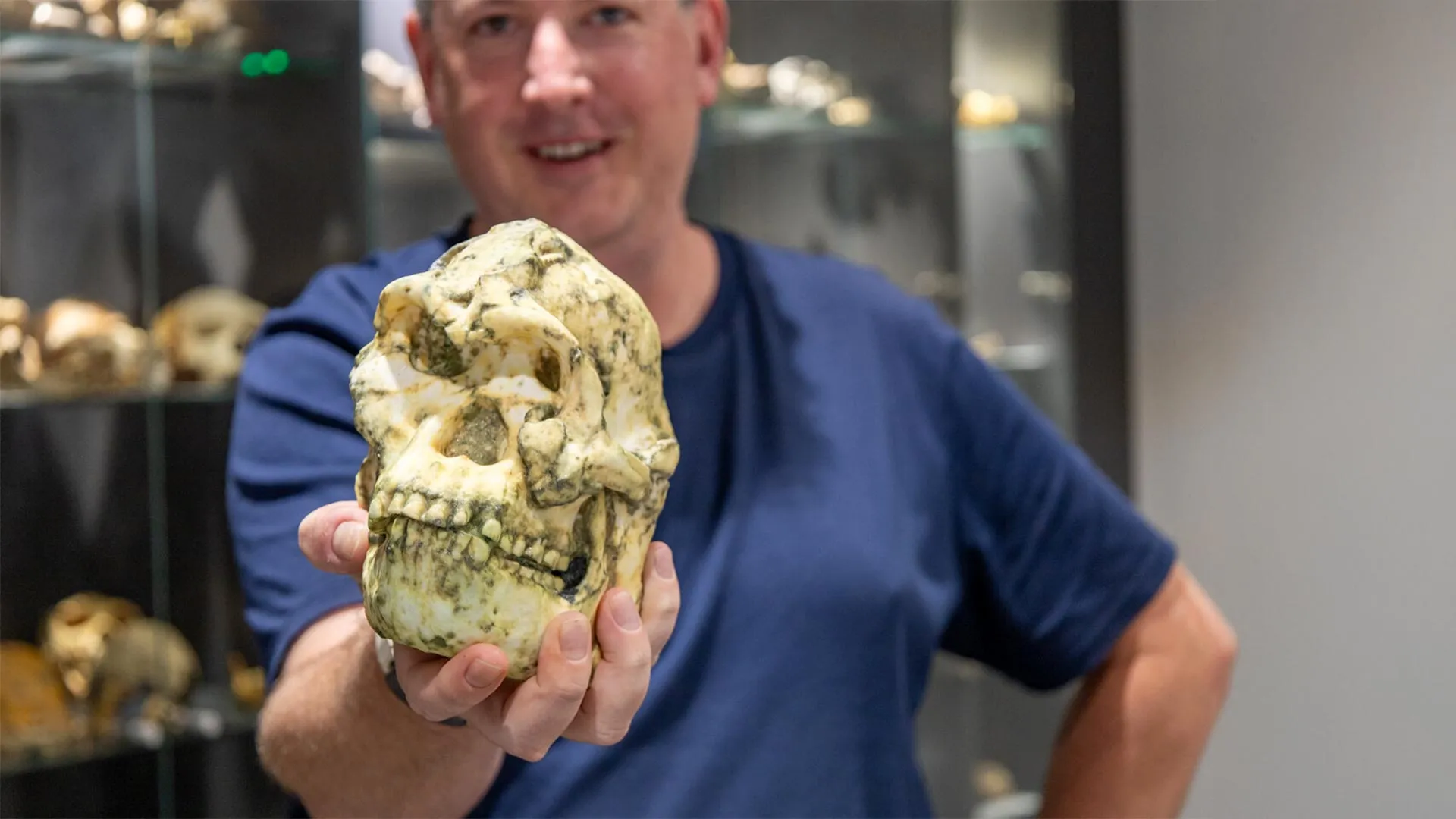
A groundbreaking re-analysis of one of the most complete early human ancestor fossils ever unearthed is prompting a significant re-evaluation of early hominin taxonomy, suggesting the specimen may represent a previously unrecognized species distinct from any currently classified human relative. This pivotal research, conducted by an international consortium of scientists, primarily from La Trobe University in Australia and the University of Cambridge, casts doubt on the long-held classification of the fossil known as "Little Foot," potentially reshaping our understanding of the intricate branches of the human evolutionary tree. The implications extend beyond a single specimen, challenging entrenched assumptions about the diversity and complexity of hominin populations in ancient southern Africa.
The Enigmatic Discovery in the Cradle of Humankind
The fossil, formally designated StW 573 but widely recognized by its evocative nickname "Little Foot," was initially discovered in South Africa’s Sterkfontein Caves in 1994, with its full excavation concluding only in 2017. The Sterkfontein Cave system, part of the UNESCO World Heritage Site known as the "Cradle of Humankind," is an unparalleled repository of Pliocene and early Pleistocene hominin fossils, having yielded more Australopithecus specimens than any other site globally. The painstaking, two-decade-long excavation of Little Foot, led by paleoanthropologist Ronald Clarke, revealed an almost entirely articulated skeleton, a rarity in the fragmented world of fossil discoveries. Its completeness, encompassing cranial, dental, and post-cranial elements, renders it an invaluable resource for understanding the morphology and locomotion of early hominins.
For decades, Little Foot has been broadly assigned to the Australopithecus genus, a pivotal group of bipedal hominins that roamed southern and eastern Africa between approximately 4 and 2 million years ago. These australopithecines are widely considered direct ancestors or close relatives of the genus Homo, occupying a critical juncture in the evolutionary pathway towards modern humans. Upon its formal introduction in 2017, Clarke himself tentatively classified Little Foot as Australopithecus prometheus, a species name that had previously been proposed but remained contentious and poorly defined due to a lack of comprehensive skeletal material. Concurrently, other prominent researchers posited that the specimen likely belonged to Australopithecus africanus, a well-established species first described by Raymond Dart in 1925, specimens of which are abundant within the Sterkfontein complex. This dual interpretation underscored an underlying uncertainty regarding its precise taxonomic placement, even prior to the current re-examination.
A Deeper Dive into Morphological Distinctiveness
The recent study, published in the esteemed American Journal of Biological Anthropology, represents the first rigorous public challenge to Little Foot’s classification since its complete unveiling. Spearheaded by Dr. Jesse Martin, an adjunct at La Trobe University and a postdoctoral research fellow at Cambridge, the international team embarked on an exhaustive comparative morphological analysis. Their methodology involved meticulous examination of a comprehensive suite of anatomical features across the Little Foot skeleton, juxtaposing them against the known variability within both Australopithecus prometheus (as defined by its historical, albeit limited, type specimens) and the more robustly characterized Australopithecus africanus.
The analytical framework employed by Dr. Martin’s team focused on identifying distinct combinations of features, or synapomorphies, that would definitively link Little Foot to one of the established species. Paleoanthropological classification often relies on a constellation of subtle yet consistent differences in skeletal architecture, including cranial vault shape, facial prognathism, dental cusp patterns, mandibular robusticity, and post-cranial indicators related to locomotion and muscular attachments. The researchers’ findings indicated that Little Foot exhibits a unique mosaic of these traits, a pattern not entirely congruent with the established morphological profiles of either A. prometheus or A. africanus. This lack of clear affiliation, rather than pointing to a mere variant within an existing species, strongly suggests a fundamental taxonomic divergence.
As Dr. Martin articulated, "We think it’s demonstrably not the case that it’s A. prometheus or A. africanus. This is more likely a previously unidentified, human relative." This statement underscores the profound implications of their work: Little Foot is not merely an outlier specimen, but potentially a representative of an entirely new species, hitherto unrecognized in the hominin fossil record. The study’s rigorous, evidence-based approach highlights the critical importance of careful, nuanced taxonomic work in a field where single, well-preserved specimens can redefine entire evolutionary trajectories.
Challenging the Homogeneity of Early Hominin Populations
The potential reclassification of Little Foot as a novel species carries significant implications for our understanding of early hominin diversity in southern Africa. For decades, the Sterkfontein Caves have been primarily associated with Australopithecus africanus, leading to an implicit assumption of relative homogeneity in the region’s hominin populations during the Pliocene. Dr. Clarke, the discoverer of Little Foot, was notably one of the few researchers to consistently advocate for the presence of at least two distinct hominin species at Sterkfontein. The new research lends considerable weight to his original hypothesis, suggesting that the landscape of early human evolution was far more complex and speciose than previously acknowledged.
The presence of multiple coexisting hominin species in a relatively confined geographical area like Sterkfontein would necessitate a re-evaluation of ecological niches, resource competition, and potential adaptive strategies. Did these different species occupy distinct ecological roles? Did they interact, and if so, how? The answers to these questions are crucial for constructing a more accurate and dynamic picture of the environmental pressures and evolutionary forces that shaped our ancestors. Professor Andy Herries of La Trobe University, who led the Australian Research Council grant funding this research, emphasized this point, noting Little Foot’s importance for "understanding early human diversity and how ancient relatives adapted to the varied environments of southern Africa."
Furthermore, the study indirectly addresses the historical ambiguity surrounding Australopithecus prometheus. Professor Herries highlighted that Little Foot "is clearly different from the type specimen of Australopithecus prometheus, which was a name defined on the idea these early humans made fire, which we now know they didn’t." This points to the inherent challenges in early paleoanthropological nomenclature, where initial descriptions were sometimes based on incomplete evidence or speculative behavioral interpretations. By demonstrating that Little Foot does not align with even the historically understood A. prometheus or A. africanus, the research clears the path for a more robust and evidence-based taxonomic framework.
Broader Implications for the Human Family Tree
The re-evaluation of Little Foot transcends mere taxonomic debate; it directly impacts our understanding of the architecture of the human family tree. If Little Foot indeed represents a new species, it introduces another branch, potentially a deep one, into the already intricate phylogenetic web of hominin evolution. This suggests that the evolutionary pathway from ape-like ancestors to modern humans was not a linear progression, but rather a complex, "bushy" tree characterized by multiple parallel lineages, some of which thrived and diversified, while others eventually became extinct.
Such a discovery reinforces the idea that hominin evolution was a dynamic process, marked by bursts of speciation and adaptation to diverse ecological pressures across the African continent. It challenges simplistic narratives of human origins, instead promoting a view of a rich tapestry of early hominins, each with unique anatomical features and potentially distinct behavioral repertoires. The identification of a new species would necessitate careful consideration of its chronological placement and its morphological relationships to other known hominins, including early Homo species, thereby requiring a recalibration of existing phylogenetic models.
The study also serves as a potent reminder of the provisional nature of scientific classification, particularly in paleontology. As Dr. Martin stated, "Our findings challenge the current classification of Little Foot and highlight the need for further careful, evidence-based taxonomy in human evolution." Each new fossil discovery, and each new analytical technique, has the potential to overturn long-held assumptions, pushing the boundaries of our knowledge and refining our understanding of our own deep past.
The Path Forward: Describing a New Ancestor
The current research marks a crucial step, but not the final one, in fully understanding Little Foot’s place in human evolution. The next phase of this scientific endeavor, which Dr. Martin will continue in collaboration with La Trobe students, involves the meticulous process of formally describing the potential new species. This will entail publishing a comprehensive anatomical description, identifying diagnostic features that distinguish it unequivocally from all other known hominins, and proposing a new scientific name. This process is rigorous and subject to peer review, ensuring that any new classification is robustly supported by evidence.
Future research will also undoubtedly involve further comparative analyses, potentially utilizing advanced imaging techniques such as micro-computed tomography (micro-CT) to explore internal bone structures and dental microwear patterns, which can provide insights into diet and behavior. The complete nature of the Little Foot skeleton also opens avenues for detailed biomechanical studies, offering unparalleled insights into its locomotion, posture, and manipulative capabilities – features critical for understanding its ecological adaptations.
The collaborative spirit underpinning this research, involving institutions and experts from the United Kingdom, Australia, South Africa, and the United States, exemplifies the global nature of modern paleoanthropology. Such international partnerships are essential for pooling diverse expertise, resources, and perspectives, ultimately accelerating the pace of discovery and refining our collective understanding of human origins.
In conclusion, "Little Foot" remains one of the most significant hominin fossil discoveries, a testament to the complex and often surprising narrative of human evolution. Its potential reclassification as a new species fundamentally reshapes our understanding of early hominin diversity in southern Africa, challenging established taxonomic frameworks and urging a more nuanced appreciation of the intricate branches of our shared ancestry. As scientific inquiry continues, this legendary fossil promises to remain a cornerstone in the ongoing quest to unravel the profound mysteries of human origins.




 Ridwan Kamil
 Safa Marwah
 Aura Kasih
 Lisa Mariana