Ayu Aulia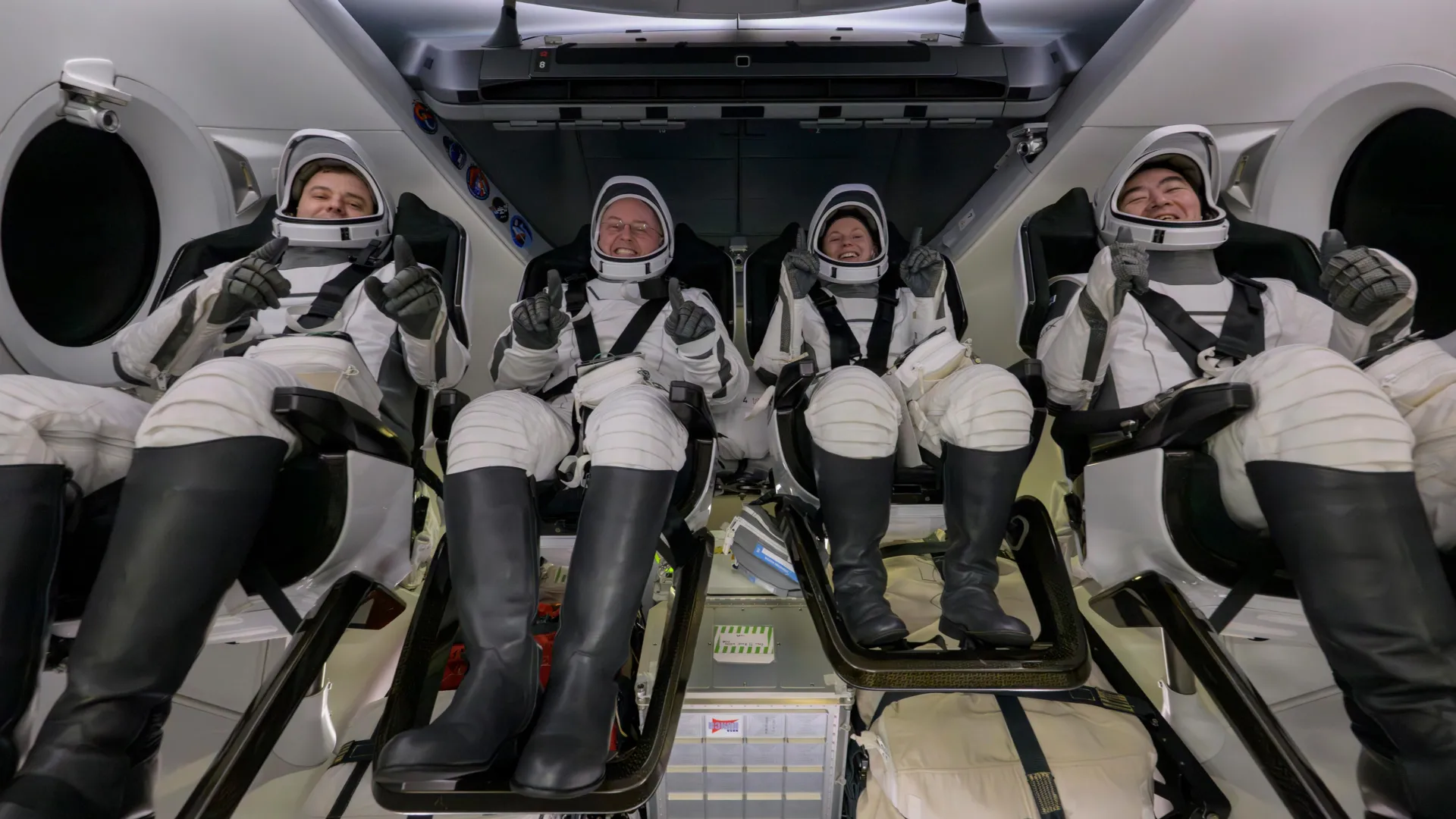
The eleventh routine crew rotation mission to the International Space Station, designated Crew-11, concluded its tenure approximately one month ahead of its projected schedule, with the SpaceX Dragon capsule executing a successful splashdown in the Pacific Ocean off San Diego. This expedited return was prompted by a medical concern identified within the multinational astronaut contingent, underscoring the rigorous health monitoring protocols integral to long-duration human spaceflight and the robust capabilities of NASA’s commercial crew transportation system to respond to unforeseen circumstances.
The capsule, carrying NASA astronauts Zena Cardman and Mike Fincke, JAXA (Japan Aerospace Exploration Agency) astronaut Kimiya Yui, and Roscosmos cosmonaut Oleg Platonov, completed its oceanic landing at 12:41 a.m. PST. Following touchdown, specialized recovery teams aboard SpaceX support vessels swiftly secured the spacecraft, initiating the meticulous process of assisting the returning spacefarers. The prompt and efficient execution of these recovery procedures is a testament to the extensive planning and integrated training undertaken by all involved agencies and commercial partners, ensuring astronaut safety remains the paramount objective in all phases of a mission.
An Unscheduled Return: Prioritizing Astronaut Health
The early conclusion of the Crew-11 mission marks a significant, albeit infrequent, event in the history of human spaceflight. While mission timelines are meticulously planned, the health and well-being of astronauts are continuously monitored, and protocols are in place to address any emergent medical situations. The decision to accelerate the crew’s return by approximately four weeks was made after flight surgeons and mission control personnel identified a medical concern pertaining to one of the crew members. In adherence to strict privacy guidelines, NASA refrained from disclosing specific details regarding the individual’s condition, emphasizing only that the astronaut remained stable throughout the return journey.
This incident highlights the inherent complexities and risks associated with extended periods in microgravity, where the human body undergoes profound physiological adaptations. Comprehensive medical assessments are conducted pre-flight, in-flight, and post-flight to understand these changes and mitigate potential health issues. The ability to bring a crew home early, if medically necessary, is a critical safeguard and a core capability that underscores the maturity and responsiveness of contemporary space programs. Such a decision involves extensive coordination between international partners, flight operations teams, and medical experts, all working in concert to ensure the safest possible outcome. The logistical intricacies of adjusting a re-entry and landing schedule on short notice, while maintaining all safety parameters, speak volumes about the operational excellence of the Commercial Crew Program and its associated ground support infrastructure.
A Legacy of Scientific Discovery and International Unity
Despite its premature conclusion, the Crew-11 mission achieved a remarkable breadth of scientific objectives, contributing significantly to humanity’s understanding of space and its implications for life on Earth. During their 167 days aboard the orbiting laboratory, the crew dedicated hundreds of hours to executing more than 140 distinct scientific investigations. These experiments spanned a diverse range of disciplines, including human physiology, materials science, fluid physics, combustion science, and Earth observation. Research in microgravity provides unique insights that are often impossible to replicate in terrestrial laboratories, paving the way for advancements in medicine, agriculture, and industrial processes.
For instance, studies on bone density loss and muscle atrophy in space directly inform treatments for osteoporosis and sarcopenia on Earth, while plant growth experiments in controlled environments could revolutionize sustainable agriculture in arid regions or future extraterrestrial habitats. The mission also saw the crew conducting critical maintenance tasks and testing innovative technologies designed to enhance the station’s capabilities and support future deep-space exploration.
A poignant highlight of their tenure was the celebration on November 2, 2025, marking 25 years of continuous human presence aboard the International Space Station. This quarter-century milestone underscores the unparalleled success of international collaboration in space, transforming what was once a geopolitical battleground into a beacon of shared scientific endeavor. The ISS stands as a testament to the enduring power of partnership, transcending national boundaries and fostering a collective pursuit of knowledge.
NASA Administrator Jared Isaacman commended the crew and support teams, stating, "Their professionalism and focus kept the mission on track, even with an adjusted timeline. Missions like Crew-11 demonstrate the capability inherent in America’s space program — our ability to bring astronauts home as needed, launch new crews quickly, and continue pushing forward on human spaceflight as we prepare for our historic Artemis II mission, from low Earth orbit to the Moon and ultimately Mars." This statement encapsulates the dual focus of current space efforts: leveraging the ISS for foundational research while simultaneously developing the capabilities for ambitious lunar and Martian expeditions.
Post-Flight Protocols and Astronaut Readjustment
Following the splashdown, an immediate and comprehensive medical evaluation of all four astronauts was prioritized. Rather than the standard transport directly to Houston, arrangements were made for the crew to be transferred to a local hospital near the landing site. This allowed for immediate access to advanced Earth-based diagnostic and medical resources, facilitating a thorough assessment of the crew member with the identified medical concern, as well as providing baseline data for the other returning astronauts.
After a planned overnight stay for observation and initial assessments, the crew was slated for transport to NASA’s Johnson Space Center in Houston. Here, they will embark on a structured program of post-flight evaluations, which include detailed medical examinations, psychological debriefings, and physical reconditioning. Readapting to Earth’s gravity after months in microgravity is a demanding process, requiring targeted exercises to regain muscle mass, bone density, and cardiovascular function. This crucial phase is vital not only for the astronauts’ personal recovery but also for collecting invaluable data that informs future long-duration missions.
Mission Parameters and Astronaut Accomplishments
The Crew-11 mission commenced on August 1, 2025, with a precise launch at 11:43 a.m. EDT from Launch Complex 39A at NASA’s Kennedy Space Center in Florida. Approximately 15 hours later, the SpaceX Dragon spacecraft seamlessly docked with the International Space Station at 1:27 a.m. CDT on August 2. Over their 167 days in orbit, the crew circumnavigated Earth more than 2,670 times, covering an astonishing distance of nearly 71 million miles.
The mission represented significant milestones for its individual members. It marked the fourth spaceflight for veteran Mike Fincke and the second for JAXA’s Kimiya Yui, while NASA’s Zena Cardman and Roscosmos’s Oleg Platonov completed their inaugural journeys into space. With this mission, Mike Fincke has now accumulated a remarkable 549 total days in space, elevating him to fourth place among NASA astronauts for cumulative time spent in orbital environments. Such extensive experience is invaluable for mentoring new astronauts and contributing to the operational wisdom of spaceflight. The diverse backgrounds and experience levels of the Crew-11 members underscore the multifaceted nature of contemporary astronaut corps, blending seasoned veterans with fresh perspectives.
The Evolving Landscape of Commercial Spaceflight
The successful, albeit expedited, return of Crew-11 further validates the efficacy and resilience of NASA’s Commercial Crew Program. This initiative, established to partner with private U.S. companies like SpaceX, has fundamentally transformed America’s access to low Earth orbit. Following the retirement of the Space Shuttle program, the Commercial Crew Program was conceived to ensure consistent, reliable, and independent transportation of astronauts to and from the International Space Station, thereby maximizing the station’s utility as a critical hub for scientific research and technological development.
The partnership with SpaceX, and specifically the development of the Dragon spacecraft and Falcon 9 rocket, has proven instrumental in normalizing crew rotation missions. The program has significantly reduced NASA’s reliance on foreign launch capabilities for crew transport, re-establishing American leadership in human spaceflight accessibility. The ability of the Commercial Crew Program to execute a complex, unplanned re-entry and recovery operation demonstrates a high degree of operational flexibility and robust systems engineering. This agility is a cornerstone of future space exploration endeavors, where adaptability to unforeseen challenges will be paramount.
Looking Ahead: From Low Earth Orbit to Deep Space
The Crew-11 mission, despite its unforeseen medical contingency, serves as a powerful reminder of both the triumphs and inherent challenges of human space exploration. The seamless execution of the early return and recovery highlights the sophistication of current space infrastructure and the unwavering commitment to astronaut safety. The invaluable scientific data gathered during their five months in orbit will continue to inform future missions, particularly as NASA prepares for its ambitious Artemis program, aiming to return humans to the Moon and establish a sustainable lunar presence as a stepping stone to Mars.
The lessons learned from Crew-11, including the protocols for medical emergencies and the operational flexibility demonstrated, will be meticulously integrated into planning for longer-duration missions beyond Earth’s protective magnetic field. As humanity ventures further into the cosmos, the ability to manage complex health scenarios and adapt mission profiles will become increasingly critical. The International Space Station, through missions like Crew-11, continues to serve as an indispensable proving ground, pushing the boundaries of human endurance and technological innovation, ultimately paving the way for humanity’s next giant leaps into the solar system.




 Ridwan Kamil
 Safa Marwah
 Aura Kasih
 Lisa Mariana