
 Ridwan Kamil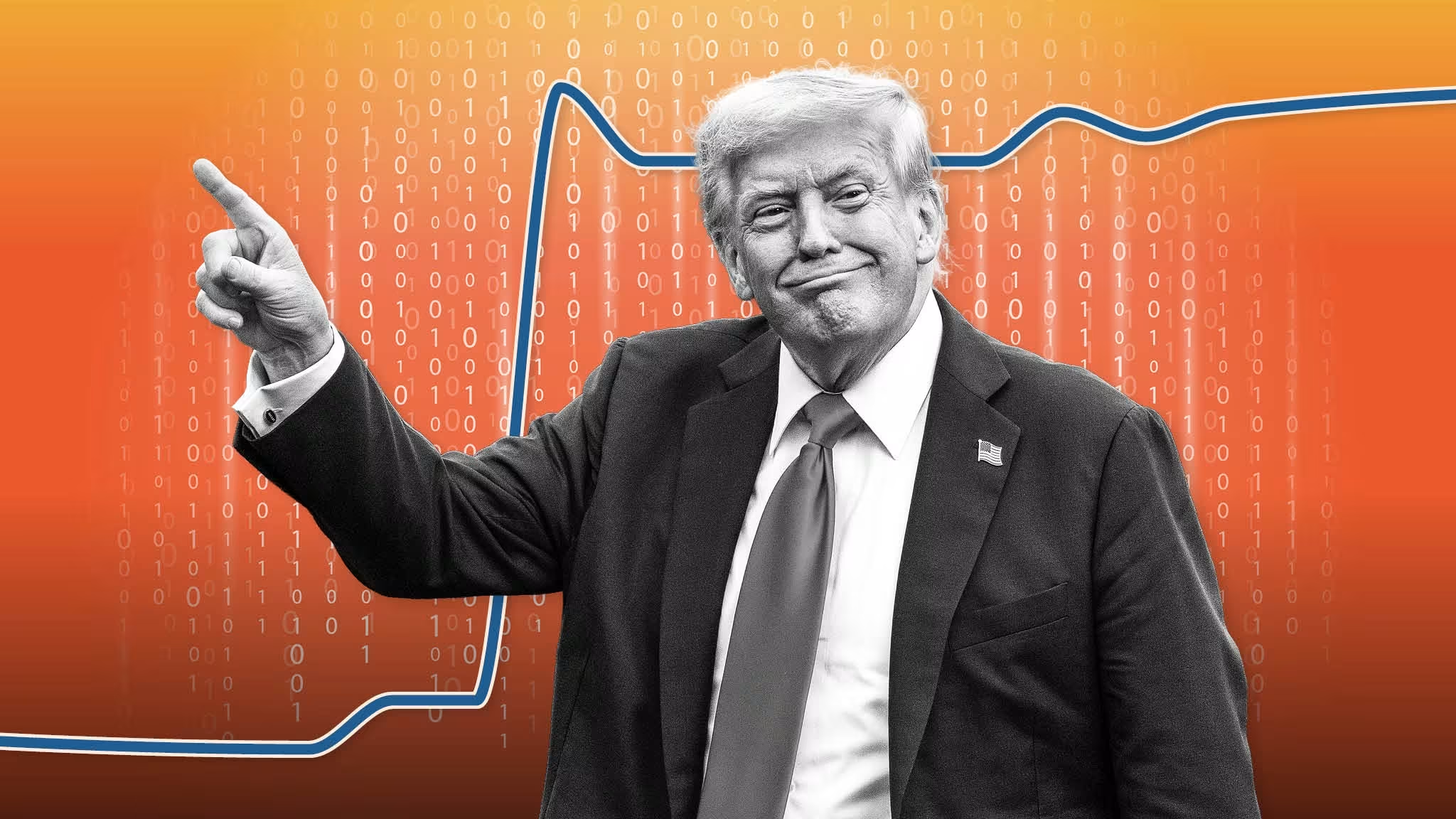
While former President Donald Trump has frequently painted a picture of an exceptionally robust U.S. economy, a comprehensive examination of key economic indicators reveals a more complex and multifaceted reality, demanding a nuanced understanding of its current trajectory and underlying strengths and vulnerabilities.
The United States economy, a global powerhouse, is indeed demonstrating resilience in several key areas, yet the narrative of unbridled "hotness" often projected requires careful scrutiny. Official pronouncements, while carrying political weight, often serve as a simplified lens through which to view intricate economic dynamics. A more granular analysis, however, uncovers a landscape characterized by both encouraging growth and persistent challenges, demanding a sophisticated appreciation of the forces at play. Understanding the true health of the American economic engine necessitates moving beyond broad-stroke declarations and delving into the granular data, expert analyses, and forward-looking projections that shape its course.
Decoding the Drivers of Economic Performance
At the heart of any economic assessment lies the Gross Domestic Product (GDP), the broadest measure of a nation’s economic output. Recent GDP figures have shown periods of robust expansion, often exceeding projections and signaling a dynamic recovery from prior slowdowns. This growth is fueled by several interconnected factors, including sustained consumer spending, which remains a significant pillar of the U.S. economy. Households, supported by a relatively stable labor market and, in some instances, residual pandemic-era savings, have continued to drive demand for goods and services.
The labor market, a critical barometer of economic health, has largely exhibited encouraging trends. Unemployment rates have remained historically low, a testament to strong job creation and a dynamic business environment. Wage growth, while not uniformly distributed across all sectors, has shown upward momentum, contributing to household purchasing power. The participation rate in the labor force, a measure of the working-age population actively employed or seeking employment, has also seen positive shifts, indicating a growing pool of available talent. However, this strength is not without its complexities. Sectoral disparities in job growth and wage increases persist, and concerns about labor shortages in specific industries continue to be a subject of economic discourse.
Inflation, a persistent concern for policymakers and consumers alike, presents a complex dynamic. While inflationary pressures have shown signs of moderating from their peaks, they remain a significant factor influencing economic stability. The Federal Reserve’s monetary policy, particularly interest rate adjustments, plays a crucial role in managing inflation without unduly stifling economic growth. The delicate balance between controlling price increases and fostering sustainable expansion is a central challenge facing economic stewards. Understanding the interplay between supply chain dynamics, energy costs, and wage pressures is essential to grasping the full inflation picture.
Sectoral Strengths and Emerging Vulnerabilities
Beyond the aggregate figures, a deeper dive into specific economic sectors reveals a varied landscape. The technology sector, for instance, continues to be a significant engine of innovation and growth, driving productivity gains and creating high-value jobs. Investments in artificial intelligence, cloud computing, and advanced manufacturing are positioning the U.S. at the forefront of technological advancement. Similarly, the services sector, encompassing everything from healthcare and finance to hospitality and professional services, remains a dominant contributor to employment and economic output.
However, certain sectors are grappling with distinct challenges. The manufacturing sector, while benefiting from reshoring initiatives and increased domestic demand, faces ongoing pressures from global competition, raw material costs, and the need for technological modernization. The housing market, after a period of intense activity, is now navigating the impact of higher interest rates, which have tempered demand and influenced affordability. Furthermore, the long-term implications of climate change and the transition to a greener economy are creating both opportunities and disruptions across various industries, necessitating strategic adaptation and investment.
Expert Perspectives and Analytical Frameworks
Economic analysts and forecasters offer a range of perspectives on the current state and future outlook of the U.S. economy. Many point to the underlying resilience of American businesses and consumers, supported by a flexible labor market and a robust financial system. They highlight the potential for continued innovation and productivity growth, particularly in technology-driven sectors.
Conversely, some experts caution against overconfidence, citing potential headwinds such as persistent inflation, geopolitical uncertainties, and the impact of rising national debt. They emphasize the importance of fiscal responsibility and targeted investments to address structural issues and ensure long-term economic sustainability. The effectiveness of monetary policy in navigating the current economic environment, particularly the potential for a "soft landing" versus a recession, remains a central theme of debate.
The role of government policy is also a critical consideration. Fiscal stimulus measures, trade policies, and regulatory frameworks all exert a significant influence on economic performance. The current administration’s focus on infrastructure investment, clean energy initiatives, and workforce development aims to bolster long-term growth and competitiveness. The efficacy and impact of these policies are subject to ongoing evaluation and debate among economists and policymakers.
Global Interdependencies and Economic Outlook
The U.S. economy does not operate in isolation. Its performance is intrinsically linked to global economic trends, trade relationships, and international financial markets. Fluctuations in global demand, supply chain disruptions, and geopolitical events can have a tangible impact on domestic economic activity. The ongoing war in Ukraine, for instance, has contributed to energy price volatility and supply chain disruptions, influencing inflation and business sentiment.
Looking ahead, the U.S. economic outlook is characterized by a degree of optimism tempered by caution. Projections generally indicate continued, albeit potentially moderating, growth in the near to medium term. The pace of inflation, the trajectory of interest rates, and the evolution of global geopolitical landscapes will be critical determinants of future economic performance. The capacity for innovation, adaptation, and strategic policy implementation will be paramount in navigating the complexities and capitalizing on the opportunities that lie ahead. The "hotness" of the U.S. economy is not a static descriptor but a dynamic interplay of forces that require continuous monitoring, sophisticated analysis, and a clear-eyed assessment of both its remarkable strengths and its persistent challenges.



 Aura Kasih
 Lisa Mariana

 Safa Marwah