Aura Kasih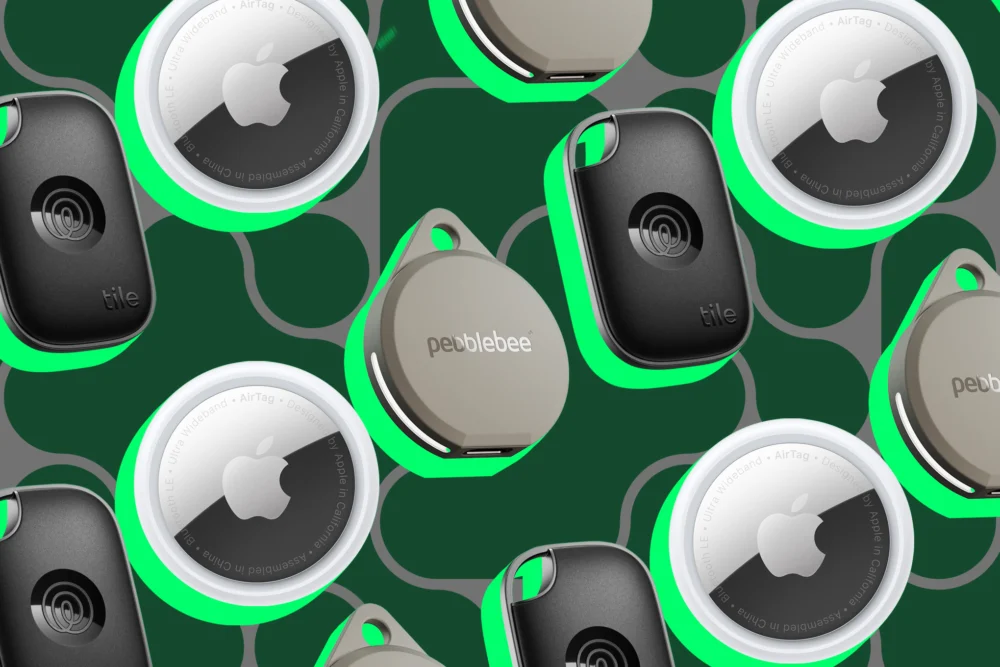
In an era where our essential possessions can seemingly vanish into thin air, the advent of sophisticated Bluetooth tracking devices has become an indispensable tool for modern life, offering peace of mind for both the habitually forgetful and the occasionally misplaced. These compact gadgets, once a simple solution for immediate proximity alerts, have evolved into powerful location-finding solutions, leveraging vast crowdsourced networks and advanced technologies to extend their reach far beyond the confines of our homes. This comprehensive analysis delves into the leading Bluetooth trackers available today, meticulously evaluating their performance, compatibility, and innovative features for both Apple and Android ecosystems, helping you reclaim control over your belongings.
The fundamental principle behind Bluetooth trackers remains consistent: attach a small device to an item, pair it with your smartphone, and utilize a dedicated application to locate it. However, the capabilities of these devices have expanded dramatically. Modern trackers are now equipped with Ultra-Wideband (UWB) chips, enabling hyper-precise directional finding that guides users directly to their lost items within a room. Furthermore, their integration with expansive networks, such as Apple’s Find My and Google’s Find My Device network (formerly Find Hub), allows for the location of items even when they are far beyond the immediate Bluetooth range of your phone. Many trackers also incorporate proactive features like "left behind" notifications, alerting you if you inadvertently stray from your tagged possessions, or display QR codes that provide a direct line of contact for well-intentioned finders.
The Gold Standard for iOS Ecosystems: Apple AirTag
For users deeply embedded within the Apple ecosystem, the AirTag stands as the undisputed leader in Bluetooth tracking technology. Launched in 2021, these discreet devices revolutionized the market by integrating Apple’s proprietary Ultra-Wideband (UWB) chip with the immense reach of the Find My network. This powerful combination offers an unparalleled experience in locating lost items, providing both extreme accuracy and extensive coverage.
The UWB technology embedded within AirTags facilitates "Precision Finding." When an item tagged with an AirTag is misplaced, the Find My app on an iPhone (or iPad) equipped with a U1 chip will display a directional arrow, guiding the user with remarkable accuracy to the exact location of the lost item. This feature transforms the often frustrating search for keys or a wallet into a guided experience, akin to a digital treasure hunt.
Complementing this precision is the sheer scale of Apple’s Find My network. This crowdsourced platform leverages the vast number of active Apple devices worldwide. When an AirTag is out of your direct Bluetooth range, it can anonymously and securely communicate its location to nearby Apple devices, relaying that information back to iCloud. This means that even if your wallet is left behind in a distant cafe, its location can be updated as long as another Apple device passes within range, providing a lifeline for recovering items lost far from home.

In practical application, the effectiveness of AirTags has been repeatedly demonstrated. During rigorous testing, an AirTag attached to keys that fell out during an outdoor activity was successfully located using the Find My app. While precise directional finding was not feasible in an open environment, the last reported location provided a crucial starting point for recovery, even after a significant time had elapsed. This level of reliability and broad coverage is a testament to the synergy between UWB and the Find My network.
However, the power of AirTags’ precision tracking has also raised significant privacy concerns, particularly regarding potential misuse for unwanted tracking. Apple has proactively addressed these issues through iterative updates and the introduction of robust anti-stalking measures. These include enhanced unwanted tracking alerts that trigger sooner and with louder chimes, a dedicated Android app for detecting unknown AirTags, and prominent user education during setup emphasizing the intended use of AirTags for personal belongings and the illegality of their misuse.
Furthermore, Apple has enhanced sharing capabilities. With iOS 17, users can share AirTag locations with trusted individuals, ensuring that shared items do not trigger unwanted tracking alerts. The introduction of temporary sharing links in iOS 18.2 allows users to share the location of a lost AirTag with others, a feature particularly beneficial for scenarios like lost luggage, where a temporary link can be provided to airlines or recovery services.
The physical design of the AirTag, while functional, necessitates the purchase of accessories for attachment to items like keychains or luggage, adding to the overall cost beyond the initial $29.99 price point. Fortunately, a thriving third-party accessory market offers a variety of solutions. A significant advantage of AirTags is the user-replaceable CR2032 coin cell battery, which offers a cost-effective way to maintain functionality over the long term, avoiding the need to purchase entirely new trackers.
Apple has also recently introduced a new generation of AirTags, enhancing UWB capabilities for even greater range and precision, alongside improved Bluetooth and a louder speaker, further solidifying its position as the premier tracking solution for iPhone users.

Bridging the Divide: Tile Pro for Android Users and Cross-Platform Households
For Android users and those operating in mixed-platform environments, the Tile Pro emerges as the leading contender, offering a robust feature set and broad network compatibility. While it may not possess the UWB precision of Apple’s AirTag, its comprehensive tracking capabilities, user-replaceable battery, and extensive network make it a highly compelling choice.
Tile’s trackers leverage the Tile Network, a vast and growing community of users that functions analogously to Apple’s Find My. This network, augmented by Amazon Sidewalk integration, provides a significant advantage in locating items beyond immediate Bluetooth range. While Google’s own Find My Device network has seen substantial improvements, Tile’s established network and integration with Amazon Sidewalk often provide more reliable out-of-home tracking.
The Tile Pro, in particular, distinguishes itself with its loud ringtone and extended Bluetooth range of up to 500 feet, surpassing many competitors. This makes it easier to locate items even in noisy environments or when they are slightly further away. A key differentiator for the Tile Pro is its user-replaceable CR2032 battery, a feature that significantly enhances its long-term value and sustainability compared to devices with sealed, non-replaceable batteries.
While Tile has historically lagged behind AirTags in terms of real-time tracking precision, the company’s acquisition by Life360 has spurred innovation. The integration of Tile within the Life360 app offers enhanced features such as SOS alerts to emergency contacts, shared location viewing within family circles, and expanded location history. These advancements bring Tile closer to parity with its competitors in terms of overall utility.
A notable advantage of Tile is its diverse range of form factors. Beyond the key fob-like Tile Pro, the company offers the credit-card-thin Tile Slim for wallets, the versatile Tile Mate with a built-in loop, and the adhesive Tile Sticker for discreet placement on remotes or other objects. This variety ensures that users can find a Tile tracker perfectly suited to their specific needs.

Tile has also implemented anti-stalking features, including its "Scan and Secure" functionality, which allows users to actively scan for unknown Tile devices in their vicinity. While this proactive approach differs from Apple’s more passive alert system, it provides an additional layer of security. Furthermore, Tile’s unique "anti-theft" mode, while requiring stringent verification and legal consent, offers a distinct advantage for tracking stolen items, potentially bypassing unwanted tracking detection.
However, a significant drawback for Tile and other third-party trackers remains the absence of UWB technology, which is largely due to Apple’s proprietary control over UWB implementation within iOS. This limitation means that Tile trackers cannot offer the pinpoint directional accuracy that AirTags provide. Additionally, many of the premium features, such as extended location history and unlimited sharing, are locked behind a yearly subscription, though a generous free tier provides essential tracking functionalities.
The All-Encompassing Solution: Pebblebee Clip 5 and Pebblebee Card 5
In the increasingly competitive landscape of Bluetooth trackers, Pebblebee has emerged as a formidable player, offering devices that bridge the gap between ecosystems and introduce innovative features. The Pebblebee Clip 5 and Pebblebee Card 5 stand out for their dual compatibility with both Apple’s Find My and Google’s Find My Device networks, providing unparalleled flexibility for users across different platforms.
The Pebblebee Clip 5, a compact tracker with an integrated keyring, offers a robust Bluetooth range of up to 500 feet. Its most significant advantage is its rechargeable battery, which can last up to 12 months on a single charge and is conveniently replenished via USB-C. This eliminates the recurring cost and environmental impact associated with replacing disposable batteries. The device also features a bright LED strip and a loud ringtone, enhancing its usability in low-light conditions or noisy environments. Its IP66 rating for dust and water resistance adds to its durability.
The Pebblebee Card 5, designed specifically for wallets, shares many of the Clip 5’s advantages. Its ultra-thin profile (1.8mm) allows it to slip seamlessly into a wallet without adding bulk. The card also boasts a rechargeable battery with an impressive lifespan of up to 18 months and supports Qi wireless charging for added convenience. Like the Clip 5, it is compatible with both Find My and Find My Device networks, ensuring cross-platform functionality. Its loud ringtone and IP66 rating further enhance its appeal.

A key strength of Pebblebee trackers is their proactive approach to unwanted tracking alerts, aligning with the standards set by Apple and Google. This ensures that users are notified if an unknown Pebblebee tracker is in their vicinity, regardless of their smartphone’s operating system. Furthermore, Pebblebee’s integration with voice assistants like Amazon Alexa and Google Assistant adds another layer of convenience, allowing users to locate their items via voice commands.
While Pebblebee trackers may not feature UWB technology for precise directional finding, their extensive Bluetooth range, loud audible alerts, and dual network compatibility make them a compelling alternative to both AirTags and Tile devices. The rechargeable nature of their batteries also positions them as a more sustainable and cost-effective long-term solution.
Other Notable Contenders in the Bluetooth Tracker Market
Beyond the leading recommendations, several other Bluetooth trackers offer compelling features and cater to specific user needs.
The Chipolo Pop and Chipolo Loop present attractive options, particularly for those seeking colorful and feature-rich alternatives. The Chipolo Pop, resembling the AirTag in form factor but with added color options and a louder beep, supports either Apple’s Find My or Google’s Find My Device network (selectable at setup). It also functions as a remote camera shutter and boasts a 300-foot Bluetooth range and an IP55 rating. The Chipolo Loop, a slightly more premium offering, includes a built-in silicone ring for easy attachment, a more robust IP67 rating, and an extended 400-foot Bluetooth range, all while maintaining a rechargeable battery. Both devices utilize user-replaceable batteries, adding to their long-term value.
For users within the Samsung ecosystem, the Samsung SmartTag2 is a strong contender. It offers UWB tracking capabilities and taps into Samsung’s Galaxy Find network, providing a user experience comparable to Apple’s AirTag but restricted to Samsung Galaxy devices. The latest iteration features an improved design, extended battery life, and enhanced tracking precision.

Motorola’s Moto Tag represents a significant step forward for Google’s Find My Device network by incorporating UWB technology. This enables directional finding on compatible Android phones, allowing users to pinpoint the exact location of nearby items. While its out-of-home tracking capabilities may not rival those of Tile, it offers a solid option for locating items within the home and boasts an IP67 rating and a user-replaceable battery.
Finally, the Eufy SmartTrack Card E30 provides a wallet-friendly option with Find My network compatibility and a QR code for easy item return. While it lacks UWB and Android support, its rechargeable battery and ability to be shared with multiple users via the Eufy Security app make it a practical choice for certain users.
The Evolving Landscape of Location Tracking
The Bluetooth tracker market is in a state of constant innovation, driven by advancements in UWB technology, the expansion of crowdsourced networks, and an increasing focus on privacy and security. The recent introduction of the Apple AirTag with enhanced UWB capabilities and the growing adoption of UWB in Android devices signal a future where finding lost items will become even more precise and intuitive.
Furthermore, the ongoing development of cross-platform compatibility, exemplified by Pebblebee’s dual-network support, is democratizing access to advanced tracking features. As these technologies mature and networks expand, users can anticipate even more seamless and reliable solutions for keeping track of their most valuable possessions. The ongoing collaboration between major tech players on standards for unwanted tracking alerts also indicates a commitment to addressing the ethical implications of this technology, ensuring that the benefits of Bluetooth trackers continue to outweigh their potential risks.


 Ayu Aulia
 Ridwan Kamil
 Safa Marwah
 Lisa Mariana