
 Lisa Mariana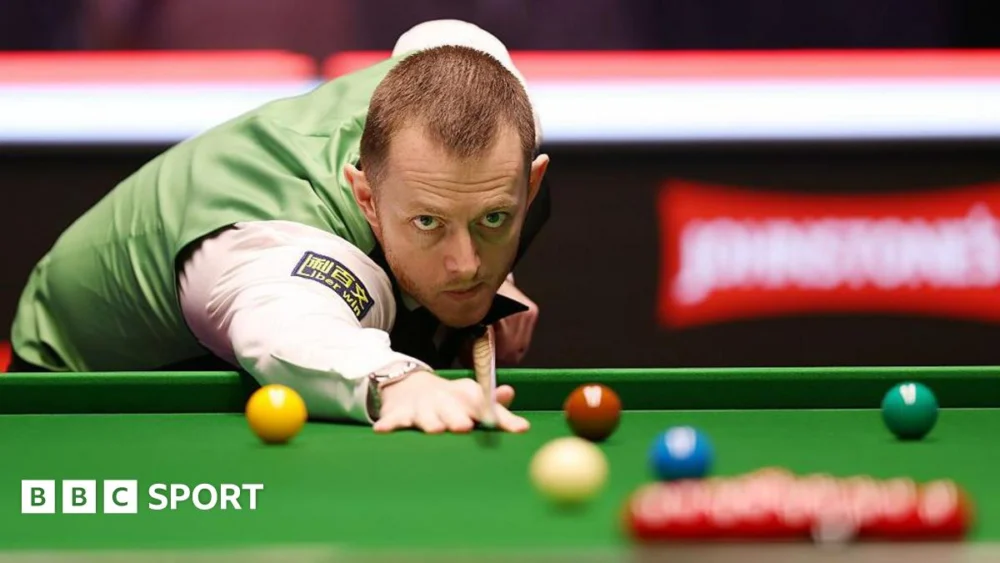
The opening rounds of the prestigious 2026 Masters snooker tournament have delivered compelling narratives and decisive outcomes, most notably with Mark Allen’s remarkable 6-2 triumph over Mark Williams despite a significant pre-match health impediment, and Zhao Xintong’s commanding 6-2 dispatch of Gary Wilson, marking his inaugural victory at Alexandra Palace. These initial encounters underscore the intense competitive landscape of one of snooker’s most coveted Triple Crown events, setting a high bar for the remainder of the competition.
The Masters: A Pinnacle of Professional Snooker
The Masters, a cornerstone event in the professional snooker calendar, stands as one of the sport’s three Triple Crown tournaments, alongside the World Championship and the UK Championship. Held annually at Alexandra Palace in London, it is an invitational event featuring only the top 16 players in the world rankings, guaranteeing a concentration of elite talent and high-stakes drama from the outset. Its history is rich with legendary performances and iconic moments, making victory at the Masters a career-defining achievement for any player. The 2026 edition has already begun to carve its own distinct chapter, showcasing a blend of seasoned veterans and formidable emerging talents vying for supremacy.
Allen’s Resilient Masterclass Against a Struggling Williams
The highly anticipated clash between Northern Ireland’s Mark Allen, a former Masters champion from 2018, and Welsh legend Mark Williams, a three-time World Champion and former Masters victor himself, unfolded with an unexpected twist. Allen, aged 39, revealed post-match that his preparations had been severely compromised by a bout of food poisoning, confining him to bed for the week leading up to the tournament. This context elevates his performance from merely impressive to truly extraordinary, demonstrating a remarkable display of mental fortitude and technical resilience under duress.
The early exchanges hinted at a closely contested battle. Allen initiated proceedings with a fluent break of 67 to secure the opening frame, signaling his intent despite his physical limitations. However, Williams, at 50 years old, momentarily stemmed the tide, leveraging his vast experience to claim the subsequent two frames, establishing a 2-1 advantage. This period offered a glimpse of the tactical acumen that has defined Williams’ illustrious career, as he capitalized on Allen’s slight errors to maintain a precarious lead.
The turning point arrived swiftly. Allen responded decisively in the fourth frame, crafting a break of 54 to restore parity at 2-2 as the players headed into the mid-session interval. This break was not just a statistical equalizer; it was a psychological reset. Emerging from the interval, Allen elevated his game to an exceptional standard, exhibiting a sustained period of high-level break-building that effectively dismantled Williams’ challenge. He orchestrated a sequence of five consecutive frames, punctuated by magnificent breaks of 60, a century break of 125, and a further 70. This relentless scoring surge not only demonstrated Allen’s superior cue ball control and potting prowess but also highlighted his ability to maintain focus and execute under immense pressure, particularly given his disclosed illness. His declaration, "I felt comfortable, which is weird… I wouldn’t have had much left if it had got much closer," speaks volumes about the fine margins at this level and his capacity to perform through adversity.
Williams’ Disappointing Outing and the Weight of Expectation
For Mark Williams, the encounter proved to be a source of profound frustration. His performance statistics painted a stark picture of a player struggling to find his rhythm. He failed to register a single break of 50 or more throughout the match, a rare occurrence for a player of his caliber renowned for his heavy scoring. Furthermore, his pot success rate of 71% is notably below the elite standard required in a Triple Crown event, indicating a lack of precision that proved costly against a player like Allen. Williams’ candid self-assessment, "I was pretty poor. It can happen and will happen more. I tried, even though it didn’t look like it," reflects the honest self-appraisal characteristic of a veteran competitor. His acknowledgment of having "made it easy" for his opponent underscores the tactical and technical lapses that permeated his game. This outcome raises questions about the sustained demands on players of Williams’ generation, often referred to as the ‘Class of ’92,’ who continue to compete at the highest level against an ever-younger and increasingly aggressive field. While their experience remains invaluable, the relentless consistency required in modern snooker can at times expose even the most decorated champions.
A Shifting Landscape: Early Exits of Former Champions
The 2026 Masters has already witnessed a notable trend of established former champions making early exits. The departures of Shaun Murphy and Mark Selby on the opening Sunday, at the hands of Wu Yize and Xiao Guodong respectively, preceded Williams’ defeat. This pattern suggests a potential shift in the competitive landscape, where emerging talents and players outside the traditional elite are increasingly capable of challenging and overcoming the sport’s most decorated figures. This trend injects an unpredictable element into the tournament, fostering an environment where no result can be taken for granted and where new narratives are constantly being forged. It reflects the global expansion and increasing depth of talent within professional snooker, moving beyond a concentrated pool of perennial winners.
Zhao Xintong’s Clinical Ascent
In the evening session, reigning World Champion Zhao Xintong delivered a commanding performance, securing a 6-2 victory over England’s Gary Wilson. Zhao, who in May became the first Asian player to clinch the World Championship title after a grueling qualification and main draw campaign, continued to demonstrate why he is considered one of the sport’s most exciting talents. This match marked a significant milestone for Zhao, as it was his first career win at Alexandra Palace, having previously lost in the first round of his only other Masters appearance in 2022 against John Higgins.
The match began with Wilson, eager to secure his maiden Masters victory after previous first-round exits in 2021 and 2024, taking the opening frame with a break of 76. This initial success suggested a potential challenge to Zhao’s authority. However, Zhao quickly asserted his dominance. Capitalizing ruthlessly on Wilson’s loose safety play and minor errors, Zhao launched a decisive four-frame winning streak. This period showcased his exceptional scoring power, featuring breaks of 50, 51, 54, and 72, during which Wilson managed to accumulate a mere 10 points. The clinical efficiency of Zhao during this phase was a testament to his focused aggression and precision.
Wilson displayed commendable resilience to claim the sixth frame, narrowing the deficit to 4-2. However, the momentum remained firmly with Zhao. In a pivotal seventh frame, Wilson squandered a 51-0 advantage, allowing Zhao back to the table, a mistake the World Champion promptly punished. Zhao then sealed his 6-2 victory in the eighth frame with his fifth half-century break of the match, a 67. The recurrence of the 6-2 scoreline across all four completed matches to date is a notable statistical anomaly, perhaps indicative of either dominant individual performances or a prevailing difficulty for trailing players to mount significant comebacks in this high-pressure environment.
The Expanding Influence of Chinese Snooker
Zhao Xintong’s victory not only propelled him into the quarter-finals but also further solidified the growing influence of Chinese players within professional snooker. His triumph meant he became the third Chinese player to reach this year’s Masters quarter-finals, a remarkable representation at an elite invitational event. This surge of talent from China, exemplified by Zhao’s World Championship title, underscores the effectiveness of development programs and the increasing global appeal of snooker. Zhao’s post-match comments, "I enjoyed the night. This is my second time at Alexandra Palace so I really enjoyed it… Hopefully in the final we have two Chinese players. Tonight I could see a lot of fans supporting me so I feel very confident and I didn’t want to lose. This is my first win at Alexandra Palace," highlight not only his personal ambition but also the collective aspirations of Chinese snooker to dominate the sport’s highest echelons.
Strategic Analysis: Quarter-Final Prospects and Pathways
The victories by Allen and Zhao set up intriguing quarter-final clashes, each carrying significant implications for the tournament’s trajectory. Mark Allen now awaits the winner of the highly anticipated last-16 tie between world number one Judd Trump and China’s Ding Junhui. Should Allen face Trump, it would pit two of the game’s most explosive break-builders against each other, promising a high-scoring spectacle. A match against Ding, another seasoned Masters champion, would present a more tactical challenge, requiring meticulous safety play and strategic frame control. Allen’s cautious optimism, "This is my 11th quarter-final [at the Masters] but I’ve only won it once so I have to sort that out – this is as good a week as any to do that," reflects his awareness of the significant hurdle that the quarter-final stage has historically represented for him.
Zhao Xintong, meanwhile, is slated to face either four-time World Champion John Higgins or two-time World Championship runner-up Barry Hawkins. A clash with Higgins would be a fascinating generational battle, pitting Zhao’s youthful aggression against Higgins’ unparalleled tactical genius and experience. A match against Hawkins, known for his gritty temperament and consistent break-building, would demand sustained precision and patience from Zhao. These potential matchups highlight the depth of talent remaining in the tournament and the strategic adaptations each player must undertake to advance. The prospect of an all-Chinese final, as voiced by Zhao, remains a compelling possibility, reflecting the sport’s evolving demographics.
The Road Ahead: Tournament Trajectories and Player Ambitions
As the 2026 Masters progresses, the narratives established in these opening rounds will continue to unfold. Mark Allen’s ability to perform at an elite level despite illness is a testament to his current form and mental strength, positioning him as a serious contender. His challenge now is to translate this early momentum into sustained success beyond the quarter-final stage, a historical bottleneck for him at this event. Zhao Xintong, having secured his maiden Masters victory, has demonstrably gained confidence and appears poised to make a deep run, potentially adding a Masters title to his World Championship crown. The early exits of several former champions suggest an openness in the draw, creating opportunities for both established stars and rising talents to leave their indelible mark on this prestigious tournament. The coming days at Alexandra Palace promise further high-octane snooker as the remaining contenders battle for the coveted Masters title.




 Aura Kasih
 Ridwan Kamil


 Safa Marwah