Aura Kasih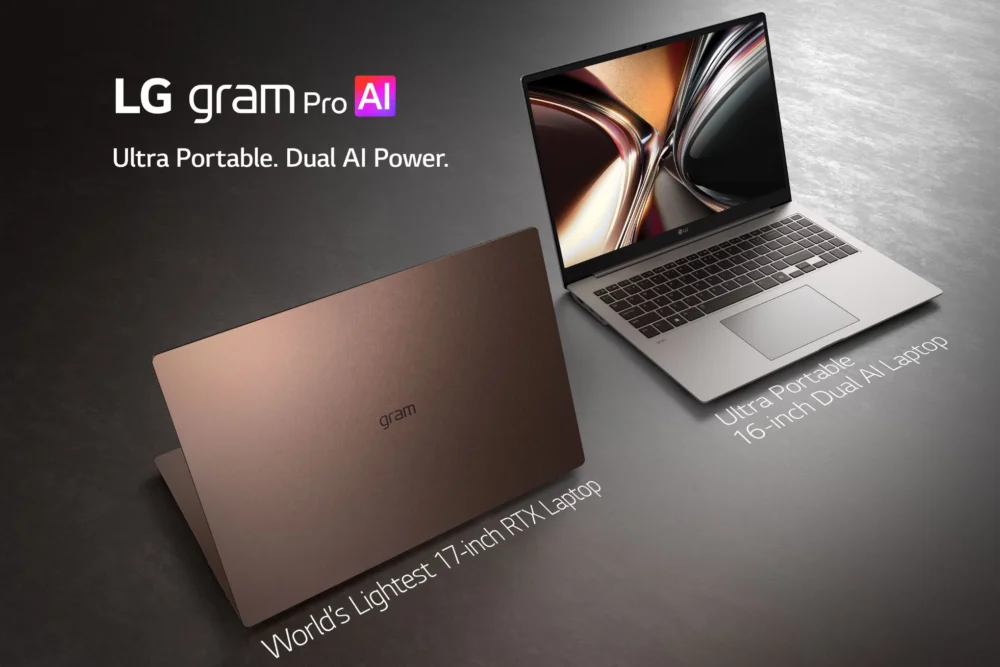
LG Electronics is poised to redefine the premium ultrabook market with the upcoming unveiling of its 2026 Gram Pro laptop lineup at CES, prominently featuring a 17-inch model that LG boldly claims will be the world’s lightest notebook of its screen size equipped with an NVIDIA RTX GPU. This significant advancement is made possible by LG’s proprietary "Aerominum" material, a novel alloy engineered to dramatically reduce weight without compromising structural integrity or durability, ushering in a new era of uncompromised portability for high-performance computing.
The forthcoming LG Gram Pro 17 (model 17Z90UR) is set to captivate consumers and industry observers alike with its ambitious specifications. The device will sport a vibrant 17-inch display boasting a resolution of 2,560 x 1600 pixels, offering a sharp and expansive canvas for both productivity and entertainment. Crucially, it integrates an NVIDIA RTX 5050 laptop GPU, a component that typically signals a substantial increase in a laptop’s physical footprint and weight. However, LG’s innovative approach with Aerominum appears to counteract this trend, positioning the Gram Pro 17 as a powerful yet remarkably portable option for professionals and creatives who demand robust graphical capabilities on the go. While LG touts "ample performance for graphics-intensive tasks, content creation, and gaming," it is important to contextualize these claims. The RTX 5050, equipped with 8GB of VRAM, will undoubtedly offer a significant leap over integrated graphics, enabling smoother operation in demanding applications and entry-level to mid-range gaming scenarios. However, it is unlikely to be a top-tier gaming machine capable of maxing out the latest AAA titles at high frame rates. Instead, its strength lies in providing a balanced performance profile for users who require accelerated rendering, video editing, or the ability to engage in casual gaming sessions without the burden of a heavy workstation.
Complementing the 17-inch model is the LG Gram Pro 16 (model 16Z90U). While specific weight figures for this device have not yet been disclosed, LG has also positioned it as a category leader, asserting it will be "the lightest 16-inch laptop in its class to feature both on-device and cloud-based AI." This proclamation underscores a broader industry trend towards integrating advanced artificial intelligence capabilities directly into hardware, promising enhanced responsiveness, personalized user experiences, and more efficient task management. The Gram Pro 16 will feature a stunning 2,880 x 1,800 OLED display, renowned for its exceptional color accuracy, deep blacks, and high contrast ratios, making it an ideal choice for visual professionals. Furthermore, it will be powered by Intel’s latest Core Ultra processors, which are specifically designed to optimize AI workloads and deliver superior power efficiency. The inclusion of both on-device and cloud-based AI capabilities suggests a hybrid approach, leveraging the immediacy of local processing for tasks like real-time translation or predictive text, while utilizing cloud resources for more complex computations or data-intensive AI models.
The introduction of the Aerominum material marks a significant engineering achievement for LG. Typically, laptops designed for high-performance graphics, especially those featuring discrete GPUs, tend to be thicker and heavier to accommodate robust cooling solutions and substantial battery life. The development of a new alloy that is both lighter and stronger is a testament to LG’s commitment to pushing the boundaries of material science in consumer electronics. This material’s ability to enhance strength and scratch resistance further contributes to the overall premium feel and durability of the Gram Pro line. The implications of such a material are far-reaching, potentially influencing the design of future laptops across various segments, from ultraportables to more performance-oriented machines. By reducing the weight of a 17-inch laptop with an RTX GPU, LG is directly addressing a key pain point for mobile professionals who need a large screen for multitasking and detailed work but are constrained by the portability limitations of traditional high-performance laptops.
The competitive landscape for premium ultrabooks is fiercely contested, with manufacturers constantly vying for dominance through innovation in design, performance, and battery life. LG’s Gram series has long been recognized for its exceptional lightness, a defining characteristic that has resonated with users who prioritize mobility. However, the integration of powerful discrete graphics like NVIDIA’s RTX series has historically presented a trade-off, often necessitating a compromise on weight or battery capacity. The Gram Pro line appears to be challenging this paradigm. By achieving a new benchmark in the "lightest 17-inch RTX laptop" category, LG is not only appealing to its existing customer base but also potentially attracting users from other segments who might have previously overlooked the Gram series due to perceived limitations in graphical power.

The strategic timing of this announcement, just before CES, suggests that LG intends to make a significant statement at the global technology exhibition. While pricing and precise release dates remain undisclosed, it is reasonable to anticipate that these details will be a focal point of LG’s CES presentation. The fact that the Gram Pro 17 will be exclusive to the US market at launch indicates a targeted marketing strategy, likely aimed at capitalizing on the strong demand for high-performance laptops in that region. The broader implications of the Gram Pro series extend beyond mere product launches. They signal a continued emphasis on user-centric design, where advanced technology is seamlessly integrated into devices that are a pleasure to use and carry. The convergence of powerful graphics, advanced AI, and ultra-lightweight construction points towards a future where the distinction between productivity laptops and gaming or content creation machines becomes increasingly blurred.
The inclusion of NVIDIA’s RTX 5050 GPU in the Gram Pro 17, while not positioned as a hardcore gaming component, is a crucial differentiator. It signifies LG’s intent to cater to a wider audience that requires more than just basic computing power. This could include graphic designers, video editors, architects, and engineers who benefit from GPU acceleration for their workflows. The 8GB of VRAM, while modest by high-end gaming standards, is generally sufficient for many professional applications and moderate gaming. The success of this balance will depend on LG’s thermal management and software optimization, ensuring that the GPU can perform consistently without overheating or throttling performance in sustained workloads.
The Gram Pro 16’s emphasis on AI, particularly with the "lightest in its class" claim for AI-enabled laptops, highlights a critical evolution in personal computing. AI is no longer a futuristic concept; it is rapidly becoming an integral part of everyday computing, enhancing efficiency, personalization, and user experience. Intel’s Core Ultra processors, with their dedicated AI acceleration capabilities, are at the forefront of this shift. By integrating these processors and offering both on-device and cloud-based AI, LG is positioning the Gram Pro 16 as a forward-thinking device ready for the demands of the AI-driven future. This could translate to faster application loading times, more intelligent multitasking, proactive system optimizations, and enhanced creative tools.
The long-term impact of LG’s Aerominum material could be substantial. If successful and scalable, it could inspire other manufacturers to explore similar lightweight yet robust material solutions. This could lead to a general trend of lighter, more durable laptops across the board, benefiting consumers by reducing the physical burden of carrying their devices. Furthermore, advancements in material science often have ripple effects, potentially influencing other industries that rely on lightweight and durable materials.
As CES approaches, the industry will be keenly watching LG’s full reveal of the Gram Pro lineup. The promise of the "world’s lightest 17-inch RTX laptop" is a bold statement, and its execution will be crucial. The combination of cutting-edge materials, powerful components, and a refined user experience is LG’s strategy to capture a significant share of the premium laptop market. The success of these new models will not only depend on their technical specifications and innovative materials but also on LG’s ability to articulate their value proposition clearly to a discerning audience seeking the perfect blend of portability, performance, and advanced features. The 2026 Gram Pro series represents a significant stride forward, suggesting that the era of compromise between portability and power is rapidly drawing to a close.




 Ridwan Kamil
 Safa Marwah
 Lisa Mariana