Lisa Mariana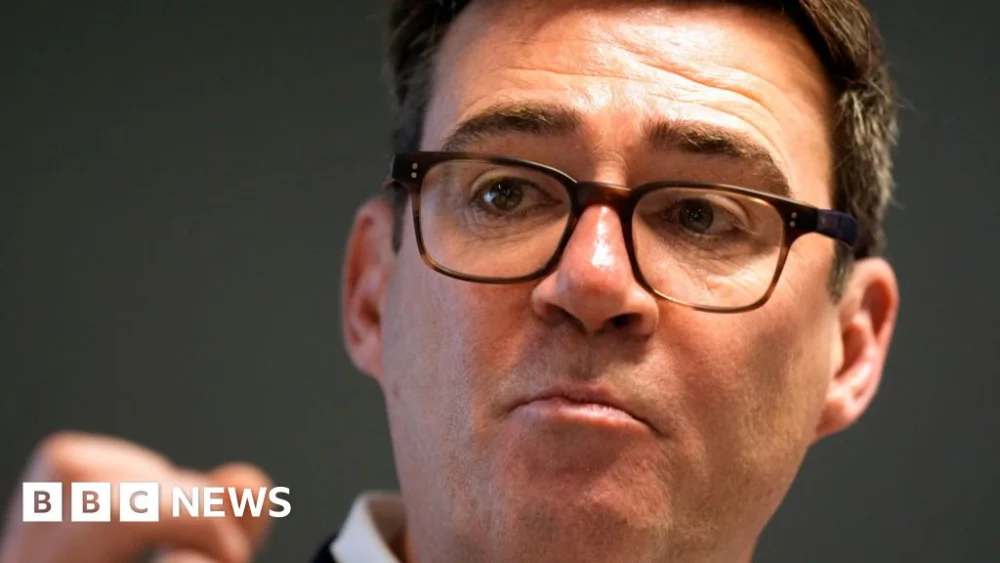
A pivotal moment in the Labour Party’s current trajectory is fast approaching as Greater Manchester Mayor Andy Burnham faces a critical Saturday deadline to declare his intention to contest the upcoming Gorton and Denton parliamentary by-election, a move widely interpreted as a precursor to a potential challenge for the party’s top leadership position. This high-stakes decision point has laid bare deep-seated tensions within the party, pitting the strategic imperative of central control against the ambitions of popular regional figures and the desires of a divided backbench. The outcome of Burnham’s application, and the National Executive Committee’s (NEC) subsequent ruling, is poised to significantly influence the immediate future of Labour’s internal dynamics and Prime Minister Sir Keir Starmer’s authority.
The political landscape surrounding Andy Burnham’s potential return to Westminster is complex, fraught with both opportunity and significant risk for all parties involved. For Burnham, a former cabinet minister and two-time contender for the Labour leadership, a parliamentary seat is a constitutional prerequisite for any future leadership bid. His tenure as Greater Manchester Mayor has cultivated a strong public profile, particularly in the North of England, where he is often seen as a champion of regional interests and a vocal advocate for devolution. This popularity, however, presents a distinct challenge to the incumbent party leadership, creating a dynamic where his ambition to serve at the national level could destabilise existing power structures.
The mechanism for Burnham’s potential entry into the by-election is not straightforward. As a directly elected mayor, his candidacy requires explicit permission from the Labour Party’s National Executive Committee, the party’s principal administrative and governing body. This requirement introduces a significant political hurdle, as various factions within the NEC are reportedly poised to either facilitate or obstruct his path. Sources close to the party indicate that allies of Prime Minister Sir Keir Starmer on the committee are likely to advocate for blocking Burnham, viewing his potential return as an unwelcome distraction and a direct threat to Starmer’s leadership stability. Such a move, however, risks alienating a significant segment of Labour MPs and the party’s grassroots, many of whom hold Burnham in high regard.
The rationale for blocking Burnham is multifaceted. A primary concern cited by several Labour sources revolves around the financial implications of his resignation from the mayoral office. Should Burnham successfully secure the Gorton and Denton seat, he would be obliged to vacate his mayoral position, thereby triggering a costly by-election for the Greater Manchester mayoralty. The previous mayoral election incurred an expense of approximately £4.7 million for the Greater Manchester Combined Authority, a sum that would ultimately be borne by taxpayers. Opponents within the party argue that instigating such an expense for the sole purpose of enabling an individual’s leadership ambitions would be politically imprudent and fiscally irresponsible, particularly given the current economic climate. This argument provides a convenient and seemingly justifiable public relations shield for a decision rooted in deeper political considerations.
Beyond financial concerns, the NEC possesses other procedural levers that could be deployed to impede Burnham’s candidacy. One prominent option is the imposition of an all-women shortlist (AWS) for the Gorton and Denton by-election. The Labour Party has a standing commitment to increasing female representation in Parliament, and the implementation of an AWS for candidate selection is a well-established mechanism to achieve this goal. While ostensibly a measure to promote gender equality, strategically deploying an AWS in this specific context would effectively disqualify male candidates, including Burnham, from contention. This tactic, if employed, would undoubtedly spark accusations of cynical manipulation and anti-democratic practices, but it remains a potent tool within the NEC’s purview to shape candidate outcomes.
The NEC’s decision-making process itself is concentrated within a select group. The final determination regarding Burnham’s application will not be made by the full committee, but rather by its 10 officers. This influential group includes key figures such as Prime Minister Sir Keir Starmer, Home Secretary Shabana Mahmood, Deputy Party Leader Lucy Powell, and Party Chair Ellie Reeves, alongside representatives from major trade unions like the GMB and USDAW. The concentration of power within this smaller body means that strategic alliances and internal lobbying efforts will play a crucial role in the ultimate verdict, which is expected to be communicated to Burnham on Sunday, just hours before the final midnight deadline for all Labour candidate applications for the by-election.
The potential for a leadership challenge to Sir Keir Starmer has been a persistent undercurrent within the Labour Party, and the Gorton and Denton by-election has brought these simmering tensions to the forefront. Speculation has intensified regarding Starmer’s position, particularly in anticipation of the upcoming May elections for the Welsh Parliament, Scottish Parliament, and numerous local councils across England. These elections are widely expected to present a challenging landscape for Labour, and a poor performance could significantly weaken Starmer’s authority, potentially emboldening internal critics and paving the way for a formal leadership contest. In such a scenario, an MP like Andy Burnham, with his significant public profile and a history of leadership bids, would be a natural frontrunner to challenge the incumbent.
Adding another layer of complexity to the electoral calendar, nearly 30 council elections scheduled for this year have been postponed due to a major reorganisation of local government. This delay, while attributed to administrative necessity, has drawn criticism from opposition MPs who argue it could disenfranchise millions of voters. While not directly linked to the Gorton and Denton by-election, this broader context of electoral uncertainty and potential voter disillusionment could influence the political mood, feeding into narratives about democratic integrity and government accountability, which might indirectly affect Labour’s standing.
The internal divisions within the Labour Party regarding Burnham’s potential return are stark and publicly articulated. Deputy Labour Leader Lucy Powell, herself an NEC member, offered a nuanced but seemingly supportive stance, telling an audience in London that she desired "the very best candidate, the person who can most help Labour win in that by-election" to be selected. She lauded Burnham as "an incredibly popular politician" but stressed that he would have to "make up his own mind." However, Powell also underscored the importance of party unity, stating that Labour members should "get behind Keir Starmer" and expressing a desire to avoid the by-election descending into "in-fighting and talking about ourselves." This duality reflects the tightrope senior party figures must walk: acknowledging Burnham’s popularity while upholding the current leadership.
Echoing a more direct endorsement, London Mayor Sir Sadiq Khan, speaking at the same event, asserted: "If Andy Burnham wants to be a member of Parliament, Andy Burnham should be allowed to be a member of Parliament." Khan’s statement, rooted in a philosophy of harnessing "all the talent" for the party’s benefit, highlights a perspective that prioritises collective strength over potential internal rivalries. Such public statements from prominent party figures serve to legitimise Burnham’s aspirations and add pressure on the NEC to permit his candidacy.
Further bolstering Burnham’s position, former Deputy Prime Minister Angela Rayner is understood to be preparing to address a Labour North West regional conference, where she is expected to directly advocate against the NEC blocking Burnham’s application. Rayner, despite her resignation from government last year, retains significant influence and strong support among a segment of backbench MPs and party members. Her intervention would represent a substantial challenge to the central party apparatus and could galvanise support for Burnham, making a decision to block him even more politically contentious.
However, dissenting voices within the parliamentary Labour Party articulate concerns about the risks associated with Burnham’s move. Graham Stringer, the MP for Blackley and Middleton South, expressed apprehension, stating, "As a sitting Manchester MP, I don’t want to leave the back door open to Reform to have a go at getting the mayoralty of Greater Manchester." He characterised by-elections as "a nightmare for any candidates standing on behalf of a sitting government" and advised against Burnham taking "that risk." Stringer’s perspective underscores the potential for unforeseen consequences in by-elections, where protest votes and national sentiment can override local loyalties, even in traditionally safe seats. The prospect of Reform UK, which came second in the last Gorton and Denton election, potentially gaining a foothold in the Greater Manchester mayoralty is a tangible concern for some.
The Gorton and Denton constituency itself has historically been a stronghold for Labour, secured at the last general election with a substantial majority of 18,000 votes. Reform UK placed second with 5,000 votes, narrowly ahead of the Green Party. While seemingly an unassailable Labour seat, by-elections possess a unique dynamic. Voter turnout is typically lower, and the electorate often uses these contests as an opportunity to register dissatisfaction with the incumbent government, or in this case, the national opposition. Even a reduced Labour majority, let alone a shock result, could be politically damaging, reinforcing Stringer’s warnings about the inherent risks.
Perhaps the most vociferous criticism of the potential move to block Burnham has come from the left of the party. Labour MP and former Shadow Chancellor John McDonnell launched an angry series of posts on social media, asserting that blocking Burnham would "cause immense damage both to Keir and therefore the party." McDonnell’s critique extended beyond the immediate decision, lambasting the Prime Minister for becoming "dependent" on "a small group of relatively inexperienced advisers" who are "cut off from the emotions and beliefs of our rank and file party supporters." He declared his intent to "divide Keir from these incompetent, self-interested control freaks because they risk bringing down the party," signaling a deep-seated frustration with the party’s central command. Cat Smith, MP for Lancaster and Wyre, echoed this sentiment, stating, "I think it would be disappointing if No 10 were to block strong candidates from being able to be considered by the party members in Gorton and Denton." These interventions highlight a significant schism within the Labour ranks, where concerns about democratic process and internal accountability clash with the leadership’s perceived desire for control.
The implications of the NEC’s decision are far-reaching. If Burnham is blocked, it could solidify Starmer’s authority in the short term, but at the cost of alienating popular figures and a segment of the party base. Such a move might also fuel narratives of a leader unwilling to tolerate potential rivals, potentially exacerbating internal dissent. Conversely, if Burnham is permitted to stand and subsequently wins the by-election, he immediately becomes a credible, if not formidable, figure on the national stage, positioned to challenge Starmer should the party’s performance in the May elections falter. This scenario would introduce a period of heightened internal competition and strategic maneuvering within Labour, with significant ramifications for its public image and its trajectory towards the next general election.
The ongoing saga surrounding Andy Burnham’s parliamentary aspirations serves as a microcosm of the broader challenges facing the Labour Party. It encapsulates the tension between central control and regional autonomy, the delicate balance between party unity and individual ambition, and the strategic complexities of navigating leadership succession. As the Saturday deadline approaches, all eyes remain on Greater Manchester, where a decision with profound national implications for the Labour Party is poised to unfold.



 Ayu Aulia
 Safa Marwah
 Aura Kasih