Aura Kasih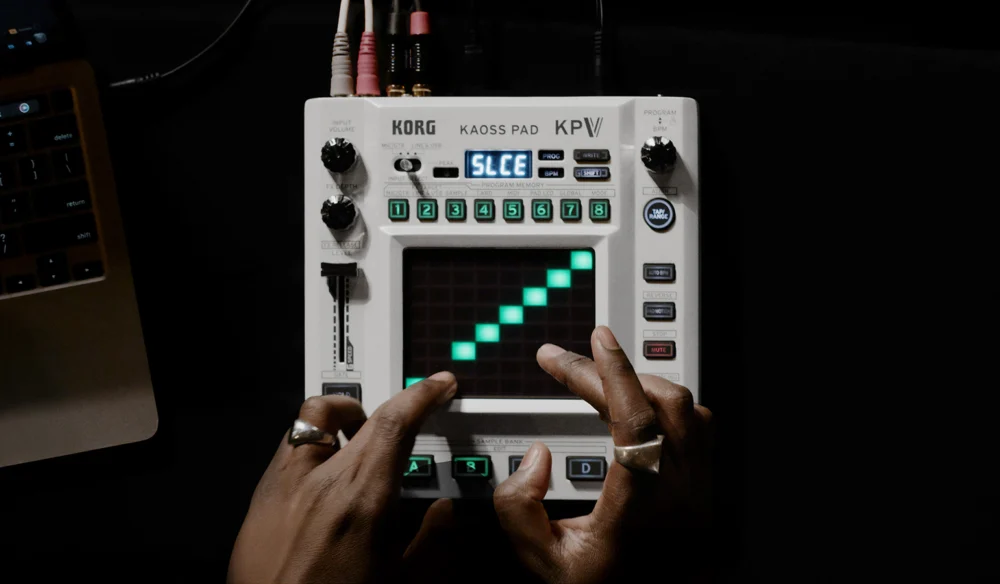
After a thirteen-year hiatus for its flagship touch-sensitive effects unit, Korg has unveiled the Kaoss Pad V, a significant evolutionary leap for its iconic line of performance-oriented sonic manipulators. This latest iteration eschews radical reinvention in favor of a refined and expanded application of the core Kaoss Pad philosophy: intuitive, real-time control of audio effects and sampling through a dynamic X/Y touchpad.
The Kaoss Pad series has long been a staple in the arsenal of DJs, electronic musicians, and experimental sound designers, celebrated for its immediate and expressive interface. Since the release of the KP3+ in 2013, the market has seen a proliferation of digital signal processing tools, yet the fundamental appeal of the Kaoss Pad—its ability to translate physical gesture into sonic texture—remained largely untouched in Korg’s mainline offering. The Kaoss Pad V arrives not as a departure, but as a thoughtful augmentation, building upon the established strengths of its predecessors while introducing groundbreaking capabilities that promise to unlock new avenues of creative expression.
At the heart of the Kaoss Pad V’s innovation lies its sophisticated multi-touch capabilities. This new functionality allows the device to simultaneously track and respond to two distinct points of contact on its iconic X/Y pad. This dual-finger control opens up a vast landscape of sonic possibilities, enabling users to manipulate two sets of parameters independently or even engage two entirely separate effects concurrently. Imagine modulating the cutoff frequency of a filter with one finger while simultaneously adjusting the delay feedback with another, or layering distinct textural effects in a fluid, interwoven manner. This level of granular control was previously unattainable on the Kaoss Pad platform, significantly enhancing its potential for intricate sound design and dynamic live performance.
Further expanding the Kaoss Pad V’s sonic palette is the inclusion of a dedicated voice effects engine. This powerful new module is engineered to facilitate advanced vocoding and harmonizing, transforming vocal input into rich, synthesized textures or intricate choral arrangements. Perhaps one of the most exciting developments within this engine is its ability to convert vocal input into MIDI data. This groundbreaking feature empowers users to control external synthesizers, drum machines, or other MIDI-compatible hardware using their voice. The implications for creative workflow are profound: imagine beatboxing intricate drum patterns that trigger a sampler, or humming melodic lines that drive a complex synthesizer sequence. This integration bridges the gap between vocal performance and instrumental control, offering a unique and highly expressive method of musical interaction.
The sampling and looping functionalities, long a cornerstone of the Kaoss Pad experience, have also undergone substantial enhancements. The Kaoss Pad V now supports recording loops of up to eight bars, providing a more expansive canvas for sonic construction. The ability to overdub layers of audio onto existing loops further enriches the creative process, allowing for the development of complex rhythmic and melodic structures in real-time. Moreover, the introduction of advanced editing capabilities, including the ability to chop and rearrange recorded loops, grants users unprecedented control over their sampled material. This transforms the Kaoss Pad V from a simple effects processor into a formidable performance looper and a compact production tool.
The utility of these enhanced looping features is significantly amplified by the addition of a balanced input. This professional-grade connectivity ensures cleaner and more accurate audio capture from a wider range of sources, including microphones, synthesizers, and other instruments. While the device retains its unbalanced RCA inputs and outputs, which remain ideal for traditional DJ setups, the inclusion of a balanced input signals Korg’s acknowledgment of the Kaoss Pad V’s expanding role in studio environments and more sophisticated live performance rigs. This move towards more robust audio interfacing underscores a commitment to catering to a broader spectrum of audio professionals.
However, the evolution of the Kaoss Pad V is not without its considerations regarding market positioning and value. The original KP3+, released in 2013, carried a price tag of $349.99. When adjusted for inflation, this figure would equate to approximately $493 in 2026 currency, reflecting the natural increase in manufacturing and technological costs over the past decade. The Kaoss Pad V, however, is positioned at a significantly higher price point, with pre-orders listing at $649.99. This substantial increase in cost suggests that the advanced multi-touch technology, the dedicated voice effects engine, and the overall refinement of the unit represent a considerable investment from Korg. This pricing strategy places the Kaoss Pad V in a more premium category, likely targeting serious hobbyists, professional musicians, and sound designers who require its advanced capabilities and are willing to invest in a cutting-edge performance instrument.
The Kaoss Pad V’s lineage can be traced back to Korg’s innovative spirit in developing user-friendly yet powerful music production tools. The original Kaoss Pad, launched in the early 2000s, revolutionized the way musicians interacted with effects. Its simple yet profound interface, where a finger’s movement across a touchpad could control a multitude of parameters, offered an immediate and intuitive alternative to traditional knob-and-fader-based control. This accessibility, coupled with a vast array of sonic possibilities, quickly endeared it to a generation of electronic musicians. Subsequent iterations, such as the Kaoss Pad 3 and the KP3+, built upon this foundation, adding sampling, looping, and an ever-expanding library of effects. Each iteration represented a step forward, but the core concept remained consistent: a tactile, performance-driven approach to sound manipulation.

The thirteen-year gap between the KP3+ and the Kaoss Pad V is a testament to the complexity and innovation required to significantly advance the technology. Developing a reliable and musically responsive multi-touch interface capable of tracking two fingers simultaneously for nuanced control over complex digital signal processing chains is no small feat. This extended development cycle likely involved extensive research and development in areas such as capacitive sensing, real-time audio processing, and user interface design to ensure that the new capabilities were not only technically impressive but also musically intuitive and inspiring.
The implications of the Kaoss Pad V’s voice-to-MIDI functionality are particularly far-reaching. For vocalists and beatboxers, it offers a direct and expressive way to interact with electronic music hardware, moving beyond traditional microphone techniques. This could foster new genres and performance styles where the human voice becomes an integral controller of synthesized soundscapes. In educational settings, it could serve as an innovative tool for teaching music theory and composition, allowing students to experiment with melodic and rhythmic concepts through vocalization and immediate sonic feedback.
Furthermore, the Kaoss Pad V’s robust sampling and looping features, combined with its enhanced input options, position it as a versatile tool for live electronic music performance. Artists can now construct intricate sonic tapestries on the fly, layering beats, melodies, and effects with unparalleled fluidity. The ability to chop and rearrange loops in real-time adds a dynamic element to performances, allowing for spontaneous improvisation and a highly engaging audience experience. For DJs, the Kaoss Pad V can serve as an extension of their existing setup, offering creative ways to manipulate track elements, add live effects, and even generate original musical ideas during a set.
The professional analysis of the Kaoss Pad V suggests a device designed to push the boundaries of interactive music technology. Its multi-touch interface represents a significant evolution in gestural control, moving beyond single-point manipulation to a more complex and nuanced interaction. This approach is aligned with broader trends in human-computer interaction, where intuitive and multi-dimensional interfaces are becoming increasingly prevalent across various technological domains. In the realm of music production and performance, this translates to a more organic and expressive connection between the artist and their sonic creations.
The integration of a dedicated voice effects engine with MIDI conversion capabilities is a strategic move by Korg, addressing a growing interest in vocal synthesis and manipulation within electronic music. This feature has the potential to democratize certain aspects of sound design, allowing individuals without extensive knowledge of synthesis to explore complex vocal textures and control external instruments through the power of their voice. It opens up a new paradigm for vocalists, transforming them into active participants in the creation and control of the electronic soundscape.
From a market perspective, the Kaoss Pad V arrives at a time when the demand for innovative and performance-oriented music gear is strong. Electronic music continues to evolve, with artists constantly seeking new tools to differentiate their sound and enhance their live performances. While the price point may be a barrier for some, the advanced features and unique capabilities of the Kaoss Pad V suggest that it is aimed at a discerning audience willing to invest in cutting-edge technology that offers tangible creative benefits.
Looking ahead, the success of the Kaoss Pad V will likely depend on its adoption by influential artists and its ability to inspire new creative workflows. The development of a robust community around the device, where users share patches, techniques, and creative ideas, will be crucial in solidifying its place in the music technology landscape. Korg’s ongoing support through software updates and potential future hardware revisions will also play a significant role in its long-term impact.
In conclusion, the Korg Kaoss Pad V represents a significant advancement in the realm of tactile effects processing and performance instrumentation. By enhancing its core multi-touch capabilities, integrating a sophisticated voice effects engine with MIDI conversion, and refining its sampling and looping features, Korg has delivered a powerful and versatile tool that honors the legacy of the Kaoss Pad while charting a course for future sonic exploration. Its premium pricing reflects the advanced technology and innovative features it offers, positioning it as a key instrument for musicians and sound designers seeking to expand their creative horizons in the ever-evolving world of electronic music.




 Ayu Aulia
 Ridwan Kamil
 Safa Marwah
 Lisa Mariana