Aura Kasih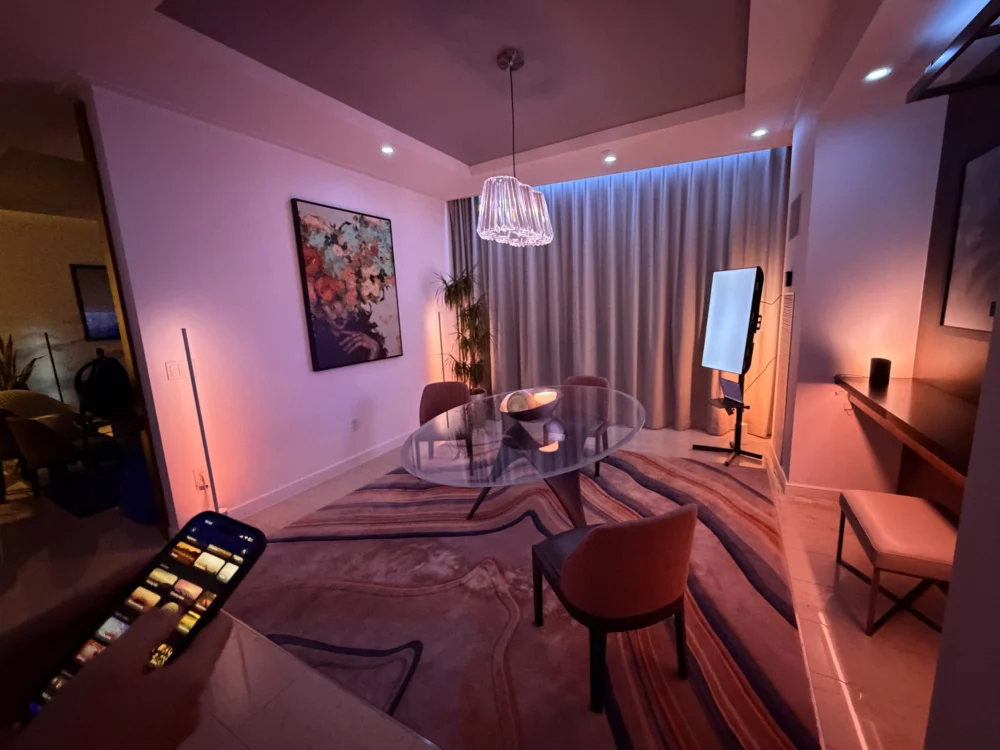
Philips Hue is set to revolutionize smart home lighting with the introduction of SpatialAware, a groundbreaking technology that intelligently maps and utilizes the physical layout of a user’s rooms to deliver more nuanced and impactful lighting scenes. This advancement moves beyond the current limitations of smart bulbs, which often lack an understanding of their placement, leading to diluted or even awkward lighting effects.
For years, the allure of smart, color-changing lights has captivated homeowners. The promise of transforming living spaces with dynamic hues and atmospheric presets offers a tantalizing glimpse into the future of domestic comfort and ambiance. However, the reality often falls short of this idealized vision. While manufacturers have strived to provide a wide array of pre-designed lighting "scenes"—curated collections of colors and effects intended to evoke specific moods or settings—these digital blueprints have historically been applied in a vacuum. The individual bulbs and fixtures, regardless of their physical location within a room, would receive the same instructions, leading to a fragmented and often uninspired visual output. A vibrant sunset scene, for instance, might be rendered with jarring color transitions or an uneven distribution of light, failing to replicate the organic flow and subtle gradations of its natural counterpart.
Philips Hue, a recognized leader in the smart lighting arena, has acknowledged this inherent limitation and is now presenting a sophisticated solution: SpatialAware. This innovative technology promises to bridge the gap between digital scene design and the physical reality of the illuminated space, ensuring that lighting effects are not just applied, but artfully orchestrated.
The Genesis of SpatialAware: Understanding the Environment
At its core, SpatialAware leverages the power of augmented reality (AR) and sophisticated spatial mapping to imbue the Philips Hue system with a contextual understanding of the home environment. The process begins with the user. Through the Philips Hue mobile application, homeowners can initiate a room-scanning procedure. Utilizing the camera and AR capabilities of their smartphone, users can meticulously map out their living spaces. This scan is not merely a superficial overview; it actively identifies the precise location and orientation of each Philips Hue bulb and fixture within the room.
The data captured during this AR scan is then meticulously processed to create a detailed 3D model of the room. This model serves as a foundational "map" for the Hue system, effectively providing it with a spatial awareness that was previously absent. This map is stored within the Hue app, becoming an integral part of the system’s operational intelligence.
Intelligent Illumination: Redefining Scene Application
The true power of SpatialAware is unleashed when users select one of the newly remastered Philips Hue scenes. Instead of broadcasting a uniform set of instructions to all connected lights, the system now consults its learned spatial map. It intelligently interprets the scene’s intended effect and distributes the colors and dynamic elements across the bulbs and fixtures in a manner that is both logical and aesthetically optimized.
Consider the evocative "sunset" scene. With SpatialAware, the system can now differentiate between various light sources within the room. Lamps positioned on one side, perhaps closer to a perceived window, might be programmed to emit warm, golden yellows and soft oranges, mirroring the direct rays of a setting sun. Simultaneously, overhead ceiling lights on the opposite side of the room could be dimmed to deeper, more muted tones of purple and indigo, representing the encroaching twilight. This deliberate spatial distribution creates a far more immersive and believable simulation of a natural phenomenon, transforming a static light show into a dynamic and captivating experience.
Similarly, for a "nightlight" scene, SpatialAware can prevent common misapplications of light. In a traditional scenario, all lights might be activated at a low setting. However, the intelligent mapping allows the system to recognize that overhead ceiling lights are generally not the desired primary source of illumination for a gentle nightlight. The remastered scenes, in conjunction with SpatialAware, can now intelligently disable these fixtures, opting instead for strategically placed accent lights or bedside lamps, thereby achieving a more appropriate and calming ambiance.
A Significant Overhaul: Remastered Scenes for a Smarter Ecosystem
To fully harness the capabilities of SpatialAware, Philips Hue has undertaken a significant effort to remaster approximately half of its existing lighting scene library. This is not a mere software update; it involves a fundamental recoding of each compatible scene. Developers have meticulously adjusted the parameters and color sequencing within these scenes to ensure they can dynamically adapt to the spatial data provided by the new mapping technology. This ensures that the intended artistic vision behind each scene is faithfully translated into the physical space, regardless of the room’s unique configuration.
During a demonstration at a recent industry event, the impact of SpatialAware was vividly illustrated. In a meticulously staged dining room environment, equipped with a variety of Hue ambient lighting products and integrated ceiling fixtures, a direct comparison was drawn between a traditional scene application and its remastered SpatialAware counterpart. The difference was striking. The original scene, while pleasant, exhibited the typical inconsistencies of non-spatialized lighting. Colors appeared somewhat haphazardly distributed, and the overall effect lacked a cohesive flow.
In contrast, the remastered scene, powered by SpatialAware, presented a polished and seamlessly integrated lighting experience. The colors transitioned smoothly, and the illumination felt purposeful, as if designed by a lighting professional. This underscores the core philosophy behind SpatialAware: to execute lighting designs as they were originally conceived by their creators. As George Yianni, CTO and founder of Philips Hue, explained, the technology ensures that scenes are "actually being done the way the lighting designer intended." This emphasis on artistic integrity and intentional design marks a significant step forward in the evolution of smart home lighting.
The Technical Foundation: Hue Bridge Pro and Future Compatibility
The computational power and advanced networking required for SpatialAware are facilitated by the Philips Hue Bridge Pro. This high-end bridge is essential for enabling the sophisticated spatial mapping and intelligent scene distribution. The technology is slated for a Spring 2026 release, signaling a commitment to delivering cutting-edge features to consumers. The requirement for the Hue Bridge Pro suggests that the processing of spatial data and the dynamic adjustment of light output demand a robust and dedicated hardware platform, ensuring reliable performance and seamless integration within the smart home ecosystem.
Implications for the Smart Home Landscape
The introduction of SpatialAware by Philips Hue carries significant implications for the broader smart home industry. It establishes a new benchmark for what consumers can expect from intelligent lighting systems. By moving beyond simple color changes and dimming, and by incorporating a deep understanding of the physical environment, Philips Hue is elevating smart lighting from a novelty to a sophisticated interior design tool.
This technological leap could spur competitors to develop similar spatial awareness capabilities, fostering innovation and driving the evolution of smart home ecosystems towards greater intelligence and user-centric design. The ability to dynamically adapt lighting to the specific architecture and furnishings of a room opens up new possibilities for personalized ambiance, enhanced well-being, and even improved functionality. Imagine lighting that subtly shifts to optimize focus during work hours, transitions to promote relaxation in the evening, or even assists with navigation in low-light conditions, all intelligently orchestrated by a system that truly understands its surroundings.
Furthermore, the emphasis on recreating the "lighting designer’s intent" suggests a future where smart lighting systems are not just about user control, but also about empowering professional design principles within the domestic sphere. This could lead to a greater appreciation for the art and science of lighting design among consumers and a more integrated approach to smart home technology, where lighting becomes a fundamental component of the overall aesthetic and functional experience.
The Future of Home Illumination
SpatialAware represents a pivotal moment in the development of smart home lighting. By imbuing Philips Hue systems with a sophisticated understanding of their physical environment, the technology promises to unlock a new level of immersive, intelligent, and aesthetically compelling lighting experiences. The ability to accurately map rooms and distribute light with such nuance moves beyond the superficial and delves into the realm of truly intelligent and artful illumination. As this technology matures and becomes more widely adopted, it has the potential to fundamentally transform how we interact with light in our homes, making our living spaces more dynamic, responsive, and beautifully lit than ever before. The era of smart lighting that truly "sees" and understands its environment has officially begun.



 Ridwan Kamil
 Safa Marwah
 Lisa Mariana
 Ayu Aulia