
 Lisa Mariana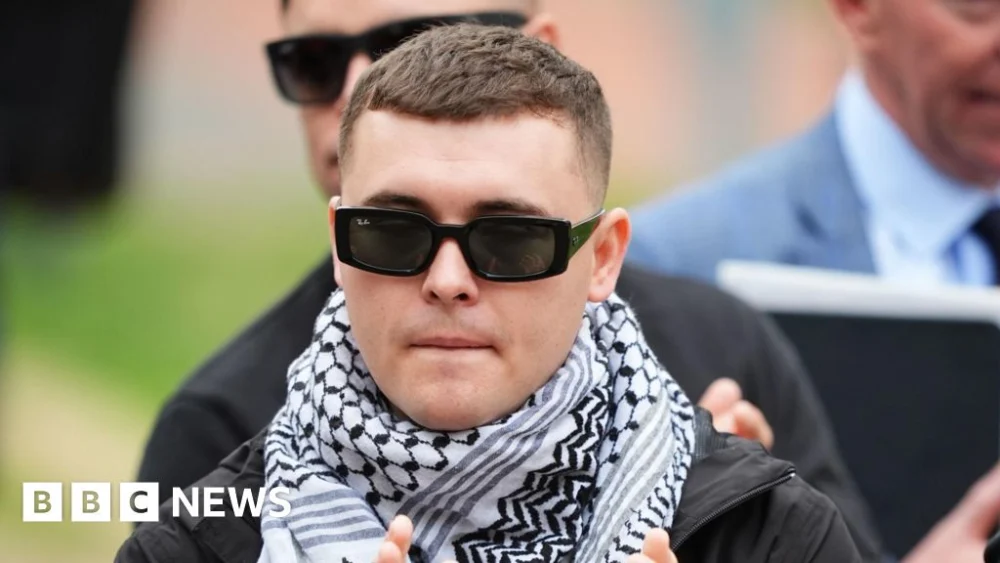
The Royal Courts of Justice in London is the focal point of a significant legal challenge as the United Kingdom government pursues an appeal against the dismissal of terrorism-related charges previously brought against a member of the acclaimed Irish language rap trio, Kneecap. This pivotal hearing scrutinizes the procedural integrity of initial legal actions and carries broader implications for artistic expression and counter-terrorism legislation.
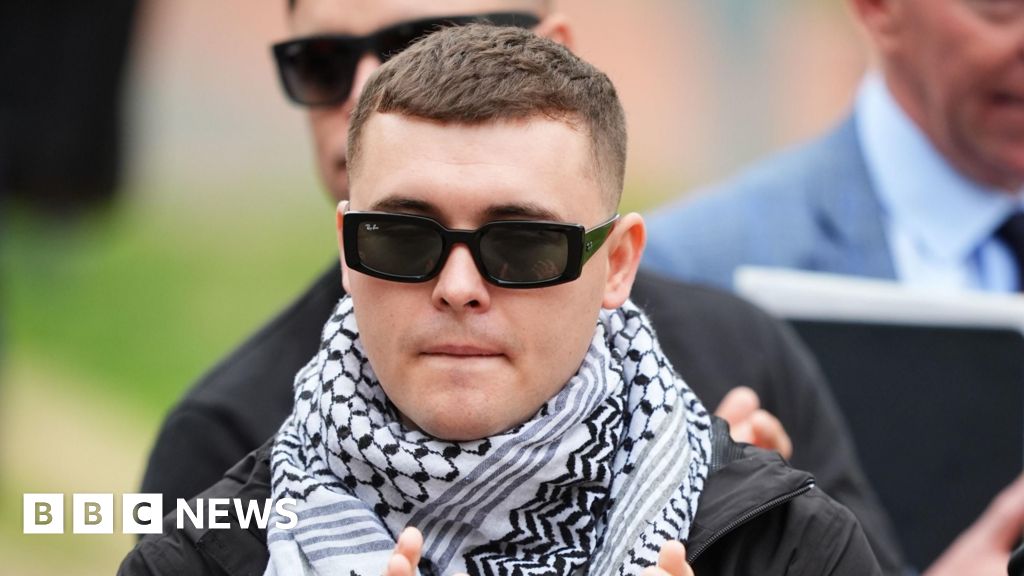
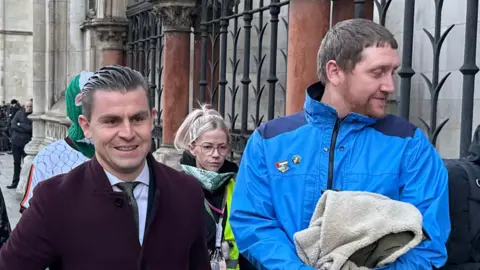
Liam Óg Ó hAnnaidh, known by his stage moniker Mo Chara, is at the heart of proceedings, which saw a considerable gathering of his supporters converge outside the venerable court building. Their presence underscores the cultural and political resonance of the case, transforming a legal dispute into a public demonstration of solidarity. The government’s appeal specifically targets a September 2025 decision that saw the original charges against Ó hAnnaidh dismissed on technical grounds pertaining to the precise manner in which the accusation was formally lodged.
The initial charge, leveled in May, stemmed from an incident in November 2024 at the O2 Forum in Kentish Town, London, where Ó hAnnaidh allegedly displayed a flag associated with Hezbollah, an organization proscribed under UK terrorism legislation. The 28-year-old musician has consistently refuted the charge, categorizing it as politically motivated, a claim that resonates deeply with his fanbase and political allies.
The Genesis of the Controversy: Art, Politics, and Proscription
Kneecap, hailing from West Belfast, has carved a distinctive niche in the contemporary music landscape, known for their provocative Irish-language rap infused with biting social commentary and a defiant anti-establishment ethos. Comprising Mo Chara, Móglaí Bap, and DJ Próvaí, the group’s work frequently explores themes of Irish identity, linguistic revival, and the legacy of political conflict, often employing a confrontational style that challenges conventional norms. Their rise to prominence has been marked by both critical acclaim and occasional controversy, positioning them as cultural provocateurs whose artistic output inevitably intersects with political discourse.
The specific incident leading to the charge involved the alleged display of a Hezbollah flag. Hezbollah, a Lebanese Shia Islamist political party and militant group, is designated as a terrorist organization by the UK government. This proscription means that any act deemed to support or glorify the group, including the public display of its symbols, can fall under the purview of terrorism legislation. The legal framework is designed to prevent the propagation of ideologies associated with groups deemed to pose a threat to national security, but its application in contexts of artistic performance or political protest often ignites fierce debate regarding freedom of speech and the interpretation of intent.
Procedural Labyrinth: The Initial Dismissal
The initial dismissal of the charges against Ó hAnnaidh was not a judgment on the factual allegations themselves but rather a consequence of critical procedural irregularities. Chief Magistrate Paul Goldspring, presiding over Woolwich Crown Court in September, deemed the charge "unlawful" and "null." The crux of his ruling lay in the timing of the prosecution’s authorization. Under relevant statutes, permission from the Director of Public Prosecutions (DPP) is a prerequisite for initiating certain types of terrorism-related prosecutions. In Ó hAnnaidh’s case, this essential consent was not granted until May 22, a full day after Ó hAnnaidh had already been formally charged.
Furthermore, the legal framework mandates that such charges must be brought within a six-month window from the date of the alleged offense. If May 22 was considered the effective date of the charge due to the belated DPP consent, it placed the prosecution a day beyond the statutory six-month limit, which commenced from the November 2024 gig. This technicality, though seemingly minor, represents a fundamental safeguard in criminal law, ensuring that prosecutorial powers are exercised within strict legal parameters and that defendants are afforded due process. The chief magistrate’s decision underscored the importance of meticulous adherence to these procedural requirements, irrespective of the gravity of the allegations.
The Government’s Counter-Argument: A Point of Law
The Crown Prosecution Service (CPS), representing the UK government, announced its intention to appeal the dismissal in October 2025, asserting that the case presented "an important point of law which needs to be clarified." Their argument pivots on the interpretation of when a charge is officially "brought" in the context of the six-month statutory limit. The DPP contends that it should be sufficient for the charge to be brought before a defendant makes their first appearance in court to answer the written accusation, which in Ó hAnnaidh’s case was June 18, 2025. This interpretation would effectively circumvent the procedural timing issue that led to the initial dismissal, suggesting that the formal administrative act of charging can precede the final prosecutorial consent, as long as the latter is in place by the time the defendant formally responds in court.
This legal distinction is crucial. Should the High Court side with the DPP, it could establish a precedent that alters how statutory time limits and prosecutorial consents are applied in future cases, potentially affording prosecutors greater flexibility in handling complex charges. Conversely, upholding the original dismissal would reinforce the strict interpretation of procedural safeguards, emphasizing the imperative for prosecutors to obtain all necessary authorizations prior to initiating formal charges.
Public Outcry and Political Allegations
The announcement of the appeal ignited a fresh wave of criticism from Kneecap and their supporters. The group issued a robust statement via social media, lambasting the appeal as "a massive waste of taxpayers’ money, of police time, of court time." They characterized the government’s pursuit of the case as "political policing," asserting that the entire process has been driven not by impartial legal considerations but by "politicians backed up by the British media." This sentiment echoes a broader distrust of state institutions among segments of the Irish community, particularly in the context of historical and ongoing political tensions.
Kneecap’s statement further declared: "There is no important point of law. The CPS have submitted nothing new in their appeal. What there is though is a state-wide witch-hunt against Palestinian solidarity." This accusation directly links the prosecution to wider geopolitical events, suggesting that the case is part of a broader crackdown on expressions of support for Palestine, a cause that has garnered significant backing in Ireland. Earlier social media posts from the group’s legal team similarly asserted that the appeal lacked "an iota of logic" and was "without any sound legal basis." These claims frame the legal battle as a struggle for free speech and political expression against what they perceive as an overreaching state apparatus.
A Show of Solidarity: The Courtroom as a Political Arena
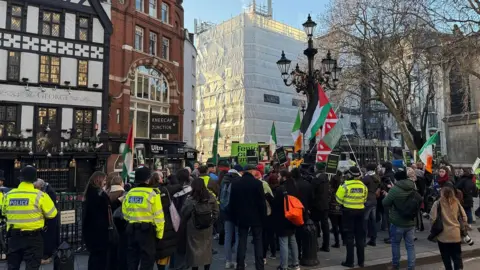
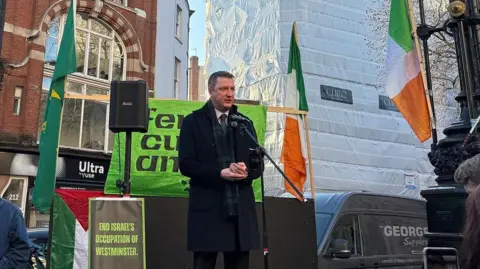
The scene outside the Royal Courts of Justice on the morning of the appeal hearing was a vivid tableau of political and cultural solidarity. Supporters of Liam Óg Ó hAnnaidh began gathering before 09:00 GMT, transforming the typically staid legal precinct into a vibrant protest space. The crowd prominently displayed Irish tricolours and Palestinian flags, symbols that powerfully articulate the intertwined political dimensions of the case. Various signs, some bearing the group’s name, further amplified their message of defiance and support.
The presence of Sinn Féin MP John Finucane, who addressed the assembled crowds, lent significant political weight to the demonstration. Finucane, the Belfast North MP, voiced unwavering support for Ó hAnnaidh, stating, "We will continue to stand with Liam, we will continue to stand on the right side of history." His remarks underscore the deep political roots of the controversy, connecting the legal proceedings to broader narratives of Irish republicanism, national identity, and perceived injustices. The demonstration served not only as a show of support for a musician facing charges but also as a potent assertion of political identity and a challenge to the perceived authority of the state.
Wider Implications: Precedent, Free Speech, and National Security
The High Court’s decision in this appeal will extend far beyond the immediate fate of Liam Óg Ó hAnnaidh. It carries significant implications for legal precedent, particularly concerning the interpretation and application of counter-terrorism legislation in cases involving artistic or political expression. A ruling in favor of the DPP could potentially broaden the scope for prosecutions where procedural requirements are met belatedly, raising concerns among civil liberties advocates about the erosion of due process safeguards. Conversely, upholding the dismissal would reaffirm the stringent nature of these legal parameters, potentially forcing a more meticulous approach from prosecutors in future cases.
Beyond the procedural nuances, the case inevitably reignites the perennial debate surrounding freedom of speech versus national security imperatives. Where does artistic license end and the promotion of proscribed ideologies begin? The context of displaying a flag associated with a designated terrorist organization, even within a musical performance, forces a difficult balancing act for the judiciary. The outcome could influence how cultural and political acts are viewed through the lens of terrorism laws, impacting artists, activists, and potentially setting new boundaries for permissible expression in the public sphere.
Furthermore, the highly politicized nature of the case, amplified by Kneecap’s own statements and the public demonstrations, highlights the complex interplay between legal processes, political activism, and public perception. The perception of "political policing" or a "witch-hunt" against specific forms of solidarity, irrespective of the legal merits, can significantly impact public trust in the justice system. The High Court’s ruling will therefore be scrutinized not only for its legal reasoning but also for its broader societal and political ramifications, particularly in communities where historical grievances and contemporary political tensions remain salient.
Future Outlook: Awaiting Judicial Clarity
As the High Court deliberates, the immediate future for Liam Óg Ó hAnnaidh and Kneecap remains subject to judicial determination. Should the appeal be successful, the original terrorism charge against Ó hAnnaidh would likely be reinstated, potentially leading to a full trial on the substantive allegations. This would initiate a protracted legal battle, demanding further resources and attention from the musician and his legal team. Conversely, if the High Court upholds the initial dismissal, it would signify a definitive end to the current charges, allowing Ó hAnnaidh to move forward without the specter of a terrorism prosecution.
Regardless of the specific legal outcome, the case has already etched itself into the public consciousness, raising profound questions about the limits of artistic expression, the application of counter-terrorism laws, and the intersection of culture and politics in contemporary society. The ongoing saga underscores the complex challenges faced by legal systems in navigating the intricate balance between protecting national security and safeguarding fundamental civil liberties, particularly in an era marked by heightened geopolitical tensions and polarized public discourse. The High Court’s judgment is keenly awaited, not just by Kneecap and their supporters, but by legal scholars, civil rights advocates, and observers of the delicate relationship between state power and individual expression.



 Aura Kasih
 Ridwan Kamil

 Safa Marwah