Lisa Mariana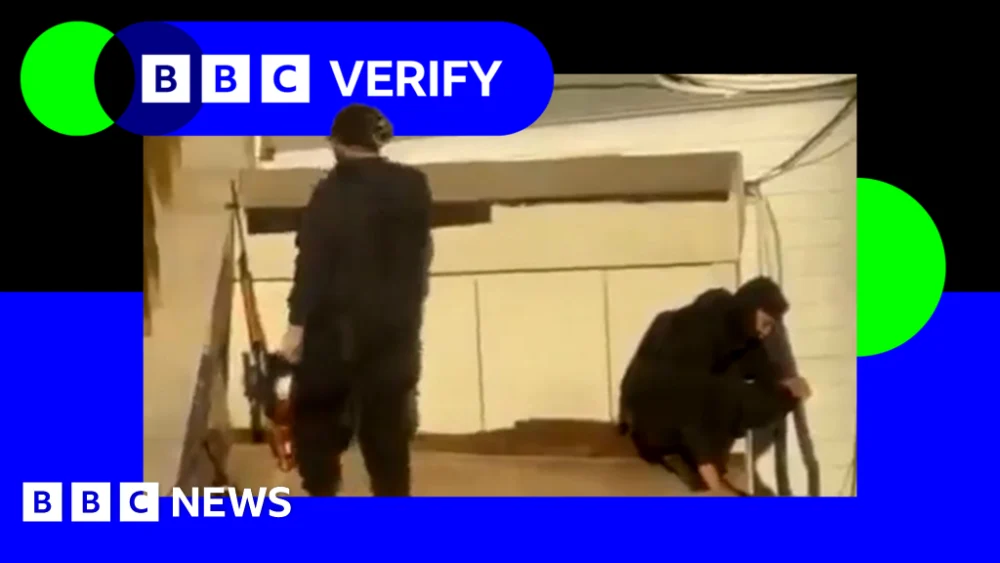
Recent independently verified video footage from Iran paints a harrowing picture of the state’s extreme response to a nationwide wave of dissent, documenting scenes of mass fatalities within medical facilities, the deployment of sharpshooters on urban rooftops, and citizens actively dismantling surveillance infrastructure amidst a near-total communications blackout. This influx of visual evidence offers a rare, unfiltered glimpse into the intensifying confrontation between a determined populace and a government employing increasingly brutal tactics to quell widespread unrest that has gripped the nation for weeks. The authenticated material underscores the profound challenges in documenting the full scale of the crackdown, particularly as authorities have sought to impose an informational vacuum across the country.
The Unfolding Crisis and Verification Imperative
Since late December, Iran has been embroiled in a period of profound civil unrest, with anti-government demonstrations erupting across numerous cities and towns. These protests, fueled by a complex interplay of socio-economic grievances, political disillusionment, and calls for fundamental change, have been met with a severe and escalating state response. The government’s strategy has included widespread arrests, the deployment of security forces with live ammunition, and a near-total internet shutdown designed to sever communication among protestors and prevent external reporting. In this highly controlled and opaque environment, the independent verification of information becomes paramount. International monitoring bodies and journalistic initiatives have taken on the critical task of sifting through fragmented data, user-generated content, and satellite imagery to corroborate events on the ground, providing an indispensable counter-narrative to official state pronouncements. The verified videos emerging now, despite significant obstacles, serve as irrefutable documentation of the violent measures deployed by Iranian authorities, offering crucial insights into the human cost of the current crisis.
Graphic Testimonies of State Violence
The newly authenticated visual records provide a stark and disturbing testament to the ferocity of the state’s response, particularly during what are believed to have been the deadliest nights for protesters on January 8th and 9th. One harrowing sequence, meticulously geolocated and cross-referenced with publicly available architectural details, captures the interior of a mortuary at Tehranpars Hospital in eastern Tehran. Within this single video, an estimated 31 deceased individuals are visibly stacked, a chilling indicator of the immediate aftermath of concentrated violence. Further compounding this grim scene, an additional clip shows at least seven body bags arrayed outside the same hospital’s entrance, suggesting an overwhelming influx of casualties that strained even the capacity of medical facilities.
Beyond the morgue, other verified videos chronicle direct confrontations and the indiscriminate use of force. Footage from a major highway in western Tehran depicts a massive gathering of hundreds of demonstrators, their voices unified in protest. The scene abruptly shifts as the unmistakable sound of multiple gunshots pierces the air, followed by a chorus of screams and panicked dispersion, illustrating the sudden and lethal nature of the security forces’ engagement. In the southeastern city of Kerman, a video taken from an elevated vantage point reveals armed men in military fatigues systematically discharging their weapons as they advance along a street. Though their specific targets remain obscured, the continuous volleys of fire, juxtaposed with the distant chants of protestors and a small, smoldering fire in the roadway, paint a grim picture of an urban battlefield. These disparate yet convergent accounts collectively underscore a systematic and brutal suppression campaign, leaving little doubt about the regime’s willingness to employ extreme force against its own citizens.
The State’s Apparatus of Control
The tactics employed by Iranian security forces extend beyond direct confrontation, encompassing a comprehensive strategy of surveillance, intimidation, and informational control. Verified video from the northeastern city of Mashhad exemplifies this multi-pronged approach, showing two individuals dressed in dark attire positioned on a rooftop in broad daylight. One figure is observed leaning against a large-caliber rifle while communicating via phone, while the other crouches and smokes. Such imagery confirms the deployment of snipers in urban centers, a chilling tactic designed to instill fear and inflict maximum casualties among demonstrators. The psychological impact of such overt displays of lethal force cannot be overstated, signaling to the populace that even participation in a peaceful assembly carries extreme risks.
In response to this pervasive surveillance, protestors have demonstrated remarkable ingenuity and courage. Footage from the capital illustrates one individual scaling a utility pole to repeatedly strike and disable a closed-circuit television (CCTV) camera. The act, met with enthusiastic cheers from a large crowd below, symbolizes a defiant rejection of the state’s panoptic control and a strategic effort to blind its surveillance network. This cat-and-mouse game between state oversight and citizen resistance highlights the critical role of information and visibility in the ongoing struggle. The deliberate destruction of surveillance equipment, while a localized act, collectively represents a broader challenge to the regime’s attempts to monitor, identify, and apprehend dissidents, showcasing the ingenuity of a population determined to reclaim its public spaces and narrative.
A Battle for Truth: Contradictory Casualty Reports
One of the most profound and concerning aspects of the current unrest is the stark divergence in casualty figures reported by various entities, underscoring a critical battle for narrative control. The US-based Human Rights Activists News Agency (HRANA) has meticulously documented and confirmed the deaths of nearly 6,000 individuals, including 5,633 protestors, since the initial eruption of unrest in late December. Alarmingly, HRANA indicates that it is currently investigating an additional 17,000 reported fatalities, figures compiled despite the severe communication restrictions imposed by the internet blackout. Further exacerbating these concerns, the Norway-based Iran Human Rights (IHR) organization has issued a somber warning, suggesting that the ultimate death toll could tragically surpass 25,000. These independent assessments paint a picture of widespread lethality, indicating a governmental response that has resulted in a devastating loss of life among the civilian population.
In stark contrast, Iranian authorities presented their own figures last week, acknowledging more than 3,100 deaths but asserting that the majority of these fatalities were security personnel or innocent bystanders who fell victim to attacks by "rioters." This official narrative not only minimizes the scale of civilian deaths but also fundamentally shifts culpability, portraying the state as a victim rather than the primary perpetrator of violence. The profound discrepancy between these figures—ranging from thousands to potentially tens of thousands—highlights a deliberate strategy of obfuscation and denial by the state, aimed at controlling public perception both domestically and internationally. Such conflicting accounts render an accurate assessment of the humanitarian crisis exceedingly difficult, yet they simultaneously underscore the critical importance of independent verification efforts in piercing through the veil of state-sponsored disinformation.
Roots of Resentment and the Call to Action
The current wave of protests is not an isolated phenomenon but rather the latest manifestation of deep-seated discontent that has simmered within Iran for years, periodically erupting into widespread demonstrations. Economic hardship, including rampant inflation, high unemployment, and pervasive corruption, forms a significant bedrock of public anger. Beyond material concerns, demands for greater political freedoms, social justice, and an end to authoritarian governance have resonated deeply across various segments of society. The current surge in demonstrations was notably amplified by a call for nationwide protests from Reza Pahlavi, the exiled son of the late Shah. His appeal, issued on January 8th, acted as a catalyst, drawing thousands more onto the streets and lending a degree of symbolic unity to a movement that often appears decentralized.
The involvement of an exiled opposition figure, even if largely symbolic, introduces another layer of complexity to the government’s response. The regime views any external influence as an existential threat, often framing domestic dissent as foreign-backed agitation. This narrative provides justification for its brutal crackdown, portraying protestors not as citizens exercising their rights but as agents of foreign adversaries. However, the sheer scale and persistence of the protests, spanning over 71 cities and towns according to tracking efforts (with the true number likely far higher), demonstrate an organic and widespread dissatisfaction that transcends any single external influence. The call to action merely tapped into a reservoir of profound frustration, demonstrating the potent synergy between long-standing grievances and moments of political mobilization.
The Digital Iron Curtain: Internet Blackout and Information Warfare
Since January 8th, the Iranian government has implemented a near-total internet blackout across much of the country, creating a digital iron curtain intended to isolate its populace and control the flow of information. This tactic, a familiar tool in authoritarian regimes’ playbooks, serves multiple critical functions: it disrupts the ability of protestors to organize and coordinate, prevents the rapid dissemination of news and images of the crackdown to the outside world, and stifles internal dissent by cutting off access to independent media. The economic repercussions of such an extensive shutdown are also severe, impacting businesses, commerce, and daily life, adding another layer of hardship for ordinary citizens.
Despite the comprehensive nature of the blackout, some individuals have managed to circumvent these restrictions through innovative and often perilous means. Reports indicate the use of virtual private networks (VPNs) and, notably, SpaceX’s Starlink satellite internet service, which offers a lifeline to global communication. These technological workarounds represent a critical front in the information war, enabling a trickle of videos and testimonies to emerge from the country, providing vital intelligence to the outside world. The continued emergence of verified videos, even weeks after the most intense period of the blackout, suggests a persistent effort by individuals to bypass state control, indicating that the digital curtain, while effective, is not entirely impenetrable. The struggle to maintain connectivity underscores the fundamental human need for communication and the inherent difficulty for any regime to completely suppress the flow of information in the digital age.
Implications and International Scrutiny
The unfolding events in Iran carry significant domestic and international implications. Internally, the unprecedented scale and ferocity of the crackdown risk deepening societal divisions and potentially radicalizing elements of the opposition. The use of lethal force against unarmed civilians, coupled with mass arrests and a concerted effort to suppress information, is likely to leave lasting scars on the nation’s social fabric and foster a profound sense of grievance among large segments of the population. Economically, the prolonged unrest and internet blackout further destabilize an already fragile economy, potentially exacerbating the very conditions that fuel the protests.
On the international stage, the graphic evidence of state violence and the mounting death toll are drawing increased scrutiny and condemnation. Human rights organizations and governments worldwide are expressing alarm, with calls for accountability and independent investigations growing louder. The systematic nature of the repression, as evidenced by the verified videos, presents a significant challenge to Iran’s international standing and could lead to renewed diplomatic pressures or sanctions. The global community grapples with how to respond effectively to a sovereign nation’s internal affairs while upholding universal human rights principles, balancing diplomatic engagement with the imperative to address severe abuses.
The Enduring Struggle and Future Trajectories
As Iran navigates this critical juncture, the future remains uncertain. The regime’s resolve to maintain control, as demonstrated by its brutal crackdown, appears unwavering. However, the resilience and determination of the protestors, who continue to risk their lives to voice their dissent and circumvent informational barriers, suggest that the spirit of resistance is far from extinguished. The long-term impact of this period of intense confrontation on Iranian society and its political landscape will be profound. The heavy human cost, the erosion of trust between the populace and the state, and the sustained economic strain are all factors that will shape the nation’s trajectory for years to come.
The flow of information, however sporadic, will continue to play a crucial role. Each verified video, each personal testimony that emerges from the digital darkness, contributes to a global understanding of the realities on the ground and serves as a vital historical record. While the internet blackout has undoubtedly complicated efforts to fully document the crisis, the ingenuity of citizens and the tireless work of independent verification groups ensure that the world is not entirely blind to the events unfolding within Iran’s borders. The struggle for fundamental rights and an accurate narrative continues, with the human spirit of defiance confronting the full might of state repression in a protracted and costly battle.




 Ayu Aulia
 Ridwan Kamil
 Safa Marwah
 Aura Kasih