Lisa Mariana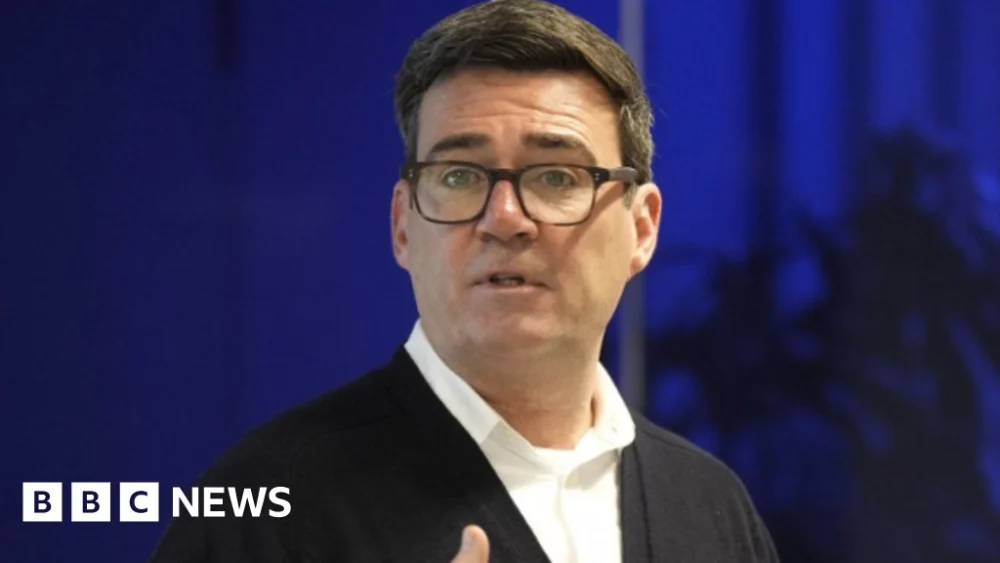
Andy Burnham, the high-profile Mayor of Greater Manchester, has formally declared his intention to seek the Labour Party’s nomination for the forthcoming parliamentary by-election in Gorton and Denton, a move that immediately triggers significant political speculation regarding his future ambitions and potential challenges to the party’s national leadership. This unexpected announcement, which requires special dispensation from Labour’s ruling National Executive Committee (NEC) given his current elected office, has ignited a fervent internal debate within the party, with some viewing it as a strategic positioning for a future leadership bid while others see it as a legitimate desire to champion a devolved agenda from Westminster.
The vacancy in the Gorton and Denton constituency arose following the resignation of long-serving Labour MP Andrew Gwynne on health grounds on Friday. This development has provided a unique opportunity for Burnham, who has maintained a high national profile since departing Westminster nearly a decade ago. His statement underscored a desire to support, rather than undermine, a future Labour government, yet the inherent political dynamics of such a return are undeniably complex and fraught with potential challenges for both Burnham and the incumbent Labour leader, Sir Keir Starmer.
Burnham’s Political Trajectory and the Lure of Westminster
Andy Burnham’s political career is marked by significant experience across both national and devolved governance. A former Member of Parliament for Leigh from 2001 to 2017, he held several prominent cabinet and shadow cabinet positions, including Secretary of State for Culture, Media and Sport, Secretary of State for Health, and Shadow Home Secretary. He also mounted three unsuccessful bids for the Labour Party leadership in 2010, 2015, and a brief consideration in 2020. This extensive background provides him with a deep understanding of Westminster mechanics and the national political landscape.
In 2017, Burnham made a decisive pivot, stepping away from national politics to become the inaugural Mayor of Greater Manchester. In this role, he has cultivated a distinct political brand, often positioning himself as a champion of the North, advocating for greater regional autonomy, improved public transport, and addressing social inequalities. His tenure as mayor has been largely successful, earning him considerable public approval and solidifying his reputation as a powerful voice for his region. This shift was famously framed as a move away from a Westminster he felt was "not working for people in our part of the world," suggesting a disillusionment with the centralised nature of national governance. His current rationale for seeking a return to Parliament therefore warrants close scrutiny.
The By-election and the "Manchester Way"
The Gorton and Denton constituency, located within Greater Manchester, is historically a safe Labour seat. Andrew Gwynne held it with a substantial majority, reflecting the strong Labour sentiment in this urban area. This makes it an attractive proposition for any Labour candidate, virtually guaranteeing a path back to Westminster should they secure the party’s nomination.
In his letter to the NEC, which he subsequently shared on social media, Burnham articulated his motivations, citing a "direct threat to everything Greater Manchester has always been about from a brand of politics which seeks to pit people against each other." He positioned the by-election as "the frontline of that fight for the Manchester Way," asserting a duty to lead this charge despite the inherent risks. This "Manchester Way" concept refers to a collaborative, community-focused approach to governance and regional development that Burnham has championed, often implicitly contrasting it with what he perceives as divisive national politics. He further elaborated that while he had "pioneered a different way of doing things" as mayor, Manchester "won’t be able to be everything it should be without similar changes at a national level," thus justifying his perceived need to "go back."
This framing suggests a strategic ambition beyond merely representing a constituency. It hints at a desire to influence national policy from within Parliament, to bring the principles of the "Manchester Way" to a broader stage, and to ensure that devolutionary gains are not undermined by central government.
Navigating Labour’s Internal Landscape: NEC Approval and Party Dynamics
Burnham’s path to candidacy is not straightforward. As a directly-elected mayor, Labour Party rules stipulate that he must obtain special approval from the National Executive Committee before he can even enter the selection process to become the party’s candidate. This provision exists to manage potential conflicts of interest and ensure party coherence. The NEC, comprising representatives from various wings of the party, holds significant power in such matters and its decision will be a critical first hurdle.
The BBC has reported that allies of Sir Keir Starmer may seek to obstruct Burnham’s bid, reflecting an underlying apprehension within the party leadership regarding his potential re-entry into national politics. This apprehension is rooted in Burnham’s history as a prominent figure, a former leadership contender, and a politician with a distinct popular appeal that could potentially rival Starmer’s. Blocking him, however, carries its own set of risks, potentially alienating a popular figure and his significant support base, particularly in the North, and exposing internal party divisions.
Indeed, the suggestion of a block has already provoked strong reactions from within the party. Several Labour Members of Parliament have reportedly expressed anger at the prospect, advocating for a fair and open selection process. Senior party figures have publicly voiced their support for Burnham’s right to stand. Notably, London Mayor Sadiq Khan, another powerful directly-elected Labour figure, stated unequivocally: "If Andy Burnham wants to be a member of Parliament, Andy Burnham should be allowed to be a member of Parliament." Energy Secretary Ed Miliband, a former Labour leader himself, also weighed in, describing Burnham as a "massive asset" in Parliament and expressing hope that Gorton and Denton party members would be given "the option" of selecting him as their candidate. These endorsements from prominent party figures highlight the internal pressure the NEC will face and underscore Burnham’s continued influence across different factions of the Labour movement.
The Leadership Question: An Unavoidable Subtext
The most significant and unavoidable implication of Burnham’s potential return to Westminster revolves around the Labour Party leadership. While Burnham’s statement emphasized his desire to "back the Labour government ‘not undermine it’," the political reality is that his presence in Parliament would inevitably reignite speculation about a future challenge to Sir Keir Starmer.
Burnham’s past leadership bids and his continued popularity make him a natural focal point for any dissent or dissatisfaction within the party, particularly if Labour were to face electoral setbacks or struggles in government. His appeal, particularly in working-class Northern constituencies, differs somewhat from Starmer’s more centrist, prosecutorial image. Should he win the by-election and become an MP, he would immediately possess a national platform from which to articulate alternative visions or critiques, even if couched in supportive language.
The mechanisms for a leadership challenge are well-defined within the Labour Party rules, typically requiring nominations from a certain percentage of the parliamentary party. Burnham’s re-entry would mean one more potential challenger in the pool, and a highly credible one at that. For Starmer and his allies, managing this dynamic would be crucial. A successful blockage of Burnham’s candidacy might temporarily avert this particular challenge, but it could also breed resentment and perceptions of an undemocratic process, potentially weakening Starmer’s authority in the long run. Allowing him to stand, conversely, could be framed as a demonstration of confidence and internal democracy, albeit with the implicit risk of nurturing a future rival.
Implications for Greater Manchester and Devolution
Burnham’s potential departure from the Mayoralty of Greater Manchester would also have significant implications for the region. He has been a highly visible and effective advocate for Greater Manchester, playing a pivotal role in advancing devolutionary powers and securing funding for local projects. His departure would leave a vacuum that a successor would need to fill, potentially disrupting ongoing initiatives and the continuity of regional leadership.
The "Manchester Way" argument, while serving as a justification for his return to Westminster, also highlights the ongoing tension between local autonomy and national governance. Burnham’s assertion that national changes are required for Manchester to fully realise its potential underscores a broader debate about the efficacy of current devolution models and the need for greater decentralisation of power and resources from Whitehall. His presence in Parliament could indeed serve to champion this cause more directly, but it would come at the cost of losing a dedicated regional leader.
Pathways and Potential Obstacles
The immediate pathway for Andy Burnham involves successfully securing the NEC’s approval. This decision will be a significant test of Labour’s internal cohesion and Starmer’s control over the party machinery. If approved, Burnham would then enter a selection contest against other potential Labour candidates for Gorton and Denton. Given his profile and local support, he would likely be a strong frontrunner in such a contest.
Should he win the selection and subsequently the by-election, his return to Westminster would mark a significant moment in contemporary Labour politics. He would immediately become one of the most experienced and high-profile backbench (or frontbench, depending on Starmer’s decisions) MPs. The media attention and internal scrutiny on his every move would be intense, with every statement analysed for its implications for the leadership.
Conversely, if the NEC were to block his candidacy, it would represent a significant setback for Burnham and potentially trigger a backlash from his supporters and within the broader party. Such a move would be difficult to justify politically, given his standing, and could be interpreted as an attempt by the leadership to stifle internal competition.
Conclusion
Andy Burnham’s announcement represents a pivotal moment for both his own political career and the future trajectory of the Labour Party. His desire to return to Westminster, articulated through the lens of championing the "Manchester Way" and addressing national imbalances, carries an undeniable undercurrent of broader leadership ambitions. The forthcoming NEC decision will be a critical indicator of the internal power dynamics within Labour under Sir Keir Starmer. Whether Burnham is ultimately permitted to stand, and subsequently if he succeeds in returning to Parliament, his re-entry into the national political fray would undoubtedly reshape the internal landscape of the Labour Party, intensifying scrutiny on its leadership and the direction of its policy agenda. The outcome of this unfolding political drama will be closely watched by analysts, party members, and the wider electorate, as it holds significant implications for the future of British politics.




 Ayu Aulia
 Safa Marwah
 Aura Kasih