
 Lisa Mariana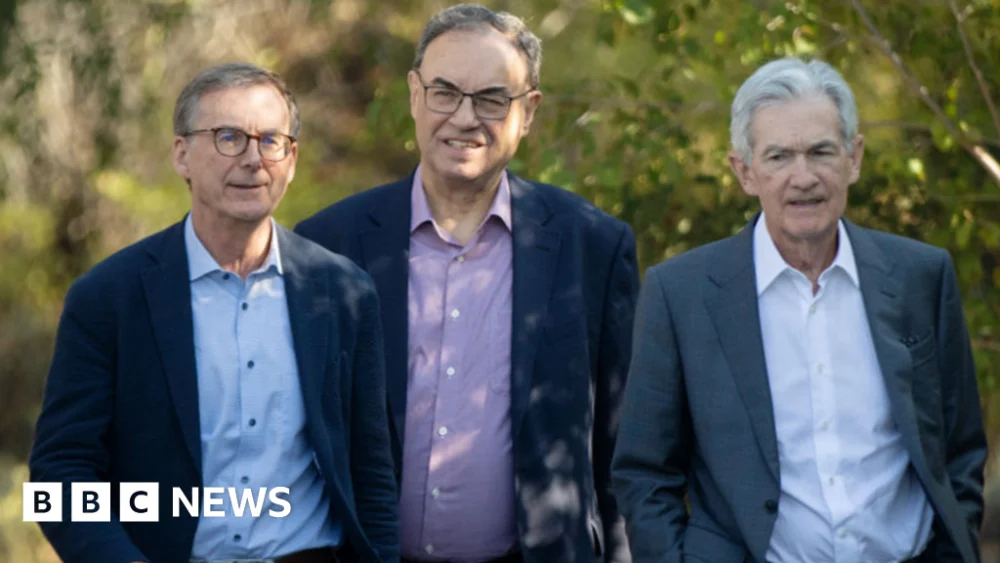
A collective declaration of unwavering support for Jerome Powell, the chairman of the United States Federal Reserve, has been issued by central banking authorities worldwide, following the initiation of a criminal investigation by the U.S. Department of Justice into his conduct and a prolonged campaign of political disparagement from the White House. This extraordinary show of international solidarity underscores profound concerns within the global financial community regarding the erosion of central bank autonomy and the potential politicization of monetary policy, principles deemed fundamental to economic stability.
The unprecedented joint statement, signed by a powerful consortium of eleven prominent central bank governors, including the heads of the Bank of England, the European Central Bank, and the Bank of Canada, articulated a unified stance in "full solidarity" with Powell. Their collective voice emphasized the critical importance of independence in the determination of interest rates, a cornerstone of sound economic governance that transcends national borders. These influential figures lauded Powell’s tenure, affirming that he has consistently demonstrated integrity, remained steadfast in his mandated objectives, and exhibited an "unwavering commitment to the public interest." The statement further highlighted his standing among his peers, describing him as a "respected colleague who is held in the highest regard by all who have worked with him."
The genesis of the current controversy lies in a Department of Justice investigation reportedly linked to testimony Powell provided to a Senate committee concerning renovations undertaken at Federal Reserve facilities. While the specifics of the alleged impropriety remain under wraps, the timing and context of the probe have amplified existing anxieties about political interference. Notably, then-President Donald Trump, a vocal critic of Powell, publicly disclaimed any knowledge of the investigation, stating he did not "know anything" about it. This denial, however, did little to quell speculation about the broader political environment influencing the central bank.
This legal scrutiny emerges against a backdrop of sustained and often vitriolic attacks on Chairman Powell by the executive branch. For over a year, Trump had subjected Powell to relentless public criticism, primarily targeting the Fed’s interest rate decisions. The President’s commentary frequently transcended policy debates, veering into personal insults, with Powell being publicly labeled a "major loser" and a "numbskull." Such rhetoric, highly unconventional for a sitting president addressing the head of an independent economic institution, significantly intensified the perceived pressure on the central bank and its leadership.
For a considerable period, Chairman Powell maintained a stoic silence in the face of these verbal assaults, adhering to the traditional apolitical stance expected of a central banker. However, the escalating pressure seemingly prompted a shift in strategy. In a notable public address, Powell forcefully pushed back against the criticisms, issuing a stark warning about the precarious state of the U.S. central bank’s independence. He articulated the gravity of the situation, stating, "This is about whether the Fed will be able to continue to set interest rates based on evidence and economic conditions, or whether instead monetary policy will be directed by political pressure or intimidation." This statement marked a pivotal moment, signaling that the institution’s autonomy was perceived to be genuinely under threat.
The global central banking community’s joint statement on Tuesday further underscored the existential nature of this challenge. They collectively affirmed that "the independence of central banks is a cornerstone of price, financial and economic stability in the interest of the citizens that we serve." This principle, they argued, is not merely an academic ideal but a practical necessity for safeguarding economic welfare. Consequently, they declared it "critical to preserve that independence, with full respect for the rule of law and democratic accountability." This nuanced phrasing acknowledges the need for central banks to operate within a legal framework and be ultimately accountable, yet firmly asserts the imperative of operational independence from short-term political whims.
The concept of central bank independence is deeply rooted in economic theory and historical experience. It posits that monetary policy decisions, such as setting interest rates, are best made by technocrats insulated from political cycles and pressures. Politicians, driven by electoral concerns, may be tempted to advocate for policies that deliver short-term economic boosts, such as excessively low interest rates, even if these policies risk long-term inflation or financial instability. An independent central bank, by contrast, can focus on its long-term mandate of price stability and maximum sustainable employment, making decisions based on economic data rather than political expediency. The collective outcry from global central bankers highlights a shared understanding that compromising the Fed’s independence could have ripple effects, potentially emboldening political leaders in other nations to exert similar pressures on their own monetary authorities.
The looming transition at the Federal Reserve adds another layer of complexity to the situation. Powell, who was initially nominated to the chairmanship by Trump in 2017 during his first term, is slated to conclude his term and step down in May. The President is anticipated to announce his successor in the coming weeks, a decision that will undoubtedly be scrutinized through the lens of the ongoing controversies. The political fallout has already manifested in the U.S. Senate, where North Carolina Senator Thom Tillis, a Republican member of the influential Senate Banking Committee, has declared his intention to oppose any nomination by Trump for Powell’s replacement, or any other Fed Board nominee, until the Department of Justice investigation is "fully resolved." This stance signals a potential legislative roadblock, emphasizing the deep divisions and concerns within the political establishment regarding the integrity of the Fed’s leadership and selection process.
Further bolstering the call for central bank independence and support for Powell, three former chairs of the Federal Reserve—Janet Yellen, Ben Bernanke, and Alan Greenspan—have publicly voiced their backing. This trifecta of previous Fed leaders, spanning decades of monetary policy, represents a formidable consensus. Janet Yellen, Powell’s immediate predecessor, was particularly outspoken, describing the criminal investigation as "extremely chilling" and warning that it should alarm investors. She drew a stark parallel, stating, "You have a president that says the Fed should be cutting rates to lower rate payments on the federal debt… It is the road to banana republic." Yellen’s powerful analogy evokes images of politically unstable nations where economic policy is dictated by political caprice rather than sound principles, leading to capital flight, hyperinflation, and a loss of international credibility. Such a scenario, she implied, would fundamentally undermine the U.S. dollar’s status as the world’s primary reserve currency and erode global trust in American institutions.
The implications of this episode extend far beyond the immediate personalities involved. At stake is the fundamental integrity of democratic institutions and the delicate balance of power crucial for a stable economy. The Department of Justice probe, regardless of its outcome, has already cast a shadow over the office of the Federal Reserve Chair, potentially setting a precedent that could make future leaders more vulnerable to political pressure or retribution. For a premium intelligence publication, the analysis delves into how such events influence global perceptions of American governance. International investors and financial markets rely on the perceived stability and independence of the Fed as a bedrock of their confidence in the U.S. economy. Any sustained perception of political interference could trigger capital outflows, increased borrowing costs, and a weakening of the dollar, with profound consequences for global trade and finance.
Moreover, the global central banking community’s robust defense of Powell is not merely an act of collegiality; it is a strategic defense of a shared global norm. In an increasingly interconnected world, the actions of one major central bank, particularly the Federal Reserve, have significant spillover effects. If the Fed’s independence is seen to be compromised, it could embolden political actors in other nations to exert similar pressures, thereby destabilizing the entire international financial architecture. The collective statement serves as a potent warning against such a dangerous precedent. The path forward for the Federal Reserve and its incoming leadership will be fraught with challenges, as they navigate the aftermath of these political and legal storms, striving to reaffirm their independence and restore unwavering public and international confidence in their critical mission. The resolution of the DoJ probe, alongside the process of selecting Powell’s successor, will be closely watched indicators of the future trajectory of central bank autonomy in the world’s largest economy.



 Aura Kasih
 Ridwan Kamil
 Safa Marwah

 Ayu Aulia