Ayu Aulia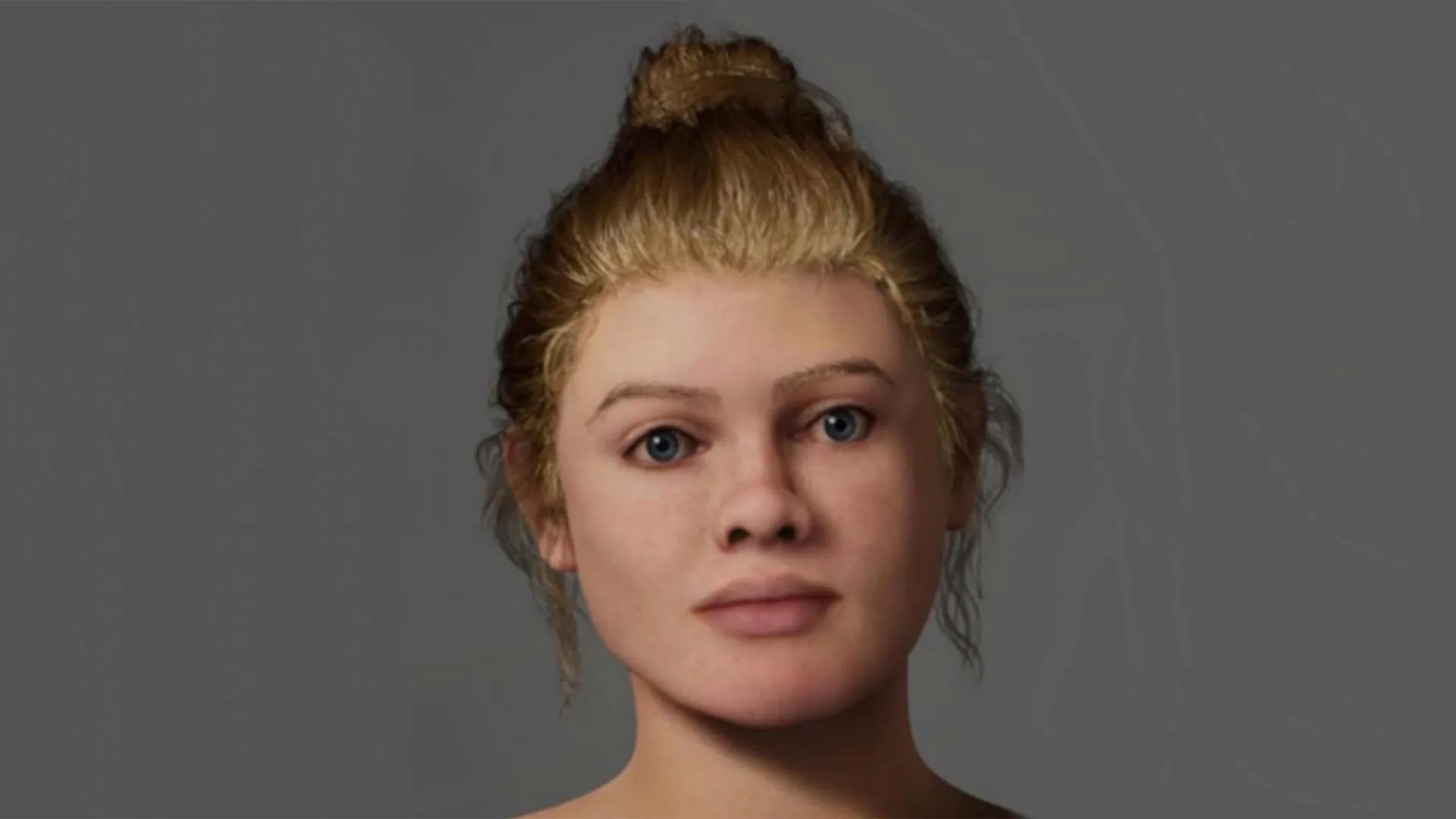
A sophisticated genetic investigation has conclusively re-evaluated the ancestral origins of a significant Roman-era human skeleton, previously known as the Beachy Head Woman, overturning earlier hypotheses that suggested distant sub-Saharan African or Mediterranean lineage. This latest genomic analysis, leveraging state-of-the-art sequencing techniques, now firmly indicates that the young woman was almost certainly indigenous to Britain, offering a revised perspective on population dynamics within the Roman province of Britannia.
For over a decade, the enigmatic identity of the Beachy Head Woman has captivated archaeologists and the public alike, representing a compelling puzzle from Britain’s Roman past. Discovered under intriguing circumstances and initially subjected to less advanced scientific scrutiny, her story has evolved through various interpretations. The initial suggestions of an exotic background, while adding a layer of mystery, were based on preliminary data that lacked the resolution and statistical power now available through contemporary ancient DNA (aDNA) methodologies. The recent findings not only resolve a long-standing debate but also underscore the transformative power of advancing scientific techniques in historical and archaeological research.
Rediscovery and Evolving Interpretations
The remains, comprising a largely complete skeleton, resurfaced in 2012 within the Eastbourne Ancestors Project. Stored in a forgotten box in the basement of Eastbourne Town Hall, a sparse handwritten label noted her discovery near the iconic Beachy Head cliffs sometime in the 1950s. This unceremonious re-emergence sparked a renewed wave of archaeological and public interest. Early assessments, utilizing forensic anthropological techniques and nascent genetic markers, posited a potential sub-Saharan African ancestry. Such a conclusion, if robustly confirmed, would have been highly significant, offering rare early evidence of individuals of African descent within Roman Britain and potentially altering narratives about the empire’s demographic diversity.
Subsequent, albeit unpublished, research attempted to refine these initial findings. This phase of inquiry, relying on DNA evidence that was unfortunately degraded and poorly preserved, suggested an alternative origin, pointing towards the Mediterranean region, possibly Cyprus. The conflicting nature of these early interpretations, coupled with the inherent limitations of the DNA material then available, meant that the true geographical and ancestral background of the Beachy Head Woman remained ambiguous, perpetuating the mystery rather than resolving it. The scientific community recognized the need for more definitive evidence, prompting a renewed focus on the skeleton as DNA sequencing technologies rapidly advanced.
The Advent of Advanced Ancient DNA Sequencing
The resolution of this enduring enigma has arrived through a new generation of ancient DNA analysis. Researchers, returning to the skeletal remains, were able to employ significantly improved extraction and sequencing protocols. These advancements are critical when dealing with ancient genetic material, which is typically fragmented, chemically modified, and prone to contamination from modern sources or microbial DNA. Modern high-throughput sequencing platforms, coupled with sophisticated bioinformatics pipelines, now allow for the recovery of far greater quantities of endogenous human DNA, even from challenging samples.
Dr. William Marsh, a lead scientist involved in the most recent analysis, emphasized the precision afforded by these contemporary techniques. "By employing cutting-edge DNA methodologies and drawing upon an expanding library of published ancient genomes, we achieved a substantially more accurate determination of the Beachy Head Woman’s ancestry than previously possible," Dr. Marsh explained. "Our findings unequivocally demonstrate that her genetic profile aligns most closely with individuals from the local Roman-era British population." This statement highlights the critical role of comparative genomics, where an individual’s genetic data is cross-referenced against vast databases of ancient and modern populations to identify the closest genetic relatives.
Dr. Selina Brace, a distinguished specialist in ancient DNA and senior author of the comprehensive study published in the Journal of Archaeological Science, reflected on the progressive nature of scientific inquiry. "Scientific knowledge and our understanding are in a perpetual state of evolution, and as researchers, our imperative is to relentlessly pursue deeper insights. The technological strides made in the decade since the Beachy Head Woman first garnered attention have been monumental. We are delighted to present these new, comprehensive data, which illuminate further details about this individual and her existence." This sentiment underscores that scientific conclusions are rarely final but rather represent the best interpretation based on current available evidence and technology.
Life in Roman Britannia: A Broader Context
Understanding the Beachy Head Woman’s life requires situating her within the intricate tapestry of Roman Britain. The initial Roman incursions into Britain commenced in 55 BCE under Julius Caesar, though full provincial control, Britannia, was not formally established until nearly a century later during the reign of Emperor Claudius. At its zenith, Roman dominion extended across much of what is now England and Wales, reaching as far north as the Antonine Wall in Scotland. This vast provincial network was characterized by extensive infrastructure, including forts, meticulously engineered roads, and burgeoning urban centers, all seamlessly integrated into the wider Roman Empire. This facilitated considerable movement of people, goods, and ideas across Europe, North Africa, and the Near East.
Historical records and archaeological findings provide ample evidence of the multi-ethnic nature of the Roman Empire. Mobility was a defining characteristic, driven by military postings, administrative duties, trade, and even the movement of enslaved populations. Inscriptions and material culture attest to the presence of individuals from diverse backgrounds within Roman Britain. Indeed, studies of ancient DNA have previously identified individuals with mixed European and sub-Saharan African ancestry living in specific regions of Britain, such as Dorset and Kent, during the post-Roman, seventh-century period. These findings illustrate the complex demographic landscape that characterized Britain throughout and beyond the Roman occupation, making the initial hypotheses regarding the Beachy Head Woman’s ancestry historically plausible, even if ultimately disproven by higher-resolution data.
Deciphering the Beachy Head Woman’s Narrative
While the precise location of the Beachy Head Woman’s burial remains elusive, radiocarbon dating has established her death between 129 and 311 CE, firmly placing her within the Roman period in Britain. The region around Beachy Head during this era was not a remote wilderness but rather a landscape dotted with Roman settlements and infrastructure. Nearby archaeological sites include a Roman villa in Eastbourne, a significant fort at Pevensey, and various rural communities at Bullock Down and Birling, indicating a populated and integrated provincial environment. Multiple burials, encompassing both adults and children, have been unearthed in the vicinity, underscoring the continuous human presence in the area.
Physical analysis of the skeletal remains has offered further insights into her individual story. She was estimated to be between 18 and 25 years old at the time of her demise, standing slightly over 1.5 meters tall. A discernible, healed injury on her leg indicates she sustained a serious but ultimately survivable trauma earlier in her life, suggesting resilience in the face of adversity. Isotopic analysis of her bones, examining carbon and nitrogen levels, has also provided compelling dietary information, indicating a regular consumption of seafood, consistent with a coastal dwelling or access to marine resources. These individual details, when combined with the robust genetic data, paint a more complete picture of a young woman rooted in her local British environment.
From Speculation to Scientific Certainty
The journey to ascertain the Beachy Head Woman’s origins exemplifies the iterative process of scientific discovery. Initial genetic analysis commenced as early as 2017, when researchers first attempted to extract DNA. These preliminary efforts, while hinting at a potential Mediterranean origin, yielded DNA of limited quantity and quality. Recognizing the inherent insufficiency of these data to support definitive conclusions, the findings were prudently withheld from publication. This decision highlights the rigorous standards and cautious approach inherent in ancient DNA research, where the potential for contamination and degradation demands exceptionally high data quality before drawing firm conclusions.
By 2024, the landscape of ancient DNA technology had transformed dramatically. Significant advancements in laboratory techniques, including improved cleanroom protocols, optimized extraction methods, and more sensitive sequencing technologies, enabled researchers to return to the skeleton with enhanced capabilities. This renewed effort successfully yielded significantly higher-quality DNA, providing a far more comprehensive genetic dataset. This expanded information allowed for a much more detailed and statistically robust comparison with established ancient population genomes. The meticulous analysis conclusively demonstrated that the Beachy Head Woman’s DNA most closely matched that of rural communities from Roman-era Britain, decisively ruling out recent African or Mediterranean ancestry. This robust evidence provided the basis for concluding her probable origin in southern England.
Reconstructing Identity: Phenotypic Predictions and Future Horizons
The improved quality of the genetic data also enabled sophisticated modern forensic analysis, extending beyond ancestry determination to the prediction of phenotypic traits. Scientists were able to infer that the Beachy Head Woman likely possessed light skin pigmentation, blue eyes, and fair hair. These predictions were subsequently utilized to update and refine her digital facial reconstruction, offering a more accurate visual representation of an individual from antiquity. Such reconstructions, informed by robust genetic data, provide a powerful means of connecting contemporary audiences with historical figures, making the past more tangible and relatable.
The ongoing trajectory of DNA technology promises even deeper insights into the lives of individuals from millennia past. As analytical tools continue to evolve, researchers anticipate the ability to uncover even more nuanced details about ancient diets, disease resistance, familial relationships, and migratory patterns. The story of the Beachy Head Woman stands as a testament to this scientific progress, transforming a vague archaeological discovery into a vividly understood individual, firmly placed within her historical and genetic landscape. Such advancements continuously reshape our understanding of human history, challenging established narratives and allowing forgotten individuals like the Beachy Head Woman to be rediscovered and understood within the rich complexity of their ancient world. The precision now achievable in ancient genomics is not merely refining historical details; it is fundamentally rewriting the human story, one genome at a time.




 Ridwan Kamil
 Safa Marwah
 Aura Kasih
 Lisa Mariana