Ridwan Kamil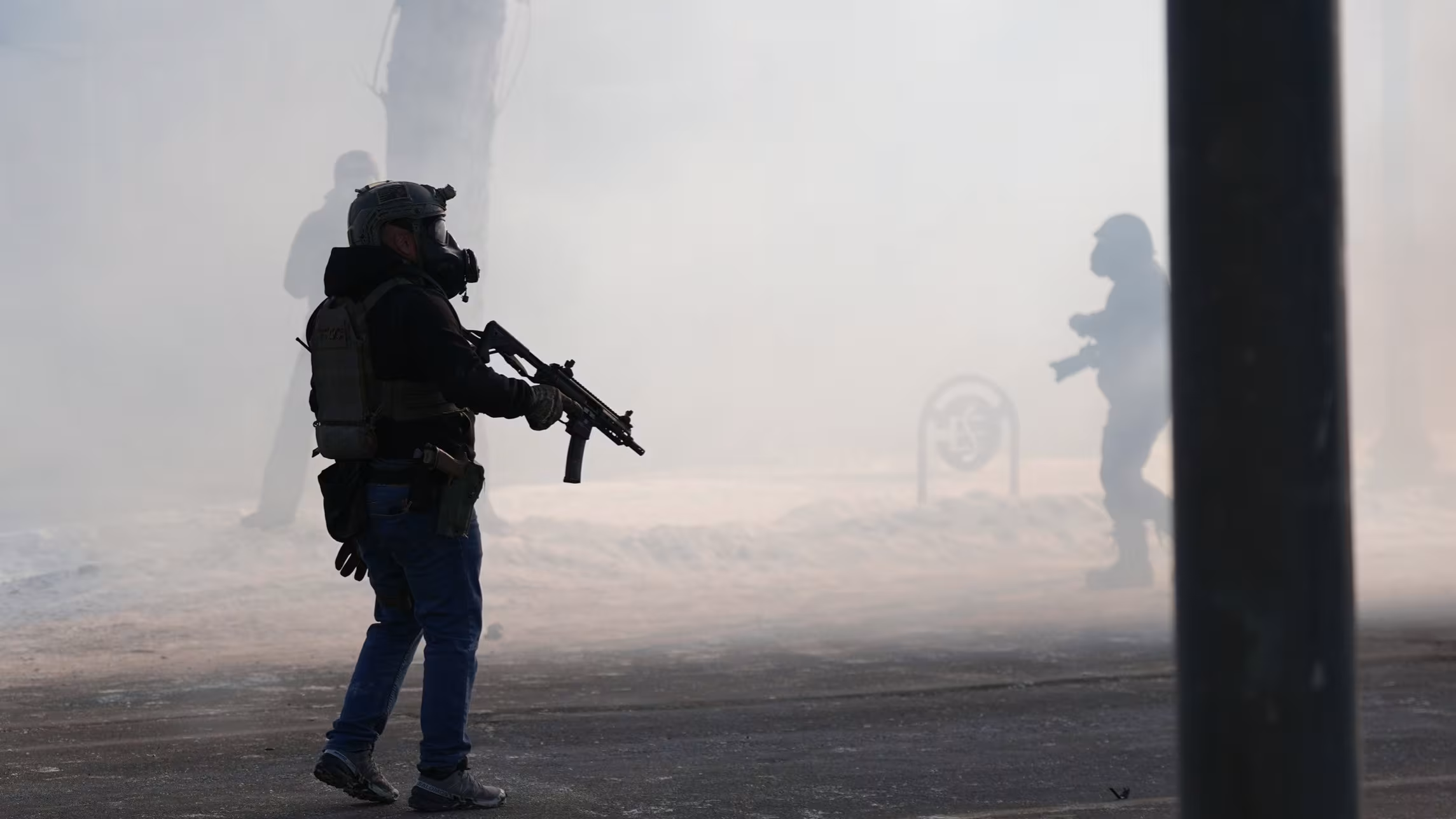
A fatal encounter occurred in Minneapolis when federal agents discharged their firearms, resulting in the death of an unidentified man. The circumstances surrounding the shooting are currently under intense scrutiny, with multiple agencies launching separate investigations to ascertain the sequence of events and the justification for the use of lethal force. This incident, occurring in a city that has previously been the epicenter of significant public discourse regarding law enforcement conduct, is expected to draw considerable attention and calls for transparency.
The specifics of the operation that led to this fatal shooting remain largely undisclosed, fueling speculation and concern. Reports indicate that the individual was engaged by agents of a federal law enforcement agency, though the precise nature of their involvement and the objective of their presence in Minneapolis have not been publicly detailed. The lack of immediate clarity surrounding the operation’s purpose and the identity of the deceased further complicates the emerging narrative, underscoring the critical need for comprehensive and prompt information disclosure from the involved authorities.
This incident serves as a stark reminder of the complex and often high-stakes nature of federal law enforcement operations, which can intersect with local communities in unforeseen and sometimes tragic ways. As investigations commence, a detailed examination of the tactical decisions, the intelligence leading up to the event, and the protocols governing the use of force by federal agents will be paramount. The outcomes of these inquiries will not only determine accountability in this specific case but may also influence future operational guidelines and community relations for federal agencies operating nationwide.
Background and Context of Federal Operations in Urban Environments
Federal law enforcement agencies, such as the FBI, DEA, ATF, and Homeland Security Investigations (HSI), frequently conduct operations in major urban centers like Minneapolis. These operations often target complex criminal enterprises, including drug trafficking, organized crime, terrorism, and cybercrime. The deployment of federal agents is typically predicated on the scope of the investigation, which may involve interstate or international dimensions, or require specialized resources and expertise beyond those available to local law enforcement.
Minneapolis, like many large metropolitan areas, has historically been a focal point for such investigations due to its strategic location, transportation networks, and diverse population. The city’s experience with high-profile law enforcement incidents in recent years has also heightened public sensitivity to any use of force by authorities, particularly when federal agencies are involved. This heightened awareness necessitates an exceptionally high degree of transparency and public trust in the investigative processes that follow.
The operational framework for federal agents often involves interagency cooperation with local police departments and sheriff’s offices. These collaborations are designed to leverage mutual strengths, share intelligence, and ensure seamless execution of missions. However, when an incident results in a fatality, the lines of command, jurisdiction, and accountability can become intricate, requiring meticulous disentanglement by independent investigators.
The Immediate Aftermath and Investigative Protocols
Following the shooting, the scene would have been secured by the involved federal agents, who are obligated to preserve evidence and ensure the safety of all parties. The subsequent phases typically involve notification of the relevant U.S. Attorney’s Office and the Department of Justice’s Office of the Inspector General (OIG) or internal affairs divisions within the specific federal agency. In cases involving fatalities, the OIG often takes a lead role in independent investigations to ensure impartiality.
Local law enforcement agencies, while potentially present and supportive, typically defer to federal investigative bodies in such circumstances. However, their cooperation is crucial for providing context, local knowledge, and access to potential witnesses or surveillance data. The collection of evidence would encompass ballistics, forensic analysis of the scene, witness statements, and any available digital records, such as body-worn camera footage or surveillance footage from the vicinity.
The process of identifying the deceased is a critical initial step. Until formal identification is made and next of kin are notified, details about the individual’s background, potential affiliations, and the reasons for their engagement with federal agents remain unknown. This information gap is often a significant factor in the initial public perception and speculation surrounding such events.
Potential Factors Under Scrutiny in the Investigation
Several key areas will be under rigorous examination by the investigating bodies:
-
Justification for the Use of Force: The paramount question will be whether the use of lethal force was legally justified and in accordance with departmental policies and the U.S. Constitution. This involves assessing the immediate threat posed by the individual to the agents or the public. Were de-escalation tactics employed, and if so, were they unsuccessful? What was the individual’s behavior and demeanor prior to the shooting?
-
Intelligence and Predatory Planning: The investigation will delve into the intelligence that led federal agents to the individual and the location. Was there an existing warrant for arrest or search? Was the individual a subject of an ongoing investigation for serious criminal activity? The nature and reliability of this intelligence will be crucial in understanding the context of the operation.
-
Tactical Execution: The planning and execution of the operation itself will be reviewed. Were the agents operating under established tactical protocols? Were there any deviations that may have contributed to the fatal outcome? This includes evaluating the deployment of agents, the approach to the individual, and the communication among team members.
-
Equipment and Procedures: The type of equipment used, including firearms and protective gear, and the adherence to standard operating procedures for equipment use will be examined. This also extends to the protocols for documenting the incident and securing the scene.
-
Witness Accounts and Forensic Evidence: Corroborating witness statements with forensic evidence is fundamental. This includes ballistics analysis to determine the trajectory of bullets, examination of the deceased’s body for any signs of struggle or defensive wounds, and any trace evidence found at the scene.
-
Body-Worn and Dash-Cam Footage: If the agents involved were equipped with body-worn cameras or if patrol vehicles were present with dash-cams, the footage from these devices will be of immense evidentiary value. This footage can provide an objective record of the events leading up to, during, and immediately after the shooting.
Implications for Federal Law Enforcement and Community Relations
Incidents of this nature have significant implications beyond the immediate legal and investigative ramifications. For federal law enforcement agencies, a transparent and thorough investigation is vital for maintaining public trust and legitimacy. Any perception of a cover-up or a lack of accountability can erode confidence and complicate future operations.
The shooting will likely reignite discussions about the balance between effective law enforcement and the protection of civil liberties, particularly in communities that have experienced historical tensions with authorities. The use of federal power in local communities is always a sensitive issue, and such events can amplify concerns about federal overreach or the disproportionate impact of law enforcement actions on certain demographic groups.
Moreover, the incident could prompt a review of existing training protocols, particularly concerning de-escalation techniques, use-of-force policies, and interagency coordination. The specific federal agency involved will likely conduct its own internal review, which may lead to policy adjustments or enhanced training requirements to prevent similar occurrences.
Future Outlook and Transparency
The path forward involves a meticulous and impartial investigative process. The U.S. Attorney’s Office will ultimately determine whether criminal charges are warranted against any federal agents based on the findings. Simultaneously, the Department of Justice’s Office of the Inspector General will likely release its own findings, which may lead to administrative actions or policy recommendations.
The public’s expectation for transparency will be a significant factor throughout this period. Timely and accurate dissemination of confirmed information, as permitted by the ongoing investigations, will be crucial in managing public perception and preventing the spread of misinformation. The eventual release of investigative reports, even if redacted for certain sensitive details, will be a critical step in achieving closure and fostering accountability.
Ultimately, this fatal encounter in Minneapolis serves as a critical case study in the complex dynamics of federal law enforcement operations within urban environments. The thoroughness and impartiality of the ensuing investigations, coupled with a commitment to transparency, will be instrumental in addressing the immediate tragedy and shaping the broader landscape of law enforcement accountability and community relations in the future. The world will be watching to see how these critical inquiries unfold and what lessons are drawn from this somber event.



 Ayu Aulia
 Safa Marwah
 Aura Kasih
 Lisa Mariana