
 Ridwan Kamil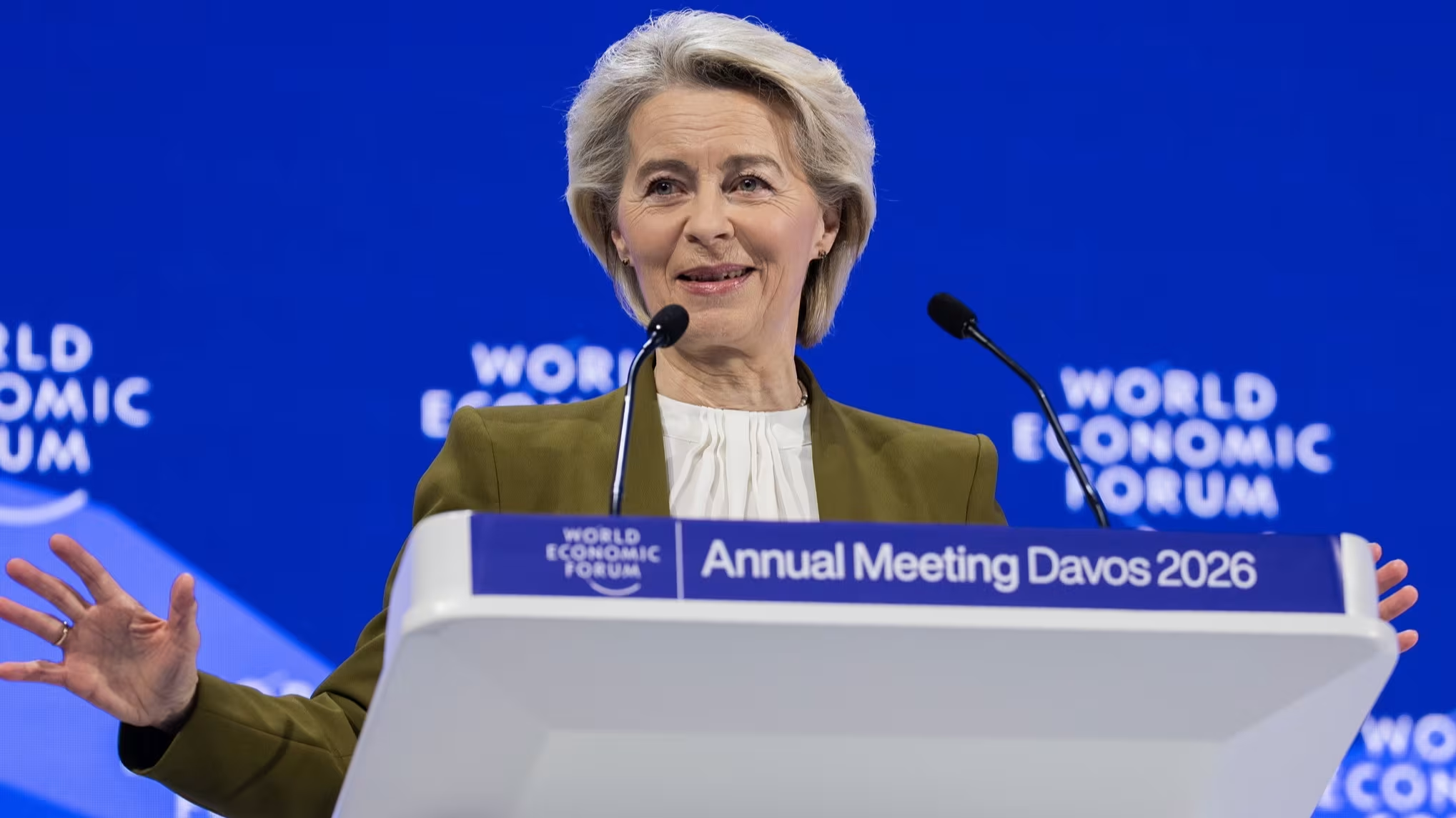
The geopolitical and economic landscape is undergoing a profound recalibration, prompting Europe to assert greater autonomy and forge its independent path forward, particularly in the wake of evolving international relations.
The current global environment presents a complex tapestry of challenges and opportunities for the European continent. A significant shift in international dynamics, notably concerning relationships with key global partners, has underscored the imperative for Europe to enhance its strategic self-reliance and proactively shape its own destiny. This evolving context necessitates a comprehensive re-evaluation of European policy, economic strategy, and diplomatic engagement on the world stage. The continent is at a critical juncture, where decisions made today will profoundly influence its trajectory for decades to come, impacting everything from economic competitiveness and security to its role in global governance and its ability to address pressing transnational issues.
The Shifting Sands of Global Alliances
For decades, the transatlantic alliance has served as a cornerstone of global stability and economic cooperation. However, recent years have witnessed a discernible divergence in priorities and perspectives between Europe and its traditional North American partners. This divergence is not indicative of a complete rupture, but rather a natural evolution in a multipolar world. Various factors have contributed to this realignment, including differing approaches to trade policy, climate change mitigation, and international conflict resolution.
The economic dimensions of this recalibration are particularly noteworthy. Trade disputes, the imposition of tariffs, and varying interpretations of fair competition have created friction points. Europe, historically a champion of multilateral trade agreements and open markets, has found itself navigating a more protectionist environment, prompting a renewed focus on strengthening intra-European trade relationships and exploring new market opportunities beyond its traditional partners. The continent’s commitment to robust regulatory frameworks and consumer protection, while a source of strength, has also led to disagreements on issues such as data privacy and digital taxation, further highlighting the need for Europe to define its own economic agenda.
On the security front, while collective defense remains a vital component of European strategy, the nature of contemporary threats has broadened. Beyond traditional military concerns, Europe is increasingly grappling with hybrid warfare, cyber threats, disinformation campaigns, and the security implications of climate change. This necessitates a more integrated and agile approach to security, one that leverages European capabilities and fosters deeper cooperation among member states, while also maintaining strong alliances. The continent’s renewed commitment to enhancing its defense capabilities and strategic autonomy reflects a pragmatic understanding of the evolving security environment.
Europe’s Strategic Pivot: Embracing Autonomy and Integration
In response to these shifting dynamics, Europe is embarking on a path of enhanced strategic autonomy. This is not an isolationist impulse, but rather a calculated effort to bolster its capacity to act independently and effectively on the global stage. The concept of strategic autonomy encompasses several key pillars:
-
Economic Resilience and Competitiveness: Europe is intensifying efforts to strengthen its internal market, foster innovation, and reduce dependencies on external supply chains for critical goods and technologies. Investments in advanced manufacturing, digital infrastructure, and research and development are crucial components of this strategy. The focus is on building a more robust and self-sufficient European economy that can withstand external shocks and drive sustainable growth. Initiatives aimed at fostering greater technological sovereignty, particularly in sectors like semiconductors and artificial intelligence, are gaining momentum. Furthermore, efforts to deepen the Capital Markets Union are designed to unlock new avenues for investment and reduce reliance on external financial markets.
-
Technological Sovereignty: In an era defined by digital transformation, Europe recognizes the critical importance of securing its technological future. This involves not only fostering domestic innovation but also establishing clear regulatory frameworks that promote ethical AI development, protect data privacy, and ensure fair competition in the digital sphere. The continent is striving to become a leader in emerging technologies, not merely a consumer of them. This includes significant investments in areas such as quantum computing, green hydrogen, and advanced battery technology, positioning Europe at the forefront of the next wave of industrial innovation.
-
Defense and Security Capabilities: While NATO remains a vital security framework, Europe is also investing in its own defense capabilities to complement and, where necessary, supplement collective security efforts. This involves increasing defense spending, promoting joint procurement of military equipment, and enhancing interoperability among national armed forces. The goal is to ensure Europe can effectively address a wider spectrum of security threats and contribute more substantially to global peace and stability. The development of a more integrated European defense industrial base is seen as a key enabler of this ambition.
-
Diplomatic Engagement and Multilateralism: Europe remains committed to a rules-based international order and continues to be a strong advocate for multilateral solutions to global challenges. However, its diplomatic engagement is becoming more assertive, reflecting its growing influence and its willingness to take a leading role in addressing issues such as climate change, global health, and sustainable development. The continent is actively seeking to forge new partnerships and strengthen existing ones, while also advocating for reforms within international institutions to ensure their continued relevance and effectiveness.
The Internal Dynamics: Unity and Divergence within Europe
The pursuit of greater autonomy is not without its internal complexities. The European Union, a union of diverse member states with varying economic interests and political priorities, must navigate these differences to present a united front on the international stage. Achieving consensus on key policy areas, from trade negotiations to foreign policy, requires constant dialogue, compromise, and a shared understanding of common goals.
However, the very diversity of the EU can also be a source of strength. Different member states bring unique perspectives, expertise, and economic strengths to the table, enriching the continent’s overall capabilities. The challenge lies in harnessing this diversity effectively, ensuring that national interests are balanced with the broader European agenda. Recent years have seen increased collaboration on issues such as vaccine procurement, energy security, and the response to geopolitical crises, demonstrating the EU’s capacity for collective action when faced with significant challenges.
The ongoing debate about the future of European integration reflects both the aspirations and the inherent tensions within the Union. While some advocate for deeper political and economic integration, others emphasize the importance of national sovereignty. The successful navigation of this complex landscape will be crucial for Europe’s ability to project influence and effectively manage its own destiny.
Implications for the Global Order
Europe’s assertion of greater autonomy has significant implications for the global order. It signals a potential recalibration of power dynamics, with Europe emerging as a more independent and influential actor. This could lead to:
-
A more diversified global economic landscape: As Europe strengthens its internal market and seeks new trade partnerships, the global economic landscape may become less dominated by a few major players, fostering greater competition and potentially new avenues for growth.
-
A more assertive European voice on global issues: Europe’s increased capacity to act independently will likely translate into a more prominent and influential voice in international forums, shaping global debates on critical issues such as climate change, human rights, and international law.
-
A redefinition of alliances: While traditional alliances will likely endure, Europe’s enhanced autonomy may lead to the formation of new partnerships and a more flexible approach to international cooperation, based on shared interests and values.
-
Potential for increased global stability: A stronger, more self-reliant Europe, capable of addressing its own challenges and contributing to global security, could foster greater international stability and a more balanced distribution of global responsibilities.
The Path Forward: Navigating Challenges and Seizing Opportunities
The journey towards greater European autonomy is an ongoing process, fraught with both challenges and immense opportunities. Success will hinge on the continent’s ability to maintain internal cohesion, foster innovation, adapt to evolving global dynamics, and effectively leverage its collective strengths. The commitment to a shared future, underpinned by common values and a strategic vision, will be paramount.
Europe’s renewed focus on self-reliance and independent action is not a retreat from the world, but rather a strategic evolution. By strengthening its own foundations and charting its own course, Europe is positioning itself to be a more effective partner, a more resilient economy, and a more influential voice in the complex and ever-changing global arena. The continent’s ability to harness its collective intelligence, embrace innovation, and foster a spirit of cooperation will ultimately determine its success in shaping a more prosperous and secure future for itself and for the world. The coming years will be critical in demonstrating Europe’s capacity to not only adapt to change but to actively lead it.



 Aura Kasih
 Lisa Mariana

 Safa Marwah