Lisa Mariana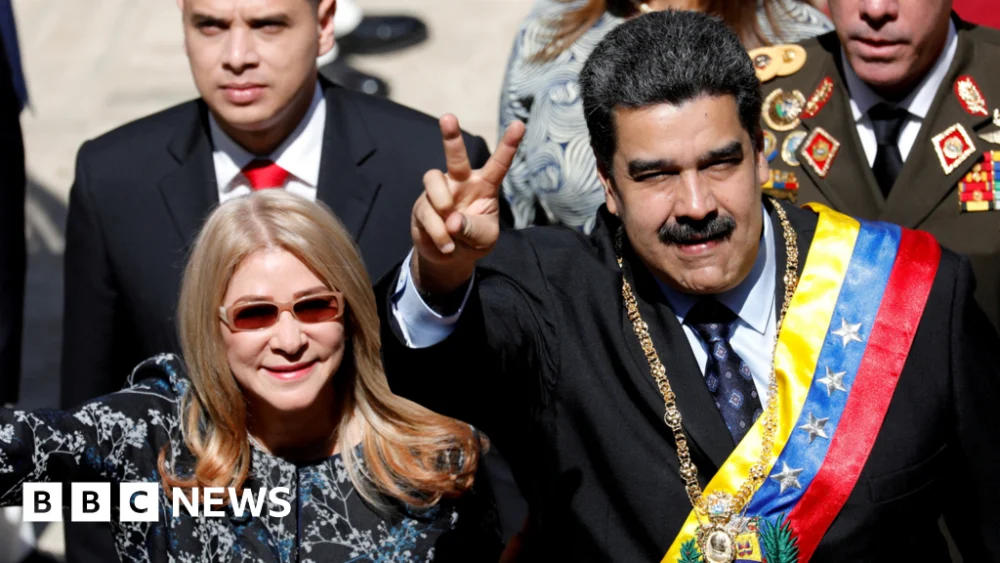
In an extraordinary turn of events that has sent shockwaves across the globe, the United States has confirmed a large-scale military operation targeting Venezuela, culminating in the capture and removal of its controversial President, Nicolás Maduro, and his wife, Cilia Flores. This unprecedented intervention, characterized by early morning explosions across the Venezuelan capital of Caracas and other strategic locations, marks a dramatic escalation in the long-standing geopolitical standoff between Washington and the socialist South American nation, raising profound questions about international law, sovereignty, and the future stability of the region.
The Apprehension of President Maduro: A Daring Operation
Details surrounding the apprehension of President Maduro remain scarce, yet the implications are immense. U.S. President Donald Trump announced that Maduro and First Lady Cilia Flores were extracted from Venezuela in a meticulously coordinated military operation involving elements of U.S. law enforcement. Sources indicate the elite U.S. Army Delta Force, renowned for its counter-terrorism capabilities, was instrumental in the detention, underscoring the high-stakes and specialized nature of the mission. While the precise location of their current custody has not been disclosed, Republican Senator Mike Lee, following discussions with U.S. Secretary of State Marco Rubio, affirmed that Maduro is expected to face criminal charges within the United States. Senator Lee further suggested that with Maduro in U.S. custody, no additional military actions within Venezuela are anticipated, implying the strikes served primarily to facilitate and protect the apprehension team. This development signifies a direct and forceful execution of a U.S. arrest warrant against a sitting head of state, a move with few modern precedents and significant international ramifications.
The Scope and Impact of the Coordinated Strikes
The operation commenced in the pre-dawn hours, around 02:00 local time (06:00 GMT), with multiple powerful explosions reverberating through Caracas. Witnesses reported plumes of smoke rising over key strategic sites, including the La Carlota military airfield in the heart of the capital and Fuerte Tiuna, one of Venezuela’s largest and most critical military installations. The widespread nature of the strikes extended beyond Caracas, with reports indicating hits in the states of Miranda, Aragua, and La Guaira, suggesting a broad effort to neutralize potential resistance or critical infrastructure. Power outages were reported in surrounding communities, further testament to the intensity and disruptive impact of the assault. Unverified social media footage depicting explosions and military helicopters underscored the chaos and uncertainty that gripped the nation. Crucially, immediate information regarding casualties remains unconfirmed, adding to the climate of concern and speculation. The precision and scale of these strikes suggest a sophisticated, pre-planned operation aimed at quickly incapacitating key defense capabilities and securing high-value targets.
Venezuela’s Urgent Response and Condemnation
In the immediate aftermath, the Venezuelan government reacted with a mixture of alarm, defiance, and outrage. Vice-President Delcy Rodríguez issued an urgent public statement, demanding "immediate proof of life" for President Maduro and First Lady Flores, highlighting the government’s initial lack of verifiable information regarding their whereabouts and condition. Defense Minister Vladimir Padrino López vehemently condemned the strikes, asserting that civilian areas had been impacted and vowing that Venezuela would "resist" the presence of foreign troops. He confirmed that authorities were actively compiling information on potential fatalities and injuries. An official government statement denounced the actions as an "extremely serious military aggression" against Venezuelan territory and its population, specifically targeting both civilian and military installations. The statement characterized the U.S. intervention as a blatant threat to international peace and stability, accusing Washington of attempting to seize Venezuela’s vast strategic resources, particularly its oil and minerals, and to forcibly undermine the nation’s political independence. This strong rhetoric signals a determined, albeit potentially desperate, stance against what Caracas perceives as an act of imperialistic aggression.
President Trump’s Affirmation and Strategic Communication
Initially, the White House refrained from public comment following reports of the explosions. However, President Trump later utilized his Truth Social platform to unequivocally confirm U.S. involvement. He declared that the "United States of America has successfully carried out a large scale strike against Venezuela and its leader, President Nicolas Maduro, who has been, along with his wife, captured and flown out of the Country." Trump explicitly stated the operation was conducted "in conjunction with US Law Enforcement" and promised further details. In a brief 50-second phone call with the New York Times, he lauded the operation as "brilliant" and indicated that comprehensive information regarding the future of Venezuela would be unveiled during an upcoming press conference. Trump’s direct and unambiguous public confirmation, a departure from typical protocol in sensitive military operations, underscored the deliberate nature of the intervention and aimed to project strength and resolve.
Nicolás Maduro: A Leader Defined by Controversy and Conflict
Nicolás Maduro’s political trajectory began within the United Socialist Party of Venezuela (PSUV) under the tutelage of the charismatic Hugo Chávez. Following Chávez’s death in 2013, Maduro ascended to the presidency. His legitimacy, however, has been consistently challenged, particularly after the 2024 presidential election, where opposition tallies suggested a landslide victory for Edmundo González, despite official results declaring Maduro the winner. His administration has been embroiled in escalating tensions with the United States, exacerbated by a humanitarian crisis that has driven hundreds of thousands of Venezuelan migrants to the U.S. and the broader White House campaign against drug trafficking, specifically fentanyl and cocaine.
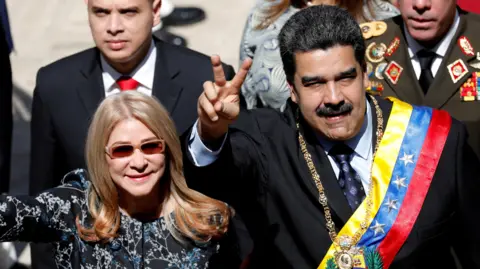
The U.S. government has leveled severe accusations against Maduro, personally implicating him in drug smuggling operations. It designated two Venezuelan criminal organizations, Tren de Aragua and Cartel de los Soles, as Foreign Terrorist Organizations (FTOs), alleging that Maduro himself led the latter. A substantial $50 million reward had been offered by the U.S. for information leading to his arrest. Maduro has consistently and vehemently denied these allegations, countering that the U.S. "war on drugs" is a pretext to depose him and seize Venezuela’s immense oil reserves. This narrative of resource-driven intervention has been a cornerstone of his administration’s anti-U.S. rhetoric. In preceding months, U.S. forces had already conducted over two dozen interdictions in international waters, targeting vessels suspected of drug trafficking, resulting in over 100 casualties, further intensifying the already fraught relationship.
Global Reactions: A Divided International Community
The news of the U.S. strikes and Maduro’s capture immediately triggered a strong and varied international response, highlighting deep divisions within the global community. Venezuela’s staunch allies were quick to condemn the actions. Russia characterized the U.S. intervention as "an act of armed aggression" that was "deeply concerning and condemnable," signaling potential geopolitical ramifications. Iran’s Supreme Leader Ayatollah Ali Khamenei offered rhetorical support, emphasizing the necessity of firm resistance against perceived foreign imposition. Colombian President Gustavo Petro denounced the strikes as an "assault on the sovereignty" of Latin America, reflecting regional concerns over external interference. Cuba’s President Miguel Diaz-Canel branded it a "criminal attack," aligning with long-standing anti-U.S. sentiment in Havana.
Conversely, other nations adopted a more cautious or neutral stance. The Spanish foreign ministry called for "de-escalation" and stressed the importance of adhering to international law, a common diplomatic refrain in crises of this nature. Germany and Italy stated they were closely monitoring the evolving situation, indicating a wait-and-see approach before issuing definitive condemnations or endorsements. The international community now grapples with the implications of one sovereign nation forcibly removing the leader of another, an act that tests the very foundations of international law and state sovereignty.
Historical Context and Legal Precedents
The apprehension of a sitting head of state by a foreign military force is an exceedingly rare event in modern international relations, evoking comparisons to highly controversial historical incidents. While dictators have been captured or brought to justice after their regimes collapsed, the direct, forceful removal of a leader by another state’s military from their own territory presents a profound challenge to the principle of state sovereignty enshrined in the UN Charter. International law generally prohibits the use of force against the territorial integrity or political independence of any state. The U.S. justification likely hinges on the existing arrest warrant for drug trafficking, framing the operation as a law enforcement action rather than an act of war, albeit one executed with overwhelming military force. This distinction, however, is likely to be hotly contested by critics, who will view it as a thinly veiled act of regime change and a dangerous precedent. The implications for future international relations and the interpretation of national sovereignty are immense, potentially emboldening other powerful nations to take similar unilateral actions under various pretexts.

Broader Geopolitical and Economic Implications
This dramatic development fundamentally alters the geopolitical landscape of Latin America and beyond. For years, the U.S. has pursued a policy of sanctions and diplomatic pressure against Venezuela, seeking to isolate the Maduro regime and support opposition movements. This military intervention represents the most aggressive manifestation of that policy to date. The immediate future of Venezuela is now highly uncertain; a power vacuum could lead to internal strife, a humanitarian crisis, or even civil conflict. The regional ripple effects could be substantial, potentially destabilizing neighboring countries grappling with the influx of Venezuelan migrants and refugees.
Economically, Venezuela possesses the world’s largest proven oil reserves. The U.S. has long sought to influence the flow of this resource and limit the revenue available to the Maduro government. The future control and exploitation of these resources will be a central concern, with potential implications for global energy markets and the economic recovery of a nation ravaged by years of mismanagement and international sanctions. The question of who will govern Venezuela, and under what international framework, will dictate the trajectory of its vast natural wealth.
An Uncertain Future
The apprehension of Nicolás Maduro marks a pivotal moment, yet it is far from a resolution to Venezuela’s complex crisis. The immediate aftermath will likely be characterized by intense political maneuvering, potential internal power struggles, and continued international condemnation or support. The U.S. will face intense scrutiny regarding its adherence to international law and its long-term strategy for Venezuelan reconstruction and governance. The precedent set by this operation will undoubtedly be debated for years, influencing future discussions on state sovereignty, interventionism, and the global fight against transnational crime. As the world watches, the full consequences of this audacious military and law enforcement action are only beginning to unfold.

 Ridwan Kamil
 Aura Kasih
 Safa Marwah