
 Lisa Mariana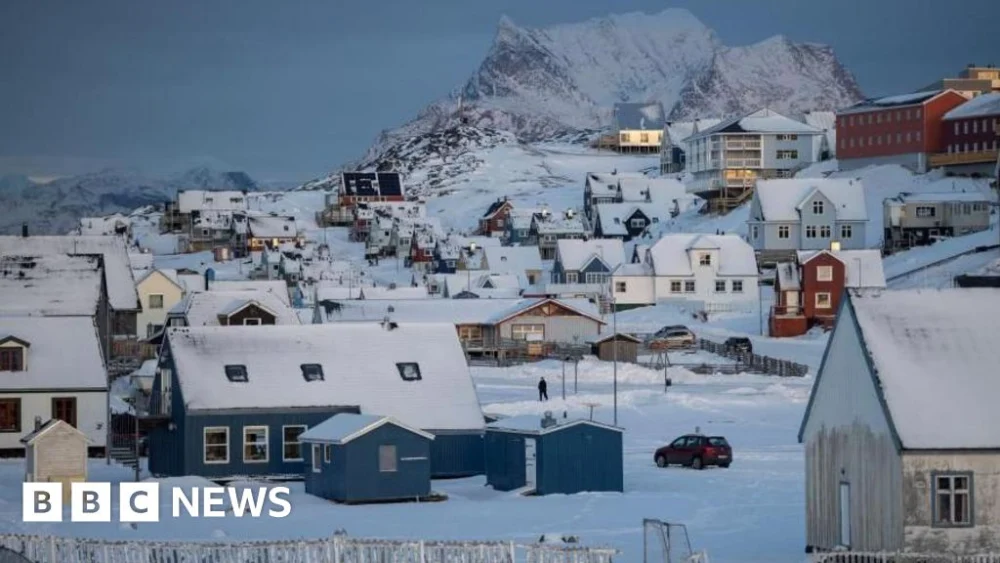
A distinguished bipartisan contingent of American legislators has embarked on a critical diplomatic mission to Denmark, signaling a robust congressional counterpoint to escalating executive branch overtures concerning the potential acquisition of Greenland, a self-governing territory within the Danish Realm. This eleven-member delegation, comprising influential figures from both the Senate and the House of Representatives, aims to reaffirm transatlantic alliances and underscore the enduring principles of international law amidst unprecedented pressure from the US presidency. Their agenda includes pivotal discussions with Danish parliamentary members, Prime Minister Mette Frederiksen, and Greenlandic Premier Jens-Frederik Nielsen, underscoring the gravity of the situation and the legislative branch’s commitment to traditional diplomatic norms.
The visit unfolds in the immediate aftermath of high-level discussions in Washington that failed to deter President Donald Trump from his publicly articulated ambition to purchase or otherwise secure Greenland. The President has consistently framed Greenland’s integration into US territory as an imperative for national security, arguing that Denmark lacks the requisite capabilities to adequately defend the vast Arctic island against potential encroachments from rival powers such as Russia or China. This assertion, however, has been met with unequivocal opposition from both Copenhagen and Nuuk, who maintain their unwavering commitment to Greenland’s sovereignty and self-determination.
Greenland’s strategic importance transcends its sparse population, deriving primarily from its vast, largely untapped natural resources and its unparalleled geostrategic location. Situated at the nexus of the North American continent and the Arctic Ocean, Greenland offers an invaluable vantage point for early warning systems crucial for missile defense and for comprehensive maritime surveillance across a critical global waterway. The United States already maintains a significant military footprint on the island, with over a hundred personnel permanently stationed at Thule Air Base, officially known as Pituffik Space Base, an installation operated by the US since the Second World War. Existing bilateral agreements between Washington and Copenhagen grant the US considerable latitude to deploy additional forces to Greenland as deemed necessary for mutual defense. Nevertheless, President Trump has asserted that outright "ownership" is essential for effective long-term defense, consistently advancing proposals to acquire the territory – offers that have been unequivocally rebuffed by Danish and Greenlandic authorities. Furthermore, the President has controversially alluded to the possibility of a forcible acquisition, a suggestion that has elicited profound alarm across the international community.
Such rhetoric has prompted a stark warning from Denmark, which cautioned that any military action against Greenland would irrevocably shatter the foundations of NATO, the transatlantic defense alliance of which the United States is the preeminent and most influential partner. The North Atlantic Treaty Organization operates on the bedrock principle of collective defense, enshrined in Article 5, which mandates mutual assistance in the event of an external attack on any member state. The prospect of one NATO ally employing force against another represents an unprecedented and existential challenge to the alliance’s very ethos and operational framework.
In response to this diplomatic quandary, European allies have swiftly rallied in support of Denmark, articulating a unified position that the security of the Arctic region is a shared responsibility of paramount importance to all NATO members. They advocate for a collaborative, alliance-wide approach to Arctic security, with the United States playing an integral, but not unilaterally dominant, role. Demonstrating this collective resolve, several European nations, including France, Germany, Sweden, Norway, Finland, the Netherlands, and the United Kingdom, have dispatched limited contingents of military personnel to Greenland for what have been characterized as reconnaissance missions. French President Emmanuel Macron further solidified this commitment, announcing forthcoming deployments of "land, air, and sea assets" to the region, signaling a broad European commitment to Arctic stability and Denmark’s sovereign integrity.
The US Congressional delegation, characterized by its fervent support for NATO and multilateralism, is led by Senator Chris Coons, a prominent Democrat. Senator Coons articulated the delegation’s underlying philosophy earlier in the week, stating, "we need to draw closer to our allies, not drive them away," a clear repudiation of the executive branch’s confrontational posture. While the majority of the delegation comprises Democratic lawmakers who are political opponents of President Trump, the group notably includes Republican Senators Thom Tillis and Lisa Murkowski, underscoring the bipartisan consensus within Congress regarding the importance of upholding alliances and international norms. This bipartisan alignment extends to legislative efforts, with Democratic and Republican lawmakers collaborating on proposed legislation aimed at precluding the President from attempting to seize Greenland through force. Conversely, a lone Republican congressman has introduced a competing bill that expresses support for the annexation plan, highlighting the internal ideological fissures within the American political landscape, though this position represents a minority view within Congress.
The historical context of US interest in Greenland is not new; the United States has explored the possibility of purchasing the island on multiple occasions, notably in 1867 and again in 1946 following World War II, recognizing its strategic value. However, these past inquiries were conducted through established diplomatic channels and predicated on mutual consent, a stark contrast to the recent, more assertive rhetoric. Greenland, with its approximately 56,000 inhabitants, primarily Indigenous Inuit, enjoys a significant degree of self-governance within the Danish Realm, controlling its own resources and domestic affairs, while Denmark retains authority over foreign policy, defense, and security. Any alteration to this status would require the explicit consent of both Greenland and Denmark, underscoring the profound challenge to international law and principles of self-determination inherent in the President’s proposals.
From an expert analytical perspective, the implications of a forced acquisition would be far-reaching and catastrophic. Such an action would not only constitute a grave breach of international law, including the principles of territorial integrity and non-intervention, but would also severely erode the credibility of the United States as a global leader committed to a rules-based international order. It would send a chilling message to allies worldwide, particularly those hosting US military bases, regarding the sanctity of their sovereignty and the reliability of American commitments. Furthermore, the legal and ethical quagmire of annexing a populated territory without the consent of its people would be an unprecedented move for a democratic nation, inviting global condemnation and potentially sparking a crisis at the United Nations.
Beyond the immediate diplomatic fallout, the broader geopolitical landscape of the Arctic region is central to this dispute. The melting of Arctic ice caps, accelerated by climate change, is progressively opening new shipping routes and exposing vast reserves of natural resources, including rare earth minerals crucial for modern technology, hydrocarbons, and abundant fisheries. This unfolding scenario has intensified strategic competition among global powers, with Russia expanding its military presence and China pursuing economic and scientific interests, often referred to as a "Polar Silk Road." In this evolving environment, stability and adherence to international frameworks like the Arctic Council are paramount. A unilateral US action against Greenland would destabilize this delicate balance, potentially triggering an arms race or increased militarization in a region traditionally characterized by peaceful scientific cooperation and resource management.
The future outlook for this contentious issue remains uncertain. The bipartisan congressional push to uphold traditional alliances and international law represents a significant check on executive power, demonstrating the internal mechanisms within the US political system designed to prevent unilateral executive overreach in foreign policy. The legislative efforts to either prevent or support annexation reflect a deeper ideological struggle within the US regarding its role in the world – whether as a guarantor of the liberal international order or as a power prioritizing perceived national interests through more aggressive means.
Ultimately, the resolution of this diplomatic impasse will test the resilience of transatlantic relations and the foundational principles of NATO. It will also highlight the increasing agency of Greenlanders in shaping their own destiny, as their voice becomes ever more critical amidst competing external pressures. While diplomatic dialogue and adherence to international legal norms offer a pathway to de-escalation and the preservation of alliances, a sustained executive insistence on unilateral action risks prolonged international friction, undermining the very security objectives it purports to advance and irrevocably altering the landscape of global governance.




 Aura Kasih
 Ridwan Kamil


 Safa Marwah