
 Aura Kasih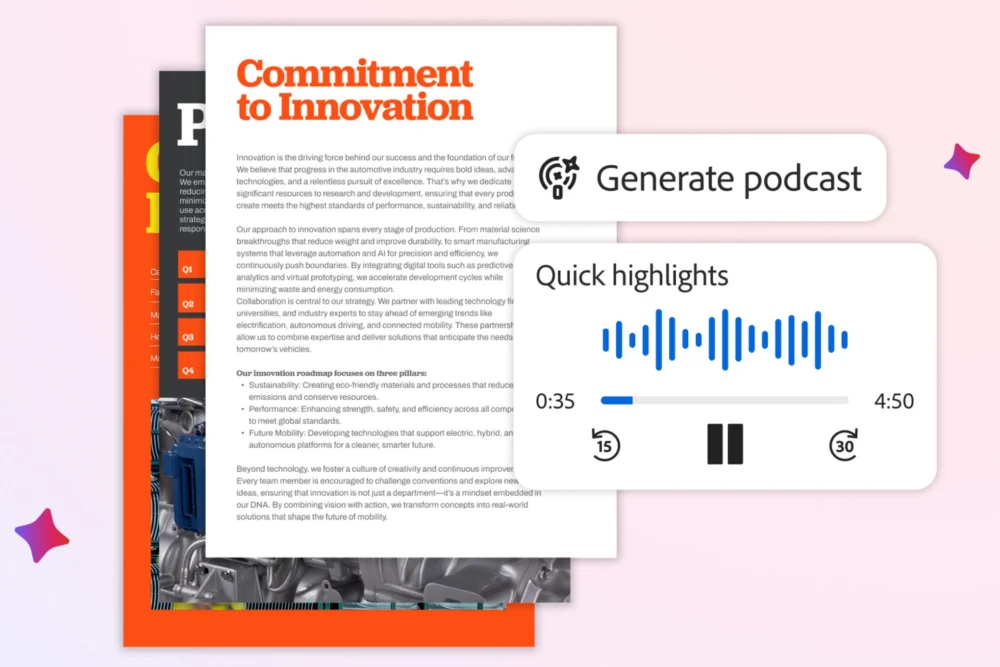
Adobe is significantly enhancing its Acrobat platform by integrating advanced generative artificial intelligence, enabling users to transform static PDF documents into dynamic audio summaries and compelling visual presentations with unprecedented ease. These powerful new features, accessible through the dedicated Acrobat Studio environment, represent a substantial leap forward in how individuals and organizations can leverage their existing document repositories for communication and knowledge dissemination.
The introduction of the "Generate Podcast" functionality marks a pivotal moment in audio content creation derived from textual sources. This innovative feature allows users to convert lengthy reports, meeting transcripts, educational materials, and even simple notes into engaging, podcast-style audio narratives. This capability addresses a growing demand for accessible information consumption, catering to audiences who prefer auditory learning or multitasking. While Adobe is continuously exploring and developing its proprietary AI audio models, this particular feature currently draws upon established and robust technologies. Specifically, it utilizes a Microsoft GPT model for the critical task of transcription, accurately converting spoken words or existing text into written form. Subsequently, a sophisticated Google voice model is employed to synthesize this transcribed content into natural-sounding speech, creating a polished audio output. This hybrid approach, leveraging best-in-class solutions from different technology leaders, underscores Adobe’s commitment to delivering high-quality user experiences by integrating specialized AI expertise. This strategic decision to partner with other AI giants for specific functionalities also highlights the rapidly evolving landscape of artificial intelligence, where collaboration and integration are key to rapid innovation. It suggests a forward-thinking strategy by Adobe, recognizing that the most effective AI solutions may arise from a combination of in-house development and strategic alliances, allowing for flexibility and adaptation as AI technology matures.
This approach echoes similar advancements seen in other AI research and development initiatives, such as Google’s NotebookLM research tool, which offers an "Audio Overviews" feature for its users. However, Adobe Acrobat’s established presence and widespread adoption within professional and academic circles position "Generate Podcast" to become an immediately accessible and highly impactful tool for a vast user base already familiar with PDF workflows. The integration into Acrobat means that the barrier to entry for creating professional-sounding audio summaries from dense documents is dramatically lowered, democratizing content creation and making information more digestible for a broader audience. This can be particularly valuable for educators, researchers, and business professionals who need to convey complex information efficiently and engagingly.
Complementing the audio capabilities, the "Generate Presentation" feature offers a powerful visual dimension to document summarization. This tool empowers Acrobat Studio users to direct the AI to create dynamic pitch decks and presentations that distill key insights from their source documents. By tapping into the robust capabilities of Adobe Express, a suite of design and content creation tools, this feature provides a curated selection of professional presentation templates. Users can opt for a fully automated process, allowing the AI to construct an entire presentation based on the identified key points, or they can engage in a more iterative design process. This flexibility allows for fine-tuning and customization, ensuring that the final presentation aligns perfectly with the user’s specific communication goals and brand aesthetic. The ability to automate the initial creation of a presentation, followed by granular editing, significantly accelerates the workflow for creating compelling visual aids. This can streamline the process of preparing for sales pitches, internal reviews, or educational lectures, transforming raw data and lengthy reports into persuasive visual narratives. The integration with Adobe Express ensures a high standard of visual quality and design coherence, leveraging Adobe’s deep expertise in the creative software domain.

Furthermore, the expansion of Acrobat’s AI assistant to support chat-based editing signifies a paradigm shift in document manipulation. Following a similar successful update implemented in Adobe Express, this functionality allows users to modify PDF documents using natural language commands. This intuitive interface removes the need for complex menu navigation or specialized editing software for many common tasks. Acrobat Studio users can now effortlessly add digital signatures, remove unwanted pages, text, comments, or images, and even replace specific words or phrases by simply describing the desired changes. This conversational approach to document editing not only enhances efficiency but also makes advanced PDF manipulation accessible to a wider range of users, regardless of their technical proficiency. The ability to perform these actions through simple text prompts democratizes the power of document editing, making it a more fluid and less intimidating process. This is particularly beneficial in fast-paced professional environments where quick adjustments to documents are often required.
The strategic integration of these generative AI features into Acrobat Studio underscores Adobe’s commitment to evolving its product ecosystem to meet the demands of modern digital workflows. Acrobat Studio, positioned as an AI-infused document workspace, is distinct from the basic PDF reader, indicating a deliberate strategy to offer advanced, AI-driven functionalities within a dedicated professional environment. This segmentation allows Adobe to cater to users with varying needs, providing both essential PDF management tools and cutting-edge AI-powered creative and analytical capabilities. The underlying AI models are continually being evaluated and refined, with Adobe expressing its intent to adapt and integrate new technologies as they emerge. This proactive stance ensures that Acrobat remains at the forefront of document technology, consistently offering users innovative tools that enhance productivity and unlock new possibilities for content creation and information management.
The implications of these advancements extend across numerous sectors. In education, instructors can transform dense textbooks or research papers into easily digestible audio summaries for students, or create engaging presentations for lectures. Businesses can leverage these tools to quickly summarize market research reports, internal documentation, or customer feedback into actionable insights presented in both audio and visual formats, facilitating faster decision-making and improved communication across teams. The legal and financial industries, which heavily rely on extensive documentation, can benefit from accelerated review processes and more efficient knowledge sharing. The ability to quickly extract key information and present it in accessible formats reduces the time spent on manual summarization and transcription, freeing up valuable professional time for more strategic tasks.
Looking ahead, the continued development of AI within document management promises even more sophisticated applications. We can anticipate features that go beyond simple summarization, perhaps offering AI-driven insights into document trends, predictive analysis based on document content, or automated content generation for specific professional contexts, such as drafting initial versions of reports or marketing materials. The seamless integration of audio, visual, and textual content manipulation within a single platform like Acrobat Studio sets a precedent for future document interaction, blurring the lines between creation, consumption, and analysis. As AI models become more nuanced and context-aware, the ability to interact with and derive value from documents will become increasingly sophisticated and personalized. Adobe’s investment in this area positions them to be a central player in shaping the future of digital document interaction, moving beyond static files to dynamic, intelligent information assets. The ethical considerations surrounding AI-generated content, such as accuracy, bias, and intellectual property, will also remain critical areas of focus as these technologies mature and become more deeply embedded in professional workflows. However, the current trajectory clearly indicates a future where AI serves as an indispensable co-pilot in navigating and leveraging the vast ocean of digital information contained within our documents.




 Lisa Mariana
 Ridwan Kamil

 Safa Marwah