Ayu Aulia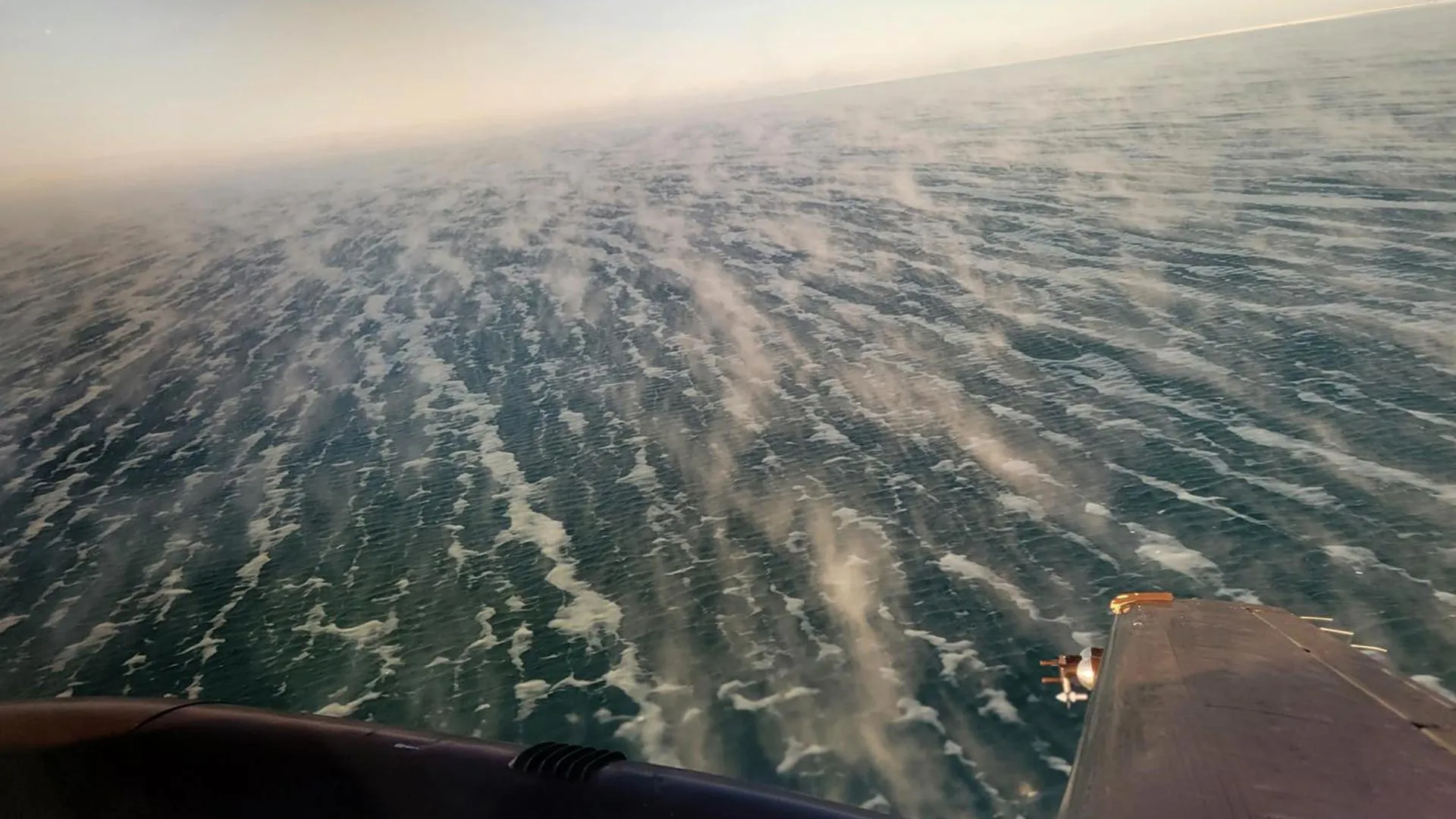
The Earth’s climatic system is undergoing a profound transformation, with the most pronounced and rapid shifts occurring within the polar regions. Recent pioneering research has meticulously mapped the intricate chemical dynamics unfolding within the Arctic atmosphere, revealing a complex interplay of distinct processes that are collectively reshaping the region’s climate trajectory and amplifying its warming rate. This comprehensive investigation illuminates a perilous feedback loop, where natural phenomena and anthropogenic influences converge to intensify the rapid degradation of Arctic sea ice.
A multidisciplinary team of scientists embarked on an intensive two-month field campaign, leveraging an array of sophisticated instrumentation, including specialized research aircraft and ground-based monitoring stations. The primary objective was to conduct a comparative analysis of atmospheric chemistry across two critical Arctic locales, specifically examining areas in proximity to North America’s largest oil field alongside their surrounding untouched environments. This rigorous data collection effort yielded three pivotal discoveries: the profound impact of sea ice openings, known as leads, on atmospheric chemistry and cloud formation; the measurable alteration of the regional atmosphere by emissions emanating from oil field operations; and crucially, the identification of synergistic feedback mechanisms driven by these factors, which collectively accelerate sea ice disintegration and exacerbate Arctic warming.
The CHACHA Initiative: Deciphering Arctic Boundary Layer Dynamics
These groundbreaking insights, recently disseminated in the Bulletin of the American Meteorological Society, constitute a significant output of the broader collaborative endeavor known as CHemistry in the Arctic: Clouds, Halogens, and Aerosols, or CHACHA. This ambitious multi-institutional project, spearheaded by a consortium of five leading research organizations, is meticulously focused on unraveling the complex chemical transformations that occur as air from the planet’s surface ascends into the lower atmosphere. These intricate chemical shifts are fundamental drivers of interactions among water droplets, low-lying cloud formations, and various atmospheric pollutants, all of which play a critical role in the Arctic’s evolving climate.
The study’s emphasis on the atmospheric boundary layer—the lowest stratum of the atmosphere, directly interfacing with the Earth’s surface—is paramount. This layer is exceptionally sensitive to surface conditions, making it a crucible for rapid environmental change in the Arctic. The detailed datasets generated from this campaign are providing an unparalleled understanding of the complex interplay between sea-spray aerosols, clouds intricately coupled to the surface, emissions originating from oil field activities, and the nuanced processes of multiphase halogen chemistry within what is increasingly termed the "new Arctic." The term "new Arctic" underscores the profound and irreversible shifts occurring, driven by unprecedented warming and the consequent transformation of its physical and chemical environment.
To meticulously probe the chemical activity within this critical Arctic boundary layer, the research team undertook extensive air sampling operations. These samples were systematically collected over both snow-covered and recently frozen sea ice expanses within the Beaufort and Chukchi Seas. Concurrently, crucial measurements were obtained over dynamic open leads and across the vast, snow-blanketed tundra of Alaska’s North Slope, encompassing regions directly adjacent to the extensive Prudhoe Bay oil and gas fields. The campaign’s operational base was established in Utqiaġvik, Alaska, spanning from February 21 to April 16, 2022. This specific timeframe was strategically chosen to follow the polar sunrise—a period marking the return of continuous daylight after months of darkness. The resurgence of ultraviolet (UV) light during this phase dramatically intensifies photochemical reactions both at the surface and within the lower atmospheric layers, rendering it a critical window for observing accelerated chemical processes.
Feedback Loop One: The Accelerating Role of Sea Ice Leads
One of the most striking discoveries pertains to the profound influence of sea ice leads on the Arctic’s atmospheric chemistry and energy balance. These dynamic openings in the sea ice cover, which can vary dramatically in scale from mere feet to several miles across, act as powerful conduits for atmospheric convection. They generate vigorous upward air currents and stimulate localized cloud formation, fundamentally altering the boundary layer’s structure. These buoyant plumes effectively loft a diverse array of atmospheric constituents—including potentially harmful chemicals, aerosol pollutants, and significant quantities of water vapor—hundreds of feet into the atmosphere. Each of these factors contributes directly to enhanced warming within the region.
The mechanism is elegantly simple yet powerfully destructive: open leads expose relatively warm ocean water to the much colder Arctic air. This temperature differential drives intense heat and moisture transfer from the ocean surface to the atmosphere. The warmed, moisture-laden air, being less dense, rises rapidly, creating the observed upward air currents. As this moist air ascends and cools, water vapor condenses, leading to the formation of low-level clouds directly above the leads. These clouds, particularly in the Arctic, can exert a significant warming effect by trapping outgoing longwave radiation from the surface, acting as an insulating blanket. This process intensifies the transfer of both heat and moisture, which in turn accelerates the rate of sea ice loss. The more sea ice that melts, the more open water leads are formed, thereby reinforcing and amplifying this destructive cycle. This positive feedback loop—open water leading to more open water—is a critical component of Arctic amplification, where the region warms at a rate significantly greater than the global average.
Feedback Loop Two: Halogen Chemistry, Industrial Emissions, and Ozone Depletion
A second critical feedback mechanism was identified along Arctic coastlines, involving an intricate interaction between naturally occurring chemicals within salty snowpacks and anthropogenic emissions from oil field operations. During the CHACHA campaign, scientists made direct observations of significant bromine production within these saline snowpacks. This process, termed a "bromine explosion," is a phenomenon largely unique to polar environments, driven by specific conditions of cold, saline surfaces, and the catalytic action of sunlight.
Bromine, once released into the atmosphere, rapidly initiates a series of chemical reactions that efficiently deplete ozone from the atmospheric boundary layer. Tropospheric ozone, while a pollutant harmful to human health and ecosystems, also acts as a greenhouse gas. Its removal in the boundary layer has a counter-intuitive effect: it allows a greater amount of ultraviolet (UV) sunlight to penetrate through the atmosphere and reach the surface. This increased solar radiation directly warms the snowpack, which in turn facilitates the release of even more bromine, further strengthening this potent feedback loop.
The interaction with industrial emissions from oil and gas fields adds a dangerous anthropogenic layer to this natural process. Emissions from these operations, such as nitrogen oxides (NOx) and volatile organic compounds (VOCs), can participate in and accelerate the chemical cycles that release bromine from snowpacks. They can act as catalysts or provide reaction pathways that enhance the efficiency of bromine activation, effectively supercharging the natural bromine explosion mechanism. This combined natural and anthropogenic feedback loop not only contributes to localized warming but also significantly alters the oxidative capacity of the Arctic boundary layer, impacting the lifetimes and fates of other atmospheric constituents and pollutants.
Anthropogenic Smog in a Pristine Environment
The field campaign also brought to light substantial alterations within the boundary layer directly above the Prudhoe Bay oil fields. Observations confirmed that gas plumes emanating from extensive oil and gas extraction activities undergo significant chemical reactions within the lower atmosphere. These reactions lead to an increase in atmospheric acidity, alongside the production of various harmful compounds and the formation of photochemical smog.
Specifically, researchers found that halogens, both naturally occurring and potentially enhanced by industrial activity, interact with oil field emissions to generate highly reactive free radicals. These radicals, while short-lived, can initiate further complex chemical reactions that ultimately lead to the formation of more stable compounds. Crucially, these stable compounds possess the capacity to travel long distances from their source, contributing to environmental changes well beyond the immediate vicinity of the oil fields. This phenomenon contributes to the broader "Arctic haze" observed across the region, where industrial pollution from various sources accumulates in the stable Arctic atmosphere, leading to reduced visibility and altered radiative properties.
The extent of this pollution is particularly alarming. While the Arctic is frequently perceived as a pristine, remote wilderness, the CHACHA scientists documented nitrogen dioxide concentrations reaching approximately 60-70 parts per billion (ppb) within these smog plumes. Such levels are commonly associated with major urban centers globally, including metropolitan areas like Los Angeles, highlighting an unprecedented level of industrial atmospheric degradation in a supposedly untouched region. This raises serious concerns about the health of Arctic ecosystems, including flora and fauna, and the indigenous communities that rely on these environments. The long-term ecological and human health impacts of sustained exposure to such pollutant levels in a region traditionally adapted to low-pollution environments are yet to be fully understood but are undoubtedly significant.
Implications for Global Climate Modeling and Future Outlook
The profound and multifaceted findings of the CHACHA project carry significant implications for the scientific community’s ability to accurately model future climate scenarios. The next critical phase of this research will concentrate on synthesizing these extensive datasets into highly detailed, quantitative inputs that climate modelers can directly incorporate. This will enable a more nuanced and accurate representation of how these localized, interconnected Arctic processes may exert influence over broader global climate patterns in the decades to come.
Current global climate models, while increasingly sophisticated, often struggle to accurately capture the fine-scale, complex chemical and physical interactions occurring within the Arctic boundary layer. The dynamic nature of sea ice leads, the intricate multiphase halogen chemistry, and the localized but intense impact of industrial emissions represent processes that are challenging to parameterize effectively at the coarser resolutions typically employed in global models. The CHACHA data provides an unprecedented opportunity to refine these model representations, leading to more robust projections of Arctic amplification, sea ice retreat, and the associated global teleconnections.
Beyond immediate modeling improvements, these findings underscore the urgent need for a holistic understanding of the Arctic’s rapidly changing environment. The identified feedback loops, particularly those involving industrial emissions, highlight the critical intersection of natural climate processes and anthropogenic activity. This knowledge is indispensable for informing policy decisions regarding emission reductions, sustainable resource management in the Arctic, and international efforts to mitigate climate change. As the Arctic continues its unprecedented warming trajectory, the intricate chemical and physical cascades uncovered by projects like CHACHA will be vital for anticipating future changes, protecting vulnerable ecosystems, and preparing for the global consequences of a rapidly transforming polar region.
The CHACHA collaborative team comprised esteemed researchers from several institutions, including Stony Brook University, the University at Albany, the University of Michigan, and the University of Alaska Fairbanks, with essential financial backing for the project provided by the U.S. National Science Foundation. This collective endeavor represents a significant leap forward in understanding the critical and accelerating changes underway in the Earth’s most vulnerable climate zone.




 Safa Marwah
 Aura Kasih
 Lisa Mariana
 Ridwan Kamil