
 Ridwan Kamil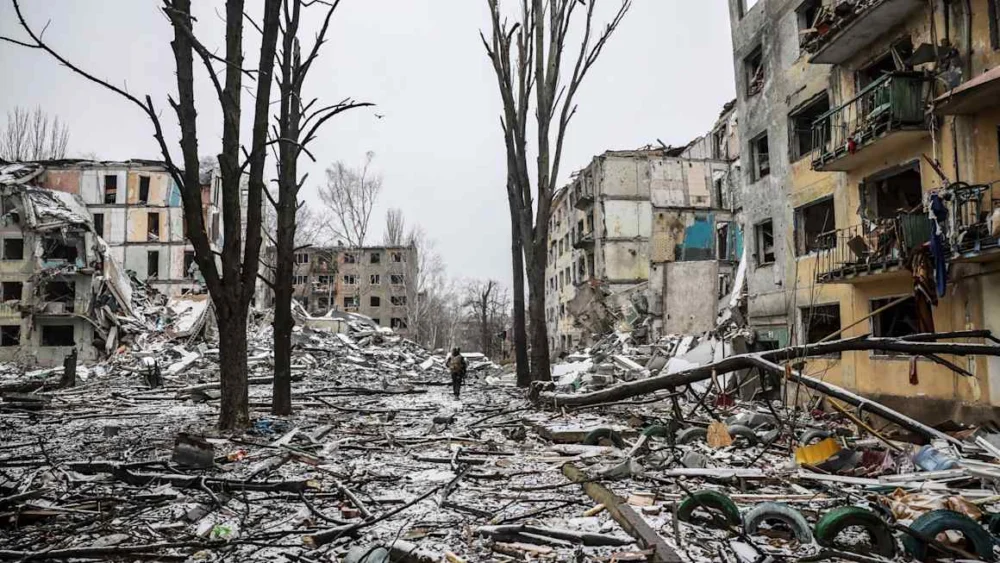
European investors must steel themselves for a tumultuous twelve months ahead, a period defined by escalating geopolitical tensions, persistent economic headwinds, and the increasing likelihood of unpredictable shocks that will test the resilience of portfolios across the continent. The intricate web of international relations, already strained by ongoing conflicts and shifting power dynamics, is poised to become even more volatile, directly impacting market sentiment, supply chains, and the very foundations of economic stability that investors have come to rely upon.
The global landscape, far from offering a period of respite, is increasingly characterized by a complex interplay of long-standing rivalries and newly emergent fault lines. The protracted conflict in Ukraine continues to cast a long shadow, not only through its direct economic consequences, such as energy price volatility and disrupted trade routes, but also by fueling broader strategic realignments. This geopolitical friction extends beyond Eastern Europe, with the rise of multipolarity and the intensifying competition between major global powers creating a more fragmented and unpredictable international order. For European economies, heavily reliant on global trade and energy imports, this environment presents a multifaceted challenge. The specter of further sanctions, counter-sanctions, and the potential weaponization of economic interdependence looms large, necessitating a proactive and adaptive approach to risk management.
Beyond the immediate theater of conflict, the intensifying rivalry between the United States and China represents another significant source of instability. This strategic competition, encompassing trade, technology, and ideological influence, has already led to a reconfiguration of global supply chains, with an increasing emphasis on regionalization and resilience over pure efficiency. For European businesses and investors, this means navigating a landscape where access to critical raw materials, advanced manufacturing capabilities, and key technological components may become subject to geopolitical considerations. Companies that have historically relied on streamlined, just-in-time global supply chains may find themselves re-evaluating their strategies, potentially leading to higher operational costs and a more complex sourcing environment. The implications for sectors ranging from advanced electronics and pharmaceuticals to automotive manufacturing are profound, demanding a strategic pivot towards diversification and enhanced supply chain visibility.
Furthermore, the rise of protectionist tendencies in various economic blocs adds another layer of complexity. As nations prioritize domestic industries and national security, trade barriers, tariffs, and other protectionist measures are likely to become more prevalent. This trend not only impedes the free flow of goods and services but also creates uncertainty for cross-border investment and international market access. European companies operating in a globalized economy will need to meticulously assess the regulatory and trade landscapes in their key markets, anticipating potential shifts that could impact profitability and market share. The era of unfettered globalization appears to be receding, replaced by a more cautious and fragmented approach to international economic engagement.
The economic ramifications of this geopolitical flux are substantial. Inflationary pressures, which have been a persistent concern for developed economies, are likely to remain elevated. Supply chain disruptions, coupled with the ongoing costs associated with energy transition and geopolitical maneuvering, contribute to upward price pressures. Central banks across Europe face the unenviable task of taming inflation without stifling economic growth, a delicate balancing act that carries inherent risks. Interest rate hikes, while necessary to curb inflation, can also dampen investment and consumer spending, potentially leading to a slowdown or even recessionary conditions in some economies. The prospect of stagflation, a scenario characterized by high inflation and stagnant economic growth, remains a tangible concern for policymakers and investors alike.
Energy security, a perennial concern for Europe, has been amplified by geopolitical tensions. While efforts to diversify energy sources and accelerate the transition to renewables are underway, the short-to-medium term reliance on fossil fuels, particularly gas, means that supply disruptions or price shocks remain a distinct possibility. Any escalation of geopolitical conflict in energy-producing regions could have immediate and severe repercussions for European industries and households. Investors will need to closely monitor energy market dynamics, assessing the impact on energy-intensive sectors and evaluating the long-term viability of investments in industries that are heavily exposed to energy price volatility. The strategic imperative to secure stable and affordable energy supplies will continue to shape economic policy and investment decisions across the continent.
The financial markets, inherently sensitive to geopolitical developments and economic forecasts, are likely to experience increased volatility. Investors will be compelled to adopt a more defensive posture, prioritizing asset classes and strategies that offer greater resilience in uncertain times. This may involve a greater allocation to sectors that are less cyclical, such as healthcare and utilities, or an increased focus on companies with strong balance sheets and pricing power that can withstand inflationary pressures. Diversification across geographies and asset classes will be paramount, with investors seeking to mitigate country-specific risks and sector-specific vulnerabilities. The search for yield may also lead investors to explore alternative investments and less traditional asset classes, albeit with a heightened awareness of the associated risks.
Moreover, the specter of cyber warfare and hybrid threats adds a new dimension to geopolitical risk. State-sponsored cyberattacks, disinformation campaigns, and other forms of hybrid warfare can disrupt critical infrastructure, undermine public trust, and create significant economic fallout. Businesses and investors must bolster their cybersecurity defenses and develop robust contingency plans to mitigate the impact of such threats. The interconnected nature of modern economies means that a successful cyberattack on one entity or sector could have cascading effects across the entire financial system.
In this environment, the role of robust risk management and scenario planning becomes indispensable. Investors must move beyond traditional forecasting models and embrace a more dynamic approach to assessing potential outcomes. This involves developing a comprehensive understanding of the interconnectedness of geopolitical, economic, and technological factors, and building portfolios that can withstand a range of plausible, albeit undesirable, scenarios. The ability to adapt quickly to changing circumstances, to identify emerging risks and opportunities, and to make informed decisions under pressure will be the hallmarks of successful investing in the coming year.
The European Union, in its efforts to navigate these challenges, faces the dual task of fostering economic resilience within its member states and asserting its strategic autonomy on the global stage. The ongoing debate surrounding fiscal policy, industrial strategy, and defense cooperation within the EU will have significant implications for the economic outlook of the region. Investors will be closely watching the effectiveness of EU-level initiatives aimed at strengthening supply chains, accelerating the green transition, and enhancing the continent’s security. The ability of the EU to act decisively and cohesively in the face of external pressures will be a critical determinant of its economic and geopolitical standing.
In conclusion, the year ahead presents a formidable set of challenges for European investors. The confluence of geopolitical instability, persistent inflationary pressures, and the evolving global economic order demands a strategic and disciplined approach. Those who can effectively anticipate, assess, and adapt to these complex dynamics, while maintaining a focus on long-term value creation, will be best positioned to navigate the uncertainties and emerge stronger from this period of heightened global flux. The imperative is clear: brace for volatility, prioritize resilience, and remain acutely attuned to the intricate web of global forces shaping the investment landscape.



 Aura Kasih
 Safa Marwah

 Lisa Mariana
 Ayu Aulia