Aura Kasih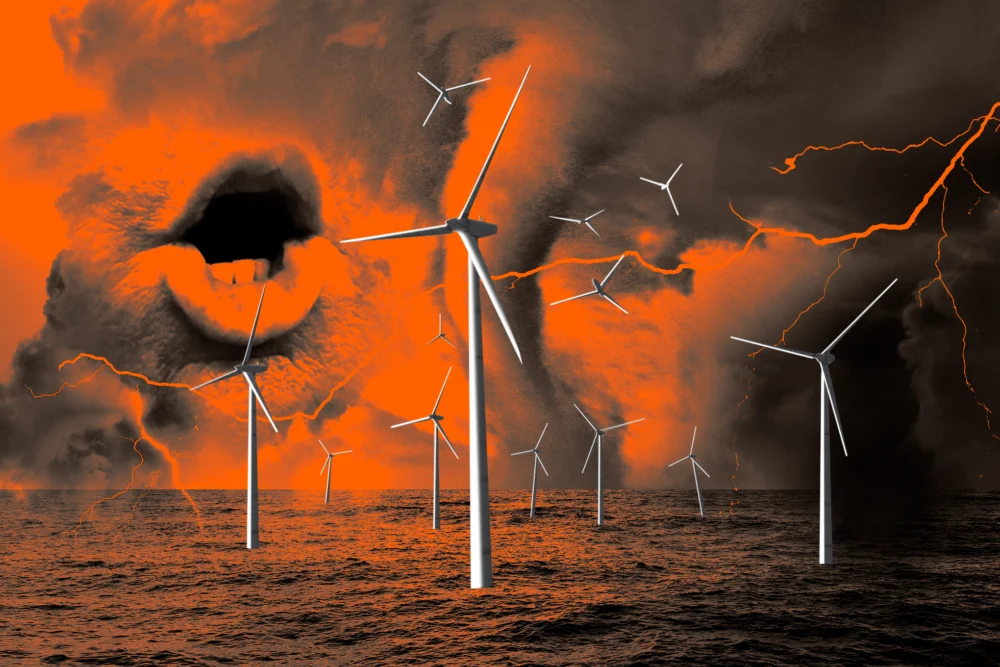
A significant legal challenge has emerged against the current federal administration’s abrupt halt to offshore wind development, as Dominion Energy, a key player in powering Virginia’s booming digital infrastructure, files a lawsuit contesting a recent stop-work order impacting multiple large-scale wind farm projects, including its own Coastal Virginia Offshore Wind (CVOW) initiative. This legal maneuver underscores the growing friction between burgeoning clean energy ambitions and the unpredictable currents of federal regulatory policy, with potentially far-reaching implications for national energy security and economic growth.
The core of Dominion Energy’s legal salvo, detailed in a complaint filed earlier this week, centers on the Bureau of Ocean Energy Management’s (BOEM) sudden imposition of a pause on federal leases for extensive offshore wind installations. The utility contends that this directive is not only procedurally flawed but also fundamentally undermines established legal frameworks, violating constitutional principles governing executive branch authority. At its heart, the lawsuit seeks judicial intervention to invalidate BOEM’s stop-work order, aiming to re-establish the regulatory certainty essential for the continuation of these vital clean energy projects.
Virginia, a state at the forefront of the global artificial intelligence revolution, finds itself at a critical juncture regarding its energy future. The Commonwealth’s "data center alley," a nexus of immense computational power, is experiencing an exponential surge in electricity demand. Dominion Energy’s leadership has repeatedly emphasized that the influx of power generated by offshore wind farms is not merely desirable but essential to meet this escalating need. The company projects that electricity demand in Virginia will double, underscoring the urgency of deploying every available source of clean energy to fuel the burgeoning AI economy and the broader electrification of transportation and industry.
The legal challenge highlights a broader concern within the renewable energy sector: the destabilizing effect of what developers describe as "sudden and baseless withdrawal of regulatory approvals." Such unpredictable shifts in policy can severely jeopardize the viability of large-scale infrastructure investments, which require years of planning, substantial capital outlay, and a consistent regulatory environment. The specter of escalating project costs, directly borne by consumers, looms large as delays mount, adding another layer of complexity to an already sensitive issue of energy affordability. In Virginia, rising electricity rates have already become a significant political concern, and the disruption of projects like CVOW could exacerbate these tensions.
The Trump administration, through the Department of the Interior, has cited national security concerns as the primary rationale for the 90-day moratorium on offshore wind leases. Secretary of the Interior Doug Burgum has stated that recently identified classified reports necessitate a review of potential national security risks. A key point of contention revolves around the potential for wind turbines to interfere with radar systems, a concern that the Department of the Interior has publicly acknowledged. This justification, however, has met with skepticism from some quarters. National security experts, drawing on their experience in naval operations, have questioned the abruptness of this policy shift, suggesting that the threat environment has not fundamentally altered to warrant such a drastic measure. The lack of a clear, publicly articulated change in the threat landscape has fueled speculation and intensified scrutiny of the administration’s motivations.
This is not the first instance of federal intervention impacting offshore wind projects under the Trump administration. Previously, construction on the Revolution Wind farm off the coast of Rhode Island and the Empire Wind project near New York faced similar stop-work orders. While federal judges and BOEM eventually lifted these earlier restrictions, allowing construction to resume, the projects have once again been suspended, illustrating a pattern of regulatory uncertainty. Furthermore, a presidential memorandum issued by Donald Trump upon entering office sought to withdraw significant portions of the outer continental shelf from offshore wind leasing. This broad directive was subsequently struck down by a federal judge, who deemed it "arbitrary and capricious," reinforcing the legal arguments against abrupt and unsubstantiated policy changes.
Dominion Energy asserts that its Coastal Virginia Offshore Wind project had successfully navigated the complex web of federal, state, and local regulatory approvals, with groundbreaking occurring in 2024. The company has already committed a substantial $8.9 billion of the project’s $11.2 billion budget, with initial power generation anticipated for the following year. Upon full operational capacity, the CVOW facility is projected to generate 9.5 million megawatt-hours of carbon-free electricity annually, a volume sufficient to power approximately 660,000 American homes. The potential loss of this significant clean energy resource, coupled with the financial implications of project delays, underscores the gravity of the current regulatory standoff.
The implications of this legal battle extend far beyond the immediate financial interests of Dominion Energy. It represents a critical test case for the future of offshore wind development in the United States, a sector poised to play a pivotal role in the nation’s transition to a cleaner energy economy. The escalating demand for electricity, driven by advancements in artificial intelligence, a resurgent manufacturing sector, and the widespread adoption of electric vehicles, necessitates a robust and reliable energy supply. Offshore wind, with its immense potential for large-scale, consistent power generation, is a cornerstone of strategies aimed at meeting these growing demands and achieving ambitious climate goals.
The legal arguments presented by Dominion Energy, focusing on the arbitrary and capricious nature of the stop-work order and its alleged infringement of constitutional principles, could set important precedents for future regulatory actions. The company’s emphasis on the economic consequences, including increased costs for consumers and the potential erosion of investor confidence in the burgeoning offshore wind market, provides a strong counterpoint to the administration’s national security justifications.
Looking ahead, the outcome of this lawsuit will likely shape the trajectory of offshore wind development for years to come. A favorable ruling for Dominion Energy could restore regulatory stability and accelerate progress on critical clean energy projects. Conversely, an affirmation of the administration’s authority to impose such pauses, even with national security justifications, could introduce a chilling effect on investment and hinder the nation’s ability to meet its energy and climate objectives. The ongoing legal dispute serves as a stark reminder of the delicate balance between national security considerations, economic imperatives, and the urgent need for sustainable energy solutions in an increasingly complex global landscape. The resolution of this case will undoubtedly be closely watched by industry stakeholders, policymakers, and environmental advocates alike, as it holds the potential to redefine the regulatory framework for a vital sector of the American economy.




 Ridwan Kamil
 Safa Marwah
 Lisa Mariana