Lisa Mariana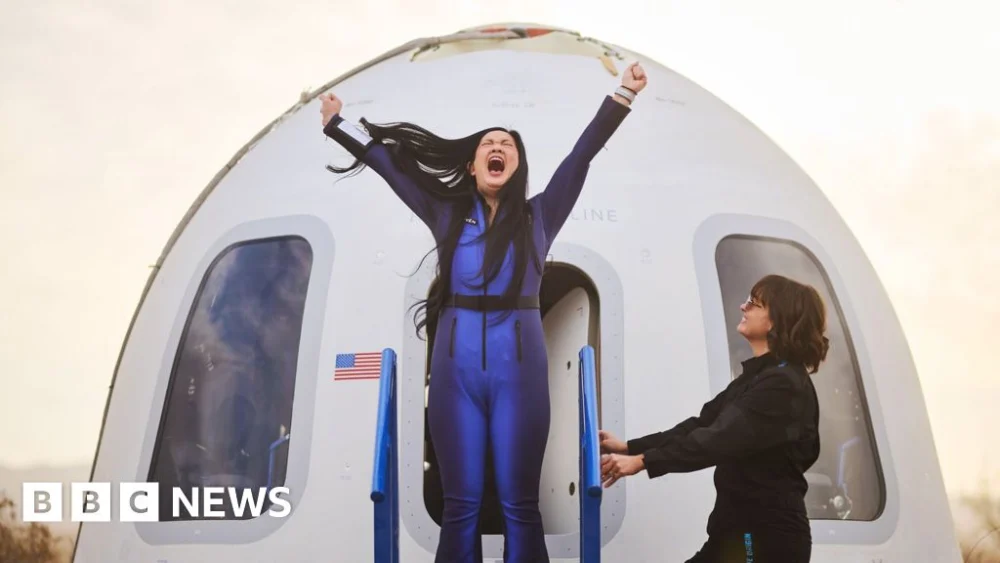
The extraordinary achievement of reaching space can, for some, be overshadowed by an equally formidable terrestrial challenge: the relentless onslaught of public criticism and its devastating psychological consequences, as profoundly experienced by civil rights advocate and scientist Amanda Nguyen following her historic journey aboard a private space mission.
Amanda Nguyen, a distinguished 34-year-old Vietnamese-American trailblazer, recently disclosed the severe depression she endured in the aftermath of her suborbital flight, attributing her mental health struggles to an overwhelming wave of public vitriol. Her participation earlier this year in a groundbreaking expedition, noted for its diverse, all-female crew—a composition not seen in over six decades—catapulted her into the global spotlight. However, the subsequent public reaction, she revealed, transformed a lifelong dream into a crucible of personal anguish, characterized by what she described as an "avalanche of misogyny" that buried her aspirations under a "tsunami of harassment."
The mission itself, operated by Blue Origin, the aerospace venture founded by billionaire entrepreneur Jeff Bezos, was an 11-minute journey that briefly carried its six passengers beyond the Karman Line, the internationally recognized boundary of space. Among the crew were other high-profile individuals, including a prominent media personality and an internationally recognized entertainer, alongside aerospace professionals and a film producer. Despite the pioneering nature of the flight, which marked Nguyen as the first Vietnamese woman to venture into space, it quickly became a lightning rod for criticism. Detractors frequently cited the substantial financial investment required for such private space ventures and their perceived environmental footprint, leading to widespread derision in both traditional media and digital forums.
Nguyen’s candid account, initially shared through a public statement, painted a vivid picture of her post-flight distress. She recounted a conversation with a fellow crew member, a respected American broadcast journalist, in the immediate days following their return, expressing fears that her depression could persist for years. The relentless scrutiny and commentary, she elaborated, constituted an "onslaught no human brain has evolved to endure." This intense psychological burden manifested physically; Nguyen described a week-long period post-flight during which she was unable to leave her bed in Texas. The emotional impact was so profound that a month later, during a call from a senior Blue Origin staff member, she was compelled to terminate the conversation prematurely, overcome by an inability to articulate through her tears.
For Nguyen, the personal significance of the flight extended far beyond mere participation. A dedicated scientist specializing in women’s health research, she meticulously conducted various experiments during her brief time in microgravity. Her identity as a Vietnamese woman astronaut, undertaking this journey on the 50th anniversary of the conclusion of the U.S.-Vietnam War, and as the child of boat refugees, imbued the experience with layers of historical and personal resonance. She articulated that everything she had strived for—her scientific contributions, her women’s health advocacy, the years of rigorous training, the experiments she executed in space, and the profound historical milestone she represented, including a promise she felt she kept to her "survivor self"—was systematically "buried under an avalanche of misogyny."
Beyond her scientific pursuits and space endeavors, Nguyen is globally recognized for her unwavering commitment to civil rights, particularly her pioneering work advocating for survivors of sexual assault. Her journey toward becoming an astronaut, a long-held ambition, was temporarily sidetracked after she experienced sexual assault during her university years. This personal trauma propelled her into a years-long, impactful campaign for justice, which ultimately led to significant legislative reforms. Her decision to speak openly about her depression underscores not only her personal resilience but also her commitment to transparency, even in the face of profound vulnerability.
Eight months after realizing her long-cherished dream of spaceflight, Nguyen shared that the "fog of grief has started to lift," expressing profound gratitude to those who offered support and well wishes, acknowledging them as instrumental in her recovery. Despite the severity of the backlash, she also highlighted the "overwhelming good" that has emerged from the experience. This includes increased media attention on her crucial women’s health research and unparalleled opportunities to engage with global leaders concerning her ongoing advocacy work for human rights.
The Blue Origin New Shepard rocket, which launched from a dedicated facility in Texas, represents a significant facet of the burgeoning commercial space industry. Founded in 2000 by Amazon founder Jeff Bezos, Blue Origin’s mandate includes developing technologies for orbital and suborbital human spaceflight. The New Shepard system, a fully automated, reusable suborbital launch vehicle, is designed for space tourism and scientific research, requiring no human operation during its brief, high-altitude flights. This particular mission, featuring Nguyen and her five female crewmates—including aerospace engineer Aisha Bowe and film producer Kerianne Flynn—symbolized a moment of gender parity in space exploration, offering a glimpse into a future where diverse populations can access the final frontier.
The broader context of commercial spaceflight, spearheaded by private entities like Blue Origin, SpaceX, and Virgin Galactic, presents a complex tapestry of innovation, aspiration, and contention. While proponents celebrate the democratization of space access, the acceleration of technological advancements, and the potential for new scientific discoveries, critics voice legitimate concerns. The immense cost of these ventures, often perceived as the playthings of the ultra-rich, raises questions about resource allocation, particularly in a world grappling with urgent terrestrial challenges. Furthermore, the environmental impact of rocket launches, even infrequent ones, remains a point of ongoing debate. This dichotomy between the awe-inspiring spectacle of space travel and the socio-economic and environmental critiques forms the backdrop against which individuals like Amanda Nguyen find their achievements scrutinized.
From a psychological perspective, Nguyen’s experience illuminates the severe mental health risks associated with public life, particularly for individuals in groundbreaking roles. Being a "first" carries immense pressure, the weight of representation, and often, disproportionate scrutiny. The digital age, characterized by the instantaneous and often anonymous nature of social media, amplifies both support and hostility, creating an environment where a "tsunami of harassment" can materialize with alarming speed and intensity. For an individual who has dedicated her life to both scientific discovery and social justice, achieving a pinnacle of personal ambition only to face such a torrent of negativity can induce profound cognitive dissonance and emotional trauma. The expectation that public figures, especially those deemed "heroes," should be impervious to such attacks is a societal fallacy that often prevents open discourse about mental health. Nguyen’s courage in revealing her depression helps dismantle this harmful stereotype, normalizing vulnerability even among the most accomplished individuals.
Societally, Nguyen’s account offers a stark illustration of the pervasive misogyny and gender-based discrimination that continues to plague women, particularly women of color, in STEM fields and positions of high visibility. The "avalanche of misogyny" she described suggests that a significant portion of the backlash was not merely a critique of commercial spaceflight but a targeted attack rooted in gender bias. This phenomenon is not isolated; women in pioneering roles across various sectors frequently encounter heightened scrutiny, skepticism, and personal attacks that male counterparts rarely face. This incident underscores the ongoing challenge of achieving true equity in scientific exploration and public recognition, where achievements are judged on merit rather than prejudiced biases.
Looking ahead, Amanda Nguyen’s courageous disclosure serves as a critical inflection point for both the commercial space industry and broader societal conversations about public scrutiny and mental health. For private space companies, it highlights the imperative to not only ensure the physical safety of their crew members but also to provide robust psychological support systems, preparing individuals for the unique pressures of global media attention and potential backlash. It also prompts a re-evaluation of how these companies frame their missions to the public, aiming to mitigate purely aesthetic or luxury perceptions in favor of emphasizing scientific merit and broader human advancement.
For future space explorers, particularly those from underrepresented groups, Nguyen’s story is both a cautionary tale and an empowering testament to resilience. It underscores the importance of mental preparedness and a strong support network. Her continued advocacy work, now amplified by her spaceflight experience, is poised to bring even greater attention to women’s health research and civil rights, demonstrating that even amidst profound personal challenges, purpose can emerge. The ongoing ethical and practical debates surrounding private space exploration will continue, but the human dimension, as powerfully articulated by Amanda Nguyen, will undoubtedly remain central to understanding its true impact on individuals and society.




 Ridwan Kamil
 Safa Marwah
 Aura Kasih
 Ayu Aulia