Aura Kasih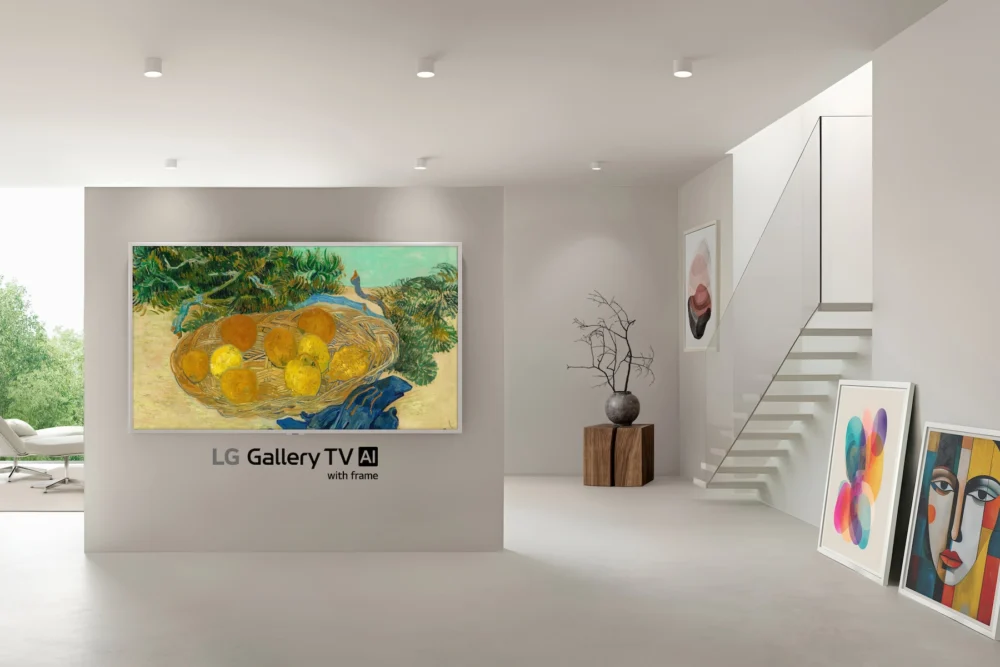
LG is making a significant play in the burgeoning market of televisions designed to blend seamlessly into home decor, announcing its "Gallery TV" at the Consumer Electronics Show (CES). This new offering directly competes with Samsung’s highly successful "The Frame" series, aiming to capture consumers who prioritize aesthetics alongside technological performance. The Gallery TV will be powered by LG’s recently introduced Gallery+ service, a digital platform offering a curated selection of visual content, from fine art reproductions to dynamic cinematic scenes and interactive gaming environments. While a basic tier of Gallery+ will be accessible without charge, unlocking the full breadth of its content library will necessitate a subscription, mirroring the monetization strategy employed by Samsung’s Art Store.
The introduction of the LG Gallery TV signifies a strategic expansion for the South Korean electronics giant into a niche but rapidly growing segment of the television market. For years, Samsung’s "The Frame" has reigned supreme, effectively defining the concept of a television that doubles as a piece of wall art when not in active use. This unique proposition resonated with consumers seeking to mitigate the visual intrusion of a large black rectangle in their living spaces. The success of The Frame has not gone unnoticed, spurring other manufacturers like TCL and Hisense to develop their own interpretations of the art-display concept. LG’s entry, therefore, is not merely an addition to its product portfolio but a calculated move to leverage its technological prowess and brand recognition to challenge the established leader and broaden consumer choice.
The naming convention of LG’s new offering warrants a brief clarification to avoid confusion. While LG has historically used the "Gallery Series" designation for its premium OLED televisions, such as the G Series OLED models, this new "Gallery TV" represents a distinct product category. The previous iteration of the G Series, which featured exceptionally slim profiles and mounting hardware for flush wall installation, has since been rebranded. The Gallery TV, in contrast, is positioned as a mini-LED television. This distinction is crucial as it speaks to the underlying display technology and its inherent characteristics. Mini-LED technology, while impressive in its own right for delivering high brightness and contrast, operates differently from OLED.
A key feature highlighted for the Gallery TV is its "specialized screen that reduces glare and minimizes reflections for an art-like viewing experience." This description strongly suggests the implementation of a matte, anti-reflective coating on the panel’s surface. Such coatings are paramount in emulating the appearance of traditional artwork, which is typically viewed under ambient light conditions without the distracting sheen often associated with glossy displays. The goal is to create an environment where the displayed imagery feels integrated into the room’s decor, rather than a stark, luminous screen. This focus on reducing ambient light interference is a hallmark of successful art-display televisions, as it enhances the perceived realism and depth of the displayed content.
While LG has remained tight-lipped regarding the precise backlight configuration of the Gallery TV, industry observers can make educated inferences based on contemporary art TV designs. The vast majority of existing art-focused televisions, including Samsung’s The Frame and similar offerings from competitors, utilize edge-lit backlighting. Given this prevalent trend, it is highly probable that LG’s Gallery TV will follow suit. Edge lighting, while capable of producing sleek, ultra-thin panel designs, presents certain technical challenges compared to full-array local dimming (FALD) systems. However, for the specific application of displaying static or slowly changing artwork, the limitations of edge lighting may be less pronounced, particularly when combined with advanced image processing.

The choice of mini-LED technology over OLED for this specific product line is also a significant strategic decision, rooted in the fundamental differences between the two display technologies. OLED panels are renowned for their perfect blacks, infinite contrast ratios, and exceptional viewing angles, all achieved through self-emissive pixels. However, OLED technology, particularly when displaying static images for extended periods, carries a residual risk of image retention or, in more severe cases, permanent burn-in. This inherent characteristic makes OLED screens less ideal for continuous art display, where a single image might remain on screen for hours or even days. Mini-LED, on the other hand, employs a traditional LED backlight with numerous small LEDs, allowing for greater control over local dimming zones and thus improved contrast and brightness without the same burn-in concerns. This makes mini-LED a more robust and worry-free choice for an "always-on" art display functionality.
LG’s approach to the physical design of the Gallery TV also mirrors successful elements from competitors, particularly Hisense. The company has incorporated a swappable frame system, a feature that has proven popular with consumers who wish to customize the television’s appearance to match their interior design. The default frame will be a clean white, offering a minimalist aesthetic. For those seeking a warmer, more traditional look, an optional wood-toned frame will be available for purchase. This attention to detail in the physical enclosure is critical for an art-focused product, as the frame is an integral part of its visual presentation.
Currently, LG plans to offer the Gallery TV in two popular screen sizes: 55 inches and 65 inches. These dimensions are well-suited for the typical living room environment and offer a substantial canvas for displaying digital art. However, pricing information has not yet been disclosed by LG. The cost will undoubtedly be a significant factor in consumer adoption, especially when positioned against the established pricing of Samsung’s The Frame and other competing art TVs. Analysts will be closely watching LG’s pricing strategy to gauge its competitiveness and market penetration goals.
The broader implications of LG’s entry into this market are far-reaching. It signals a maturing of the smart television industry, where functionality is increasingly being augmented by aesthetic considerations. The art TV segment is a testament to the desire for technology that not only entertains but also enhances the living environment. LG’s Gallery TV, powered by the Gallery+ service, has the potential to democratize access to high-quality digital art display, making it more accessible and appealing to a wider audience. The success of this venture will likely depend on a combination of factors: the quality of the mini-LED panel, the effectiveness of the anti-glare coating, the breadth and quality of the Gallery+ content library, the user-friendliness of the platform, and, of course, a competitive price point.
Furthermore, the integration of a subscription service for premium content raises questions about the long-term value proposition for consumers. While a free tier offers a taste of the service, the true appeal of an art TV lies in its ability to present a vast and diverse collection of visually engaging content. LG will need to demonstrate that its Gallery+ subscription offers compelling content that justifies the recurring cost. This could involve partnerships with museums, galleries, photographers, and digital artists, as well as the development of exclusive content that cannot be found elsewhere. The ability to curate and present a dynamic and evolving library of art will be crucial for sustained user engagement.
The competitive landscape in the art TV market is intensifying, and LG’s Gallery TV is poised to become a significant contender. By leveraging its expertise in display technology and its established brand presence, LG aims to carve out a substantial share of this growing market. The company’s strategic decision to utilize mini-LED technology, coupled with a specialized anti-glare screen and a customizable frame, addresses key consumer demands for a television that functions as both a high-performance display and an elegant piece of home decor. As CES unfolds, further details regarding the Gallery TV’s specifications, performance benchmarks, and pricing will undoubtedly shed more light on its potential impact and its ability to redefine the aesthetics of home entertainment. The ongoing evolution of smart TVs beyond mere functional devices to integrated elements of interior design is a trend that LG’s Gallery TV is well-positioned to champion.




 Ridwan Kamil
 Safa Marwah
 Lisa Mariana
 Ayu Aulia