Aura Kasih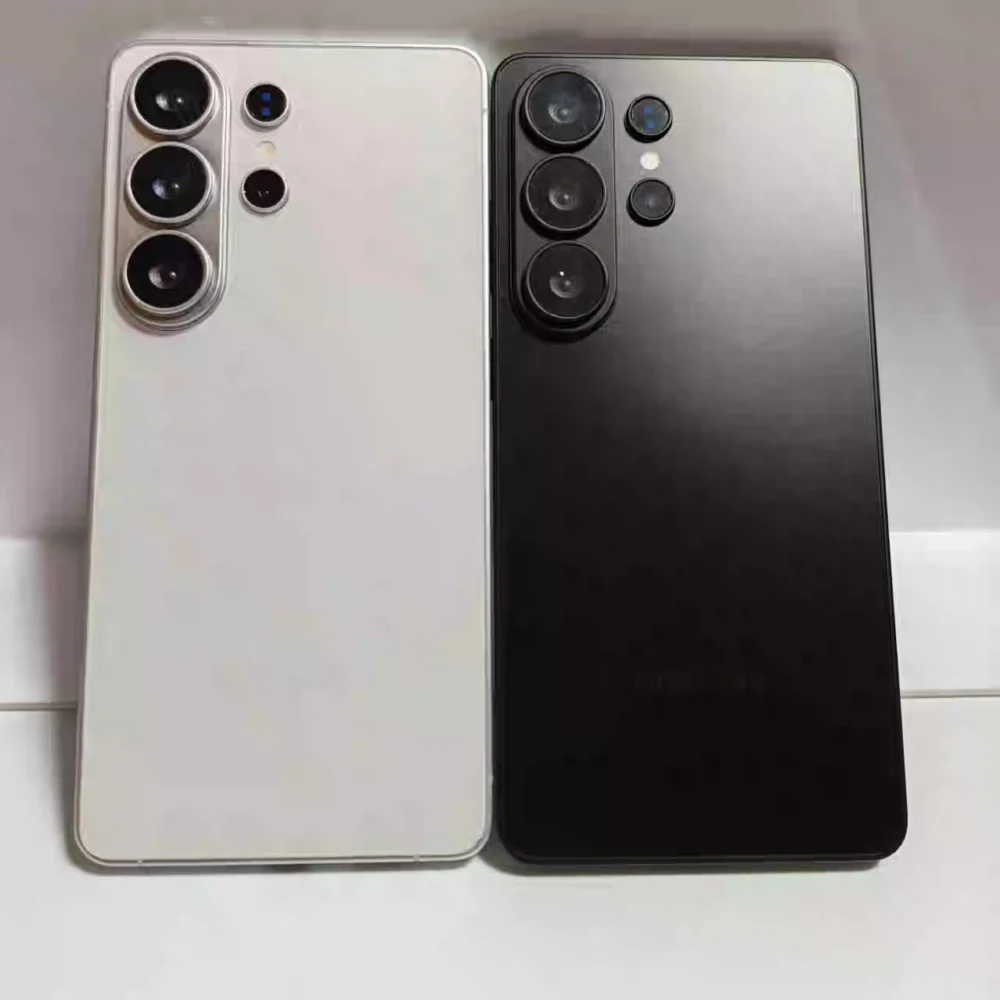
Emerging photographic and video evidence offers a compelling preview of Samsung’s forthcoming Galaxy S26 Ultra, revealing a significant and potentially polarizing redesign of its prominent camera housing. This leak suggests a departure from recent iterations, reintroducing a more pronounced "bump" that is likely to be a defining characteristic of the device’s aesthetic and functional profile.
The visual information, disseminated through clandestine channels, paints a picture of a device that embraces a more substantial camera module. This architectural shift is not entirely unprecedented within Samsung’s product ecosystem, as a similar design philosophy has been observed in the recent Galaxy Z Fold 7. This design choice, while potentially offering enhanced optical capabilities, raises immediate questions regarding the device’s ergonomics and practical usability, particularly concerning its stability when placed on flat surfaces. The implication of a more pronounced camera protrusion is a heightened risk of "wobble," a phenomenon that can detract from the user experience during everyday interactions, such as typing or interacting with notifications while the phone is laid down.
This latest revelation builds upon earlier speculative reports. In September of the previous year, preliminary design renders surfaced, hinting at a departure from the S25 Ultra’s more integrated camera design. These initial renderings, which also pointed towards a more prominent camera array, were met with considerable interest and debate within the tech community. The current leak appears to validate these early impressions, providing a more tangible glimpse into the final product’s physical manifestation.
Furthermore, recent speculation surrounding the broader Galaxy S26 lineup has indicated a potential realignment of Samsung’s flagship strategy. Renders that emerged in November suggested a notable redesign for the Galaxy S26 Plus, also featuring a conspicuous camera island. This development has fueled conjecture that the S26 Plus might be poised to absorb the market segment previously occupied by a slimmer "Edge" model, indicating a broader design language shift across Samsung’s premium offerings. The anticipated launch window for the S26 series, typically set for February, places these design revelations squarely within the critical pre-release information cycle, intensifying anticipation and market analysis.
The prominence of the camera system on flagship smartphones has become an increasingly critical differentiator in a saturated market. Consumers often prioritize photographic capabilities, and manufacturers continually strive to integrate more advanced sensor technology, larger lenses, and sophisticated imaging processors. This relentless pursuit of photographic excellence inevitably leads to compromises in device design, most notably in the physical dimensions of the camera module. The S26 Ultra’s apparent embrace of a more substantial camera bump can be interpreted as Samsung’s strategic decision to prioritize cutting-edge camera hardware, potentially signaling advancements in sensor size, optical zoom capabilities, or the integration of novel imaging technologies that necessitate a larger physical footprint.

Historically, Samsung has experimented with various camera housing designs across its Galaxy S line. Early iterations featured more discreet lens cutouts, gradually evolving to encompass larger individual sensors and more complex arrangements. The Galaxy S22 Ultra, for instance, adopted a pill-shaped camera island that housed individual lenses without a unified frame. The S23 Ultra then introduced a more streamlined, albeit still prominent, individual lens design that sat flush with the back panel. The S24 Ultra further refined this by integrating the lenses into a unified, raised rectangular island. The impending S26 Ultra’s design, as suggested by the leaks, appears to represent a significant evolution, potentially moving towards a more consolidated and architecturally distinct camera unit.
The technical implications of a larger camera bump are manifold. Physically larger sensors can capture more light, leading to improved low-light performance, better dynamic range, and the potential for higher resolution images. Enhanced optical zoom capabilities often require larger and more complex lens assemblies, which in turn necessitate more space. Furthermore, the integration of advanced stabilization mechanisms, such as larger optical image stabilization (OIS) units or sensor-shift stabilization, can also contribute to a larger module size. Samsung’s consistent push for industry-leading camera performance on its Ultra models suggests that these leaked visuals are likely indicative of substantial internal hardware upgrades designed to maintain its competitive edge.
Beyond the purely technical, the design of the camera island has significant implications for the overall aesthetic and user interaction with the device. A more pronounced bump can alter the in-hand feel of the phone, potentially making it less comfortable to hold for extended periods or more prone to tipping when used on a flat surface, as previously noted. This ergonomic consideration is a crucial aspect of smartphone design, and manufacturers must strike a delicate balance between advanced functionality and user comfort. The success of the S26 Ultra’s design will hinge on Samsung’s ability to mitigate any potential negative impacts of the larger camera module, perhaps through improved weight distribution, refined material finishes, or software optimizations that enhance grip.
The competitive landscape of premium smartphones is intensely focused on camera innovation. Apple’s iPhone Pro models have consistently featured prominent camera bumps, a design choice that has become synonymous with their high-end imaging capabilities. Google’s Pixel series, while often opting for a more integrated "visor" design, has also showcased advancements in computational photography that have redefined smartphone imaging. Samsung, by seemingly embracing a more substantial camera island for the S26 Ultra, is signaling its commitment to pushing the boundaries of hardware-driven photographic excellence, aiming to deliver tangible improvements that users can readily perceive.
The timing of these leaks, occurring several months before the official unveiling, is a common tactic in the industry, allowing for a controlled release of information and generating pre-launch buzz. It also provides an opportunity for market analysts and consumers to scrutinize the design and speculate on its implications. The "content" referenced in the initial report likely refers to the visual nature of these leaks – the photographs and videos that offer an unvarnished look at the device’s external features.
Looking ahead, the Galaxy S26 Ultra’s camera system will undoubtedly be a focal point of Samsung’s marketing efforts. The company will likely highlight any new sensors, lens configurations, or imaging technologies that necessitate the new design. The debate surrounding the practicality versus the aesthetic of such a pronounced camera bump will continue to be a significant talking point. Ultimately, the success of this design will be determined by whether the perceived photographic benefits outweigh any potential drawbacks in terms of ergonomics and everyday usability. The S26 Ultra represents a critical juncture for Samsung, demonstrating its ongoing commitment to photographic innovation and its willingness to embrace bold design choices to achieve its technological ambitions. The market will be keenly watching to see how this new camera architecture translates into real-world performance and user satisfaction.




 Ridwan Kamil
 Safa Marwah
 Lisa Mariana
 Ayu Aulia