
 Lisa Mariana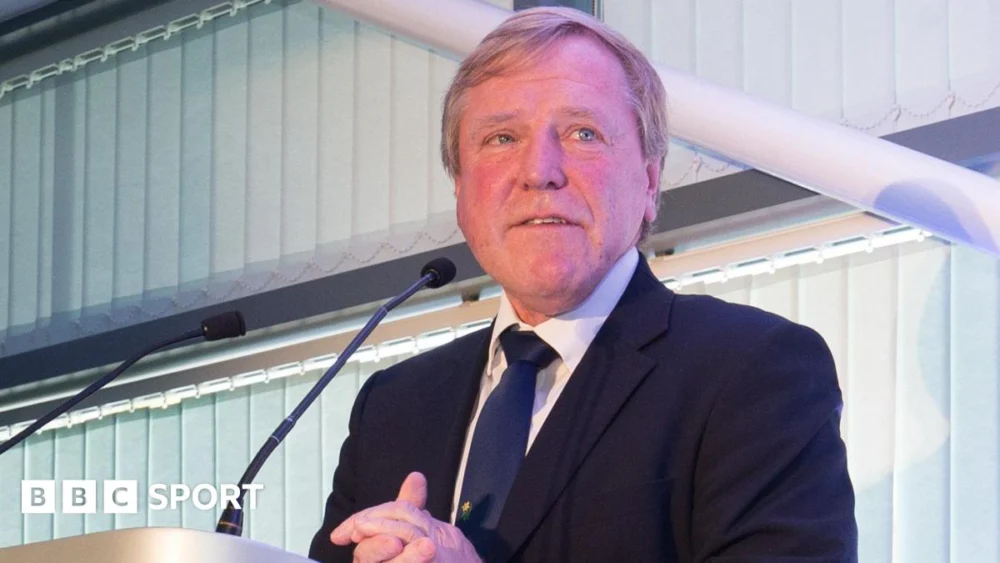
The cricketing world mourns the passing of Hugh Morris, a distinguished figure whose career spanned exceptional performance as a player and transformative leadership as an administrator, at the age of 62.
Hugh Morris’s journey through the echelons of cricket was marked by a rare blend of on-field prowess and astute strategic vision off it. Born in Cardiff, his early life was intrinsically linked with the game, manifesting a talent that would see him rise through county ranks to represent his country. His premature departure leaves a profound void, yet his legacy, etched in the annals of Glamorgan County Cricket Club and the England and Wales Cricket Board (ECB), remains indelible. Morris’s battle with illness began with a diagnosis of bowel cancer in January 2022, a challenge he faced with characteristic fortitude. Despite a temporary return to his executive duties, the demanding nature of his treatment ultimately led him to step down from his role as Chief Executive of Glamorgan in September 2023, prioritising his family during this intensely personal struggle.
As a cricketer, Morris was revered for his resolute and prolific style as an opening batter. His technical proficiency, coupled with an unwavering temperament, made him a formidable presence at the top of the order. He dedicated significant portions of his playing career to Glamorgan, the county he would later lead with such distinction. His tenure as captain of Glamorgan spanned two distinct periods, a testament to his natural leadership qualities and the respect he commanded from his peers. A crowning achievement of his playing captaincy was leading Glamorgan to the Sunday League title in 1993, a triumph that resonated deeply within the Welsh cricketing community and underscored his ability to inspire success. Beyond his county achievements, Morris earned three full caps for the England national team, a highly coveted honour that placed him among the elite of his generation. His leadership capabilities were further recognised when he captained England A on challenging tours to South Africa, the West Indies, and Sri Lanka, experiences that undoubtedly honed the strategic acumen he would later deploy in his administrative roles.
Upon concluding his playing career, Morris seamlessly transitioned into the administrative sphere, dedicating an impressive 16 years to various senior positions within the ECB. This extended period allowed him to gain a comprehensive understanding of the intricate workings of English cricket, from grassroots development to the pinnacle of the international game. His ascension through the ECB hierarchy culminated in his appointment as Chief Executive, a role in which he exercised significant influence over the direction and strategic development of the sport. During his tenure as Chief Executive, English cricket experienced a period of remarkable success, particularly concerning the men’s Test team. Under his strategic oversight, England achieved the rare feat of securing three consecutive Ashes series victories, a testament to the robust structures and high-performance environments cultivated under his leadership. This era was characterised by a concerted effort to foster a culture of excellence, identify and nurture talent, and provide the necessary resources for national teams to thrive on the international stage. His administrative foresight played a crucial role in shaping the trajectory of England’s cricketing fortunes, establishing frameworks that yielded sustained success.
Following his impactful tenure at the ECB, Morris made a poignant return to his roots, taking up the mantle of Chief Executive at Glamorgan. This homecoming marked the beginning of a transformative nine-year period for his beloved home county. Upon his return, Glamorgan faced significant financial challenges, a precarious situation that threatened the club’s long-term viability. Morris, drawing upon his extensive experience and formidable negotiation skills, embarked on a determined mission to stabilise and revitalise the club’s financial health. His efforts led to a substantial reduction in debts, safeguarding the future of Glamorgan Cricket. Beyond fiscal recovery, one of Morris’s most significant achievements during this period was ensuring that Sophia Gardens, Glamorgan’s home ground in Cardiff, became a designated venue for the burgeoning Hundred competition. This strategic move was instrumental in securing the Welsh Fire franchise for Cardiff, a decision that brought significant investment, increased spectator engagement, and elevated the profile of cricket within Wales. The transformation of Sophia Gardens into a modern, international-calibre stadium capable of hosting major cricketing events stands as a tangible testament to his vision and relentless dedication. He foresaw the importance of adapting to the evolving landscape of global cricket and positioned Glamorgan at the forefront of this new era.
Morris’s life was also marked by profound personal resilience and a commitment to charitable causes. In 2002, he was diagnosed with throat cancer, a battle he courageously fought and ultimately overcame. This experience profoundly shaped his perspective and ignited a passion for supporting others facing similar health challenges. He subsequently became a dedicated patron of Heads Up, a charity committed to supporting vital research into head and neck cancer. His personal journey through illness provided him with unique empathy and drive to contribute to this crucial cause, demonstrating a character that extended far beyond the boundary ropes. It is important to note that his 2022 bowel cancer diagnosis was entirely unrelated to his earlier fight against throat cancer, highlighting the unfair and relentless nature of his health struggles. Despite these personal adversities, Morris continued to serve the game and his community with unwavering dedication.
His multifaceted contributions to cricket and charity did not go unnoticed. In 2022, his extensive service to the sport and his philanthropic endeavours were formally recognised with the prestigious appointment as a Member of the Order of the British Empire (MBE). This national honour underscored the significant impact he had made across various facets of British life. Further cementing his revered status within Welsh sports, Morris was posthumously inducted into the Welsh Sports Hall of Fame in September 2024, a fitting tribute to a man who embodied the spirit of Welsh sporting excellence. These accolades reflect a career defined by integrity, leadership, and an enduring commitment to the betterment of cricket and society.
The news of Hugh Morris’s passing has elicited a wave of heartfelt tributes from across the cricketing world, each underscoring the profound respect and affection he commanded. Dan Cherry, who succeeded Morris as Chief Executive at Glamorgan, articulated the deep sense of loss felt within the club, stating, "Hugh holds a very special place in the history of Glamorgan Cricket as well as in the hearts of the club’s supporters for his efforts, both on and off the field." Cherry fondly remembered Morris as "a man of great energy and a true gentleman," whose achievements would be perpetually enshrined in the club’s records. He particularly highlighted Morris’s extraordinary seasonal record of 2,276 first-class runs, a feat Cherry doubted "any batter in any county team will ever surpass," thereby immortalising his prowess as a player. Cherry drew a powerful parallel between Morris’s fearless approach as a player, "fending off whatever thunderbolts opposing bowlers sent in his direction," and his administrative courage in leading the club through perilous financial times, when "foreclosure seemed a possibility." He emphasised Morris’s role in the club’s salvation and his enduring legacy, notably the transformation of Sophia Gardens into an "international calibre" venue and the establishment of the Welsh Fire franchise, both pivotal for the future of Welsh cricket. Cherry concluded with a poignant reflection on the loss, describing Morris as "a great player, a tireless administrator, and a fine human being of great dignity and integrity," extending the club’s deepest sympathies to his wife Debbie, their twin daughters Bethan and Emily, and his wide circle of friends and colleagues.
International cricketing figures also paid their respects. Former Indian cricketer Ravi Shastri, who shared the dressing room with Morris during his four-year stint at Glamorgan, expressed his profound sadness: "Really gutted to hear of the passing of teammate and captain Hugh Morris. Baanas, God bless your soul. You were honest in whatever you did, and did a bloody good job. Heartfelt condolences to the family. Respect." Shastri’s use of the affectionate nickname "Baanas" speaks volumes about the camaraderie and bond they shared, underscoring Morris’s integrity and effectiveness in all his endeavours. Similarly, former England wicketkeeper Jack Russell offered a concise yet powerful tribute, lamenting, "Sad to hear of the passing of my old team-mate Hugh Morris MBE. One of the game’s really good guys will be sadly missed #RIPHugh." These personal reflections collectively paint a portrait of a man universally admired for his character, leadership, and unwavering commitment to the sport.
Hugh Morris’s passing represents a significant loss to the cricketing community, particularly in Wales and England. His multifaceted career, encompassing an illustrious playing period and highly impactful administrative roles, leaves an expansive and enduring legacy. From his prolific run-scoring at Glamorgan and brief foray into international cricket to his pivotal leadership at the ECB during a period of national team success, and his transformative return to his home county, Morris consistently demonstrated exceptional dedication and strategic insight. His personal battles with cancer, faced with remarkable courage, further illuminated his resilient spirit and compassionate nature, driving his commitment to charitable causes. The tributes from his peers and successors underscore not only his professional achievements but also his profound impact as a person – a gentleman, a leader, and an inspiration. The foundations he laid at both Glamorgan and the ECB will continue to shape the future of cricket, ensuring that his influence resonates for generations to come. His memory will undoubtedly serve as a beacon of excellence and integrity within the sport he loved and served so faithfully.




 Ridwan Kamil
 Aura Kasih

 Safa Marwah