Lisa Mariana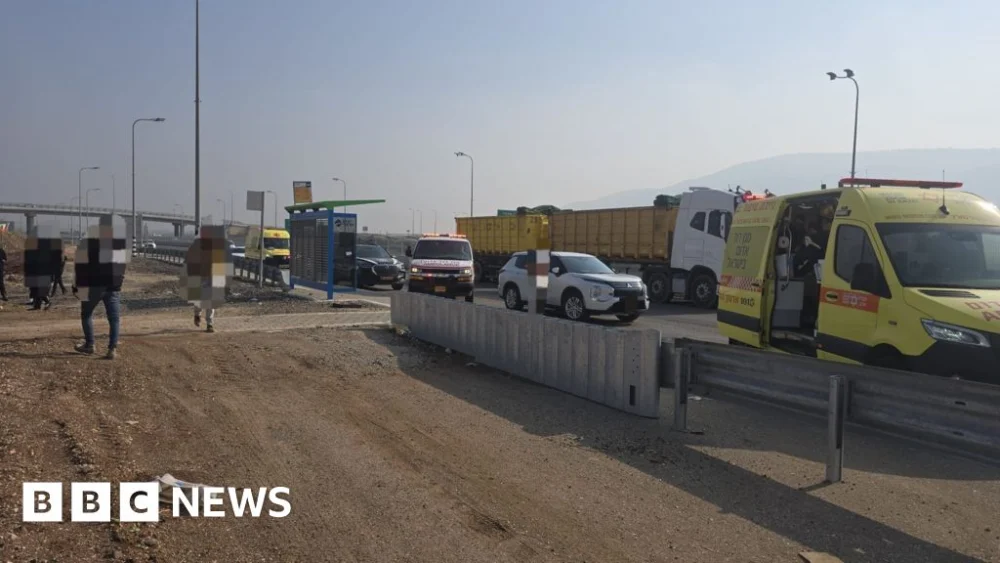
A violent incident unfolded across northern Israel today, resulting in the fatalities of two individuals and injuries to several others, as a perpetrator engaged in a series of vehicle ramming and stabbing assaults, underscoring the persistent and volatile security challenges facing the region. The assailant, identified as a Palestinian national from the occupied West Bank, initiated his rampage in the city of Beit Shean before continuing westward, ultimately being neutralized by civilian intervention following a multi-kilometer pursuit.
The sequence of events commenced in the eastern city of Beit Shean, where a male pedestrian, aged 68, was fatally struck by a vehicle in what authorities swiftly characterized as a deliberate act of terror. The vehicle, subsequently confirmed to have been driven by the assailant, continued its trajectory for approximately 12.5 kilometers (8 miles) to the vicinity of Ein Harod. There, the perpetrator abandoned the vehicle and proceeded to carry out a stabbing attack, critically wounding an 18-year-old woman. The assailant’s flight was ultimately halted outside the city of Afula, where a civilian, whose identity has not yet been publicly disclosed, intervened and shot the suspect, bringing an end to the rolling assault. Medical emergency services confirmed the death of the 68-year-old man and reported that a 16-year-old boy sustained injuries in the initial ramming incident in Beit Shean, alongside the 18-year-old woman injured in the subsequent stabbing.
Investigations quickly revealed the suspect’s origin as the village of Qabatiya, situated in the northern occupied West Bank. Initial reports suggest the 37-year-old individual had unlawfully entered Israeli territory several days prior to the attack and was reportedly employed illegally within Israel. Crucially, the vehicle utilized in the ramming was identified as belonging to his employer, raising further questions regarding the circumstances of his presence and access. In response to the grave security breach, Israel’s Minister of Defense immediately issued directives to the Israel Defense Forces (IDF) to prepare for a robust and immediate operational response in the Qabatiya area, signaling a likely escalation of military activity in the West Bank.
Historical Context and Evolving Threats
This incident is not isolated but rather fits within a broader, deeply entrenched pattern of violence characterizing the Israeli-Palestinian conflict. For decades, the region has been marred by periods of intense conflict punctuated by seemingly spontaneous acts of aggression. Attacks employing vehicles and knives have become increasingly prevalent in recent years, particularly since the mid-2010s, often attributed to so-called "lone wolf" perpetrators. These individuals, frequently lacking direct affiliation with established militant organizations, are often radicalized through online content, personal grievances, or a deep-seated sense of frustration stemming from the prolonged occupation and the absence of a political horizon. The accessibility of vehicles and knives, combined with their capacity for significant harm in civilian areas, renders them a persistent and challenging threat for security forces to preempt.
The geopolitical landscape of the West Bank remains highly volatile. Frequent Israeli military raids, often aimed at apprehending suspected militants or dismantling terror infrastructure, are met with resistance and contribute to a cycle of violence. Concurrently, the expansion of Israeli settlements and the daily realities of occupation fuel Palestinian resentment. The movement of Palestinians between the West Bank and Israel, whether legally or illegally, is a constant point of tension and a significant security concern for Israeli authorities. While Israel relies on Palestinian labor in various sectors, particularly construction and agriculture, the porous nature of the separation barrier and the economic desperation driving many to seek work illegally present inherent security vulnerabilities.
Operational Response and Intelligence Implications
The swift declaration by the IDF to initiate operations in Qabatiya highlights Israel’s doctrine of immediate and forceful retaliation against communities from which attackers originate. Such operations typically involve raids, arrests, and sometimes demolition of homes associated with perpetrators, intended as a deterrent. However, critics argue these measures can further inflame tensions and contribute to collective punishment, potentially fueling future cycles of violence.
From an intelligence perspective, "rolling terror attacks" present a unique challenge. Unlike planned, organized assaults that may leave digital or operational footprints, these incidents often involve spontaneous decisions or rapid escalation of intent, making traditional intelligence gathering methods less effective. The perpetrator’s status as an illegal worker using an employer’s vehicle adds layers of complexity, pointing to potential gaps in enforcement of labor laws and border controls. The incident will undoubtedly prompt a review of intelligence protocols regarding individuals who infiltrate Israel for work, as well as an assessment of the efficacy of current physical barriers and surveillance technologies along the West Bank boundary. The fact that a civilian ultimately neutralized the threat also underscores the widespread carrying of firearms by trained Israeli citizens and the readiness of the populace to respond in crisis situations, a double-edged sword that provides immediate defense but also carries risks in highly charged environments.
Broader Implications and Future Outlook
This latest act of violence carries significant implications for regional stability and policy. Domestically, it will likely intensify calls within Israel for even stricter security measures, potentially including more stringent controls on Palestinian movement, increased military presence in the West Bank, and potentially a re-evaluation of permits issued to Palestinian laborers. Such responses, while aimed at enhancing security, frequently have profound economic and social consequences for Palestinians, exacerbating their already precarious living conditions and potentially fostering further resentment.
Politically, the incident could embolden hardline elements within the Israeli government, potentially leading to a more assertive stance on security matters and a hardening of positions regarding any future peace negotiations. For Palestinian factions, such attacks are often framed differently: by some as legitimate acts of resistance against occupation, and by others as counterproductive acts that undermine the broader Palestinian national cause. The international community, which consistently monitors the Israeli-Palestinian conflict, will likely issue statements condemning the violence and calling for de-escalation, though such calls often have limited immediate impact on the ground.
The attack serves as a stark reminder of the deeply ingrained nature of the conflict and the profound challenges to achieving any lasting peace. The cycle of violence, fueled by historical grievances, political stagnation, and economic disparity, continues to claim lives and deepen animosities. Without a fundamental shift in the political landscape and a renewed commitment to addressing the root causes of the conflict, such tragic incidents are likely to remain a recurring feature of the region, perpetuating instability and human suffering. The immediate future will undoubtedly see heightened security alerts, further military operations in the West Bank, and a pervasive sense of vigilance across Israeli society as authorities grapple with the enduring threat of both organized and individual acts of terror.



 Ridwan Kamil
 Safa Marwah
 Aura Kasih
 Ayu Aulia