
 Lisa Mariana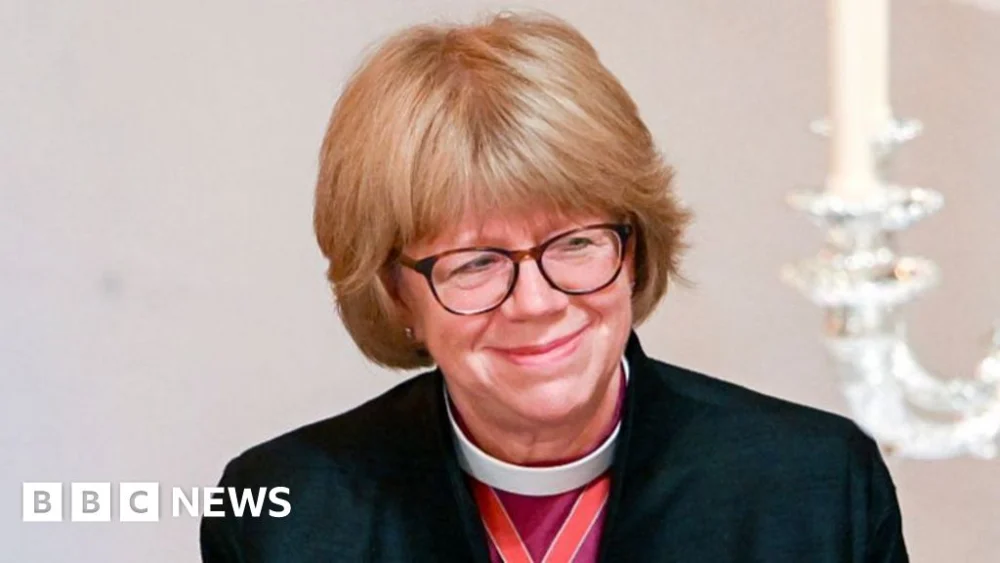
The newly appointed Archbishop of Canterbury is encountering significant pressure from a cohort of Conservative parliamentarians and peers, who are demanding a reversal of the Church of England’s proposed £100 million commitment aimed at addressing its historical ties to the transatlantic slave trade. This formidable challenge to the fund’s legitimacy, which asserts that the allocated finances are legally restricted to core ecclesiastical functions, places an immediate and profound test upon Dame Sarah Mullally as she prepares to assume the Church’s most senior spiritual office.
The genesis of this contentious financial allocation lies in a comprehensive investigation initiated by the Church Commissioners, the Church of England’s primary financial management body. In January 2023, the Commissioners published a landmark report detailing the institution’s profound and troubling historical entanglement with chattel slavery. This report unveiled that a charitable fund, originally established by Queen Anne in 1704, known as Queen Anne’s Bounty, had directly benefited from the proceeds of the transatlantic slave trade. The fund, intended to support impoverished Anglican clergy, was found to have invested in enterprises linked to African enslavement and accepted donations derived from this brutal system. The revelation prompted an immediate and widespread reckoning within the Church, leading to a public apology from the then-Archbishop of Canterbury, Justin Welby, who expressed deep remorse for the Church’s "shameful past" and pledged concrete action to address these historical injustices.
In response to these findings and Welby’s commitment, the Church Commissioners announced the creation of a new £100 million fund, earmarked for disbursement over a nine-year period. The stated purpose of this fund is to foster "healing, justice, and repair" through a structured program of "investment, research, and engagement" specifically directed towards communities that suffered egregiously from the enslavement of African people during the transatlantic slave trade. This initiative was framed as a tangible demonstration of the Church’s commitment to reconciliation and its determination to confront its past complicity in a system of profound human exploitation.
However, the ambitious reparations plan has now drawn sharp criticism from influential political figures. A formal communication, reviewed by the Sunday Times, was dispatched to Dame Sarah Mullally by a collective of Conservative Members of Parliament and members of the House of Lords. This letter emphatically urges the incoming Archbishop to discontinue the proposed expenditure, arguing that the funds are, by legal stricture, confined to supporting the Church’s foundational activities. The signatories contend that the endowment’s legal framework exclusively permits its utilization for the maintenance of church edifices, the payment of clergy stipends, and the broader support of parochial ministries across the nation.
The political opposition transcends mere legal interpretation, venturing into a critique of the Church’s strategic priorities. The MPs and peers characterize the reparations initiative as "high-profile and legally dubious vanity projects," suggesting a misallocation of resources at a time when numerous parish churches across the United Kingdom are facing severe financial duress. They argue that countless local congregations are struggling to sustain their operations, keep their doors open, and prevent their historic buildings from falling into disrepair. In their view, diverting £100 million towards a project deemed "entirely separate from those core obligations" represents a profound error in judgment and a dereliction of fiduciary duty. Among the co-authors of this critical missive are prominent Conservative figures such as Katie Lam, Chris Philp, and Claire Coutinho, lending significant political weight to the challenge.
The Church Commissioners, in their defense, have reiterated their commitment to the fund, asserting that the arrangements for its deployment are being "developed transparently" and in full compliance with charity law. They emphasize their position as a 320-year-old Christian endowment fund, which, upon discovering its historical links to transatlantic African chattel enslavement, deemed it morally imperative to commit resources towards healing and repair. Their spokesperson underscored that this action is entirely consistent with the Church of England’s Fourth Mark of Mission: "to seek to transform unjust structures of society, to challenge violence of every kind and pursue peace and reconciliation." The Commissioners further affirmed their adherence to both their fiduciary duties and their overarching moral purpose, promising robust governance arrangements to ensure proper oversight and accountability of the new investment fund.
Dame Sarah Mullally’s ascension to the Archbishopric marks a pivotal moment for the Church of England, not least because she will be the first woman to hold the prestigious office. Her formal replacement of Justin Welby is scheduled for a ceremony at St Paul’s Cathedral in January, with her enthronement at Canterbury Cathedral slated for March. Mullally brings a unique blend of professional and spiritual experience to the role. A former NHS chief nurse, she transitioned to ordained ministry in 2006, swiftly rising through the ranks to become the first female Bishop of London in 2018, a position that ranks as the third most senior in the Church of England. She inherits a Church navigating not only profound theological and social debates but also a period of intense scrutiny following Welby’s resignation amidst a safeguarding scandal, leaving the top ecclesiastical position vacant for nearly a year. This context means Mullally’s initial decisions, particularly on high-profile and controversial matters such as the reparations fund, will be meticulously observed and carry substantial symbolic weight.
The broader implications of this dispute extend beyond the immediate financial allocation. It brings into sharp relief the complex intersection of historical accountability, contemporary social justice demands, and the legal constraints governing charitable endowments. The legal arguments advanced by the opposing MPs and peers hinge on the concept of cy-près doctrine in charity law, which dictates that if a charity’s original purpose becomes impossible or impracticable, its funds can be redirected to a purpose "as near as possible" to the original intent. The Church Commissioners’ position, conversely, appears to interpret their mandate more broadly, integrating their "moral purpose" and "Fourth Mark of Mission" into their fiduciary responsibilities, arguing that addressing historical injustice is not a departure but an evolution of their core charitable objectives, particularly given the specific origins of the Queen Anne’s Bounty fund.
This debate also reflects a wider societal discourse on reparations for historical injustices, a movement gaining momentum globally. Various institutions, from universities to corporations, are grappling with their own historical ties to slavery and colonial exploitation. The Church of England, as a foundational institution within British society, finds itself at the forefront of this reckoning. Its decision-making process will inevitably set a precedent, influencing how other organizations approach their own historical liabilities and the mechanisms they might adopt for redress.
Furthermore, the political intervention underscores the delicate balance between the Church’s autonomy and its embeddedness within the broader political and social fabric of the United Kingdom. While the Church of England maintains its spiritual independence, its status as the established church means its financial and ethical decisions often become subjects of public and political debate, especially when they involve substantial sums and contentious historical narratives. The incoming Archbishop will need to deftly navigate these external pressures while also managing internal divisions, as not all within the Church may agree on the prioritization of reparations over other pressing ministerial needs.
Looking ahead, Dame Sarah Mullally faces a critical early challenge in her tenure. Her leadership on this issue will define, in part, her approach to reconciling the Church’s historical legacy with its contemporary mission. She could choose to reaffirm the commitment, potentially inviting further legal challenges or political friction, or she could seek a revised approach, risking accusations of backtracking on a moral imperative. The process of developing the governance arrangements for the fund will be crucial, requiring meticulous transparency and a clear demonstration of how the expenditure aligns with both legal requirements and the Church’s stated moral objectives. The resolution of this dispute will not only impact the financial future of the £100 million fund but also profoundly shape the Church of England’s public image, its internal coherence, and its capacity to engage authentically with issues of justice and reconciliation in the 21st century. The outcome will be closely watched by both proponents and opponents of reparations, within and beyond the ecclesiastical sphere, as a significant indicator of institutional willingness to confront and rectify historical wrongs.




 Ridwan Kamil
 Aura Kasih

 Safa Marwah