Lisa Mariana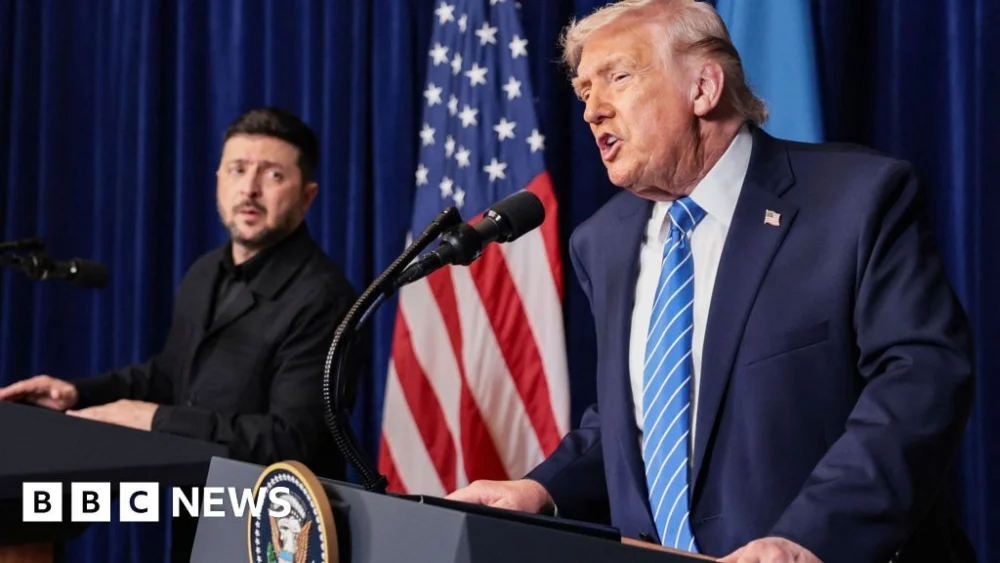
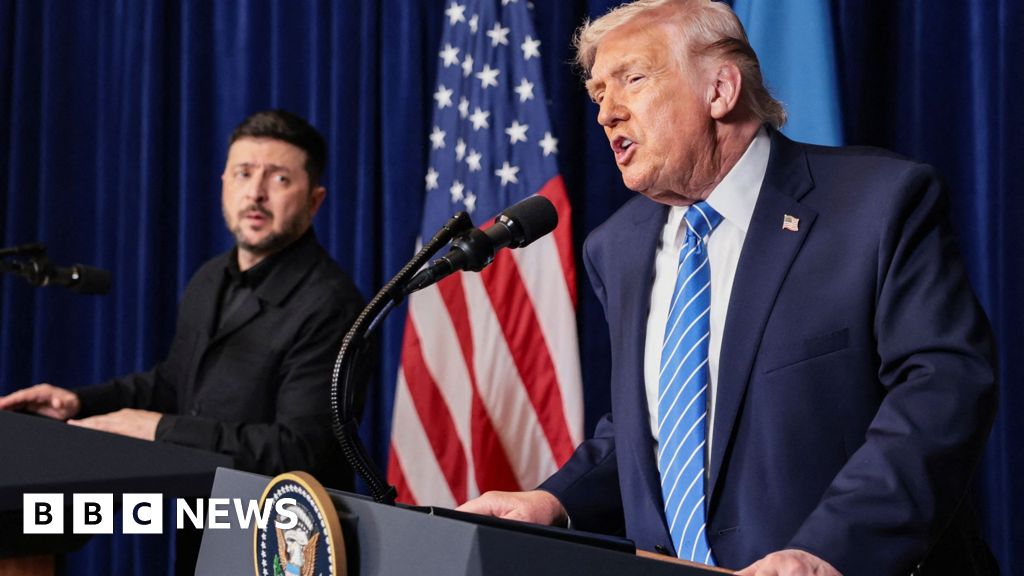
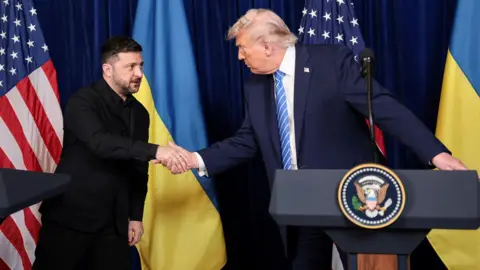
Significant strides toward a potential resolution for the protracted conflict in Ukraine have emerged from high-level discussions between the United States and Ukrainian leadership, although fundamental disagreements on territorial sovereignty and the future security architecture of the region persist. Following a crucial meeting in Florida, both American and Ukrainian officials expressed cautious optimism regarding the advanced state of negotiations, particularly concerning future security assurances for Kyiv. However, President Volodymyr Zelensky has articulated a desire for more expansive protective measures than initially proposed, highlighting the intricate balance required to forge a durable peace.
The recent dialogue, spearheaded by former U.S. President Donald Trump and Ukrainian President Volodymyr Zelensky, reportedly saw the United States put forth a proposal for a fifteen-year security guarantee to Ukraine. This offer, a cornerstone of a burgeoning peace framework, represents a tangible commitment to Kyiv’s post-conflict stability. President Trump characterized the progress on this particular aspect as "close to 95% done," indicating a substantial convergence of views. Yet, President Zelensky, while acknowledging the offer, has since articulated a preference for a significantly longer duration, advocating for guarantees extending up to 30, 40, or even 50 years. This divergence underscores Ukraine’s profound need for long-term protection against potential future aggression from its eastern neighbor, reflecting a deeply ingrained strategic imperative.
The notion of robust security guarantees is paramount for Ukraine. For Kyiv, any cessation of hostilities without concrete, internationally-backed commitments would merely represent a temporary pause in conflict, leaving the nation vulnerable to renewed hostilities. President Zelensky explicitly stated, "Without security guarantees, this war cannot be considered truly over. We cannot acknowledge that it has ended, because with such a neighbour there remains a risk of renewed aggression." This perspective is rooted in historical precedent and the ongoing geopolitical realities of the region, where a fragile peace could quickly unravel without credible deterrence mechanisms. The proposed security assurances are envisioned to commence immediately upon the signing of any comprehensive peace accord, providing an immediate protective umbrella for the war-torn nation.
While the United States has yet to publicly comment on Ukraine’s request for extended guarantee durations, former President Trump had previously suggested that European allies would be expected to assume a substantial share of the responsibility for these security efforts, with continued backing from Washington. This implies a burden-sharing model, where a coalition of international partners would collectively uphold Ukraine’s security, thereby distributing the commitment and reinforcing its enforceability. The involvement of multiple European nations would lend greater weight and credibility to the guarantees, transforming them from a bilateral promise into a multilateral commitment, enhancing Ukraine’s long-term stability.
Beyond security arrangements, the most intractable challenges remaining on the diplomatic table revolve around territorial disputes and the future of critical infrastructure. President Zelensky specifically identified the sovereignty over contested territories and the operational status of the Russian-occupied Zaporizhzhia nuclear power plant as the primary unresolved matters. Conspicuously absent from explicit detailed discussion in the immediate aftermath of the talks was the highly contentious Donbas region, although Trump later confirmed it remains a sticking point.
The Donbas region, encompassing significant portions of the Donetsk and Luhansk oblasts, remains a flashpoint. Russia currently maintains control over approximately 75% of Donetsk and nearly all of Luhansk. Moscow has consistently articulated its unwavering objective to secure full control of these areas, which it has controversially annexed. Ukraine, conversely, has proposed that the Donbas could be transformed into a free economic zone, policed by its own forces, but crucially, any such arrangement would necessitate the direct involvement and consent of the Ukrainian populace through a national consultation or referendum. This reflects Kyiv’s commitment to democratic principles and national self-determination, directly contrasting Russia’s unilateral claims.
The resolution of the Donbas question is arguably the most formidable hurdle in the entire peace process. Its fate has been a perennial obstacle in all previous negotiation attempts. Former President Trump’s own position on Ukraine’s lost territories has exhibited considerable variability. While he had previously stunned international observers by suggesting Ukraine might regain these territories, he subsequently reversed course, illustrating the complex and often fluid nature of high-stakes diplomatic maneuvering. The Kremlin’s recent reaffirmation of its demand for Ukraine to withdraw its troops from the parts of Donbas still under Kyiv’s control further underscores the deep chasm that separates the two sides on this fundamental issue.
The Zaporizhzhia nuclear power plant, Europe’s largest, presents another critical and uniquely dangerous challenge. Its continued occupation by Russian forces raises profound concerns regarding nuclear safety, the potential for catastrophic accidents, and its broader implications for regional stability. Any comprehensive peace agreement would necessarily have to address the plant’s status, potentially involving demilitarization, international oversight, or a return to Ukrainian control under specific security protocols. The presence of military forces around such a sensitive facility poses an unacceptable risk, demanding a robust and immediate resolution within any peace framework.
Despite these significant obstacles, the rhetoric emanating from both Washington and Moscow suggests a degree of rapprochement. President Zelensky reiterated his earlier assessment that an overall peace agreement was "90% of the way there," a figure he had consistently cited prior to the Florida meeting. Strikingly, a Kremlin spokesman, as reported by the Russian state news agency Tass, concurred with Trump’s assessment that peace appeared closer, a rare alignment of views from opposing sides of the conflict. This cautious optimism from Moscow, despite its prior rejections of key elements of Ukraine’s peace plan, indicates a potential shift in diplomatic calculus, perhaps driven by evolving battlefield realities or a strategic reassessment of long-term objectives.
The prospect of trilateral talks involving the United States, Russia, and Ukraine was also floated by former President Trump, who indicated such discussions could occur "at the right time." While keen to add the resolution of the Ukraine-Russia conflict to his list of diplomatic achievements, Trump also issued a cautionary note: stalled or failed negotiations could inadvertently prolong the war. This acknowledges the delicate nature of high-stakes diplomacy, where missteps or inflexibility could exacerbate rather than alleviate conflict.
Looking ahead, President Zelensky suggested that Ukrainian officials could convene at the White House in January, potentially alongside European leaders, to finalize plans for further discussions. This indicates a desire to maintain diplomatic momentum and broaden the base of international support for the emerging peace framework. Indeed, European allies have responded positively to the reported progress. European Commission President Ursula von der Leyen lauded "good progress" in the Florida talks, while emphasizing the critical need for "ironclad security guarantees" for Ukraine. French President Emmanuel Macron further announced that Kyiv’s allies would gather in Paris next month to deliberate on these very security assurances, highlighting the coordinated international effort underpinning the peace process.
A key element of Ukraine’s democratic vision for peace involves putting any final peace plan to a national referendum. President Zelensky has stipulated that a 60-day ceasefire would be an essential prerequisite for such a vote, providing the necessary stability and security for the Ukrainian populace to participate freely and fairly. However, this proposal directly clashes with Russia’s position. During a pre-meeting call between former President Trump and Russian President Vladimir Putin, the Kremlin reportedly rejected the notion of a temporary ceasefire, arguing that it would merely prolong the conflict. Yuri Ushakov, Russia’s former ambassador to the U.S., indicated that both leaders concluded that a temporary cessation of hostilities, as proposed by the EU and Ukraine, would indeed extend the duration of the war. Trump, acknowledging Russia’s skepticism, stated, "I understand that position," and even expressed his belief that the Russian leader "wants Ukraine to succeed," a statement that has prompted considerable analysis regarding its true meaning and implications.
Amidst these diplomatic maneuvers, the grim realities of the conflict persist. Overnight, military strikes continued across Ukraine. Kyiv reported intercepting 21 out of 25 Russian airstrikes on Sunday, underscoring the ongoing aerial threats. Concurrently, Russia’s Ministry of Defence claimed its forces intercepted 89 Ukrainian Unmanned Aerial Vehicles (UAVs) on Sunday night, with the vast majority reported over the Bryansk region, indicating continued cross-border engagements. These ongoing hostilities serve as a stark reminder of the fragile nature of diplomatic progress and the immediate human cost of the unresolved conflict.
The convergence of diplomatic efforts and persistent military activity creates a complex and volatile landscape. While the articulated progress on security guarantees and the cautiously optimistic tone from key players offer a glimmer of hope, the fundamental disagreements on territorial integrity, particularly regarding Donbas and the Zaporizhzhia plant, remain formidable obstacles. The interplay between U.S. and European engagement, Ukraine’s unwavering demands for sovereignty and long-term security, and Russia’s strategic calculations will determine the trajectory of these nascent peace talks. The path to a comprehensive and lasting resolution is fraught with challenges, demanding sustained diplomatic pressure, creative solutions, and a willingness from all parties to navigate truly "thorny issues" that have, for too long, fueled one of Europe’s most devastating conflicts. The coming months will be critical in determining whether this newfound diplomatic momentum can translate into tangible progress towards a genuine and enduring peace.


 Ridwan Kamil
 Safa Marwah
 Aura Kasih
 Ayu Aulia