
 Safa Marwah
South Korea’s dominant e-commerce enterprise, Coupang, has declared a substantial financial commitment totaling $1.17 billion (equivalent to 1.685 trillion Korean Won) as a restitution package for 33.7 million individuals impacted by a recently disclosed data breach, marking one of the most significant corporate responses to a cyber incident in the nation’s history.
The incident, which transpired on June 24 but remained undetected until mid-November, represents a critical security lapse for the digital retail giant. This delay in discovery underscores persistent challenges within corporate cybersecurity frameworks, particularly concerning the detection of internal threats and the timely identification of unauthorized data exfiltration. The sheer scale of affected customers, encompassing a significant portion of the South Korean population, immediately elevated this event beyond a typical security incident to a matter of national concern, prompting direct intervention from law enforcement agencies.
Coupang, a company with considerable operational scope and financial muscle, is a United States-headquartered technology and online retail firm that has achieved unparalleled market penetration within South Korea. Boasting a workforce of 95,000 employees and annual revenues exceeding $30 billion, its position as a market leader makes the implications of such a breach particularly severe, not just for the company’s immediate financial standing but for its long-term brand equity and consumer trust in a highly competitive digital economy.
The Nature and Scope of the Breach
The compromised information was extensive, involving sensitive personal data categories such as customer names, email addresses, physical mailing addresses, and detailed order histories. For 33.7 million individuals, the exposure of such a composite dataset creates a heightened risk of various forms of cyber exploitation, including sophisticated phishing campaigns, identity theft, and targeted social engineering attacks. While the immediate financial impact on individuals may not be direct, the long-term potential for misuse of this information presents a significant liability for those affected. The aggregation of purchase history with personal identifiers can also be exploited for highly personalized and convincing fraudulent schemes, making it more challenging for victims to discern legitimate communications from malicious ones.

This breach quickly garnered the attention of national authorities, with the Korean National Police Agency initiating a comprehensive investigation. The focus swiftly turned to an insider threat: a 43-year-old Chinese national, formerly employed within Coupang’s Information Technology department. This individual had been part of the company’s IT infrastructure between November 2022 and an unspecified point in 2024 when their employment ceased. The revelation that the breach originated from an ex-employee who allegedly retained unauthorized system access post-departure highlights critical vulnerabilities in the company’s access management and offboarding protocols, a common yet frequently overlooked vector for data compromise.
The Investigation and Recovery Efforts
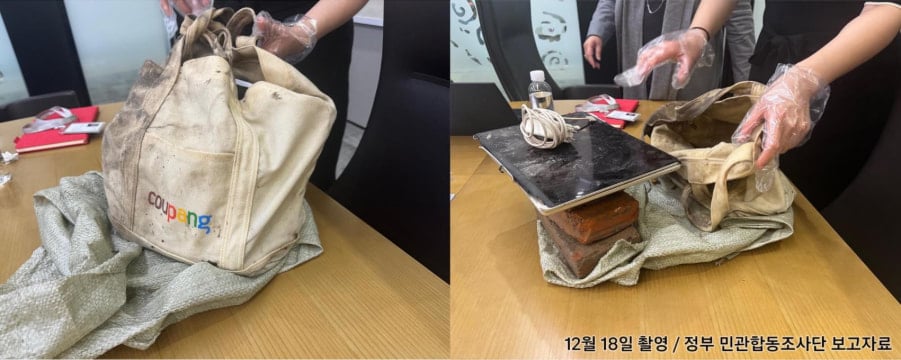
The police investigation, corroborated by Coupang’s internal findings, revealed a dramatic turn of events in the pursuit of evidence. Earlier this month, Coupang representatives successfully contacted the former employee, leading to a meeting where the individual’s desktop computer hard drives, confirmed to contain sensitive customer data, were recovered. Furthermore, a MacBook Air laptop, also belonging to the suspect, was retrieved from a river where it had been deliberately disposed of in an apparent attempt to destroy incriminating evidence. The retrieval of this device from such an unusual location underscores the intensive and persistent nature of the forensic investigation undertaken by law enforcement and Coupang’s security partners.
To bolster their investigative capabilities and ensure a thorough examination of the incident, Coupang enlisted the expertise of leading cybersecurity and forensic firms, including Mandiant, Palo Alto Networks, and Ernst & Young. These organizations bring unparalleled capabilities in incident response, digital forensics, and security consulting, crucial for understanding the full scope of the breach and verifying the integrity of the recovered data. According to the preliminary findings from this joint investigation, while the perpetrator accessed approximately 33 million customer accounts, the actual volume of user data retained on the suspect’s devices was significantly smaller, impacting around 3,000 accounts. Coupang has further asserted that the former employee did not transfer any of this retained data to external parties and subsequently deleted it from their devices. While this particular finding might offer a degree of reassurance regarding widespread data dissemination, the initial access to millions of records remains a grave concern, indicative of profound systemic weaknesses. The verifiability of claims regarding data deletion and non-transfer is paramount and typically relies on extensive forensic analysis to provide definitive proof.
The Restitution Framework and Its Implications
The $1.17 billion compensation package is scheduled for phased distribution, commencing on January 15, 2026. This prolonged timeline for the commencement of restitution may be attributed to the logistical complexities of processing such a vast number of claims, potential ongoing legal procedures, and the need to fully conclude the forensic investigation to ensure accurate identification of all eligible recipients. The compensation will extend to all past and present Coupang customers, including its premium "WOW" members, standard users, and even those who have previously terminated their memberships, demonstrating a comprehensive approach to victim identification.
Each eligible customer will receive four single-use purchase vouchers, collectively valued at 50,000 Korean Won (approximately $34 USD). These vouchers are strategically segmented to encourage continued engagement across Coupang’s diverse service ecosystem:
- A 5,000 won voucher applicable across all Coupang product categories, including Rocket Delivery, Rocket Overseas, Seller Rocket, and Marketplace. This broad utility aims to drive general e-commerce activity.
- A 5,000 won voucher specifically for Coupang Eats, their food delivery service, targeting repeat usage in a high-frequency transaction segment.
- A 20,000 won voucher for Coupang Travel products, designed to incentivize higher-value purchases in their travel booking segment.
- A 20,000 won voucher for R.LUX products, which likely refers to a premium or luxury goods segment, encouraging exploration of higher-margin offerings.
This voucher-based compensation strategy, while fiscally substantial in aggregate, serves multiple corporate objectives beyond mere restitution. By issuing vouchers redeemable exclusively within its own platform, Coupang effectively channels the compensation back into its revenue streams, potentially mitigating the net financial outflow. It also acts as a powerful customer retention mechanism, encouraging affected individuals to continue utilizing Coupang’s services, thereby attempting to convert a negative incident into an opportunity for renewed customer engagement and loyalty. The long-term efficacy of this approach in fully restoring customer trust remains to be seen, as consumers increasingly demand robust data protection and transparent communication from service providers.
Broader Implications and Industry Analysis
This incident serves as a stark reminder of the multifaceted challenges in securing vast repositories of customer data in the digital age, particularly within the rapidly expanding e-commerce sector. The emergence of an insider threat as the primary vector for this breach highlights a critical vulnerability that often receives less attention than external cyberattacks. Insider threats, whether malicious or unintentional, can bypass even the most sophisticated perimeter defenses, making robust internal controls, comprehensive access management policies, continuous monitoring of employee activities, and stringent offboarding procedures absolutely essential. The case of the former employee retaining system access underscores a failure in the lifecycle management of employee privileges, a foundational element of enterprise security.
South Korea operates under stringent data protection regulations, notably the Personal Information Protection Act (PIPA). This law mandates strict requirements for the collection, storage, processing, and protection of personal information, and imposes significant penalties for non-compliance, including substantial fines and potential criminal charges. The scale and nature of the Coupang breach will undoubtedly lead to intense scrutiny from regulatory bodies, and could result in additional penalties beyond the self-imposed compensation, further emphasizing the legal and financial ramifications of inadequate data security. This incident could also prompt a review of existing data protection enforcement mechanisms in South Korea, potentially leading to even stricter regulations or more aggressive enforcement actions across the industry.
From an industry perspective, this event sends a powerful signal to other e-commerce platforms and digital service providers globally. It underscores the imperative for continuous, proactive investment in cybersecurity infrastructure, not merely as a compliance exercise but as a fundamental pillar of business continuity and customer trust. Companies must move beyond reactive measures to implement adaptive security architectures that can detect sophisticated threats, whether originating externally or from within. This includes advanced threat intelligence, behavioral analytics to identify anomalous user activity, and rigorous security audits performed by independent third parties.
Restoring Trust and Future Outlook
Coupang’s explicit aim to "restore customer trust" following this incident is a formidable undertaking. Trust, once eroded, is difficult to rebuild, and it requires sustained commitment to transparency, accountability, and demonstrable improvements in security posture. Beyond the financial compensation, the company must effectively communicate the enhanced security measures it is implementing to prevent future occurrences. This includes publicly detailing changes to its access management policies, strengthening its employee offboarding procedures, and investing in advanced threat detection and response capabilities.
The long-term impact on Coupang’s brand reputation and market share will largely depend on the perceived effectiveness of its response. In an increasingly competitive e-commerce landscape, consumer choice is often influenced by factors beyond price and convenience, with data security and privacy becoming increasingly important differentiators. If customers perceive Coupang’s response as insufficient or lacking in genuine commitment to their privacy, it could lead to significant customer churn and a loss of market standing.
In conclusion, the Coupang data breach is a multifaceted incident that highlights critical vulnerabilities in enterprise security, particularly the often-underestimated insider threat. The company’s significant financial commitment to compensation, while noteworthy, is only one component of a much larger effort required to navigate the aftermath of such a large-scale compromise. The incident serves as a crucial case study for global businesses, reinforcing the indispensable need for robust security frameworks, vigilant internal controls, and an unwavering commitment to data protection to maintain consumer confidence and ensure operational resilience in the digital economy. The path forward for Coupang will be closely watched as a benchmark for how major corporations respond to and recover from significant cybersecurity failures.




 Aura Kasih
 Ridwan Kamil

 Lisa Mariana
 Ayu Aulia