Lisa Mariana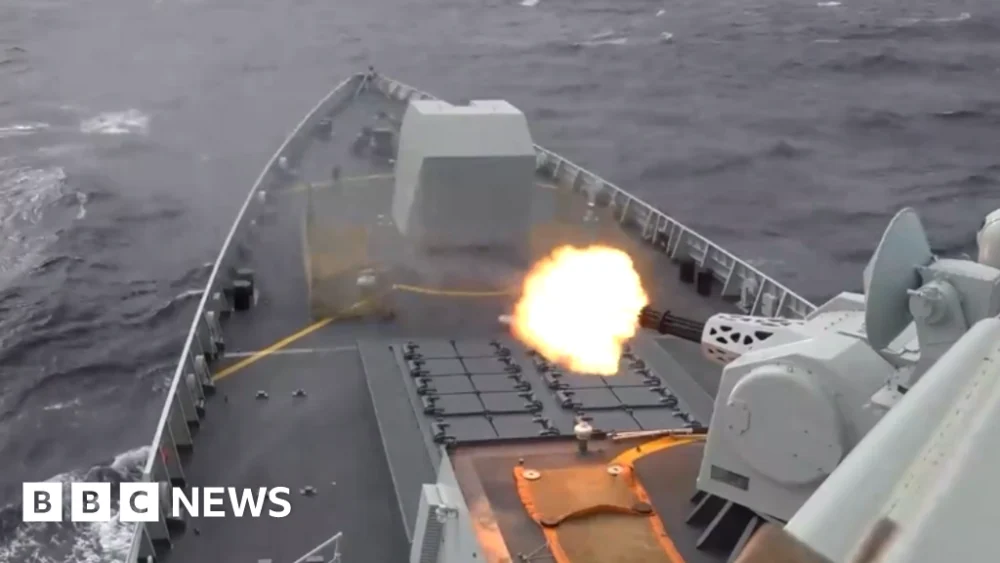
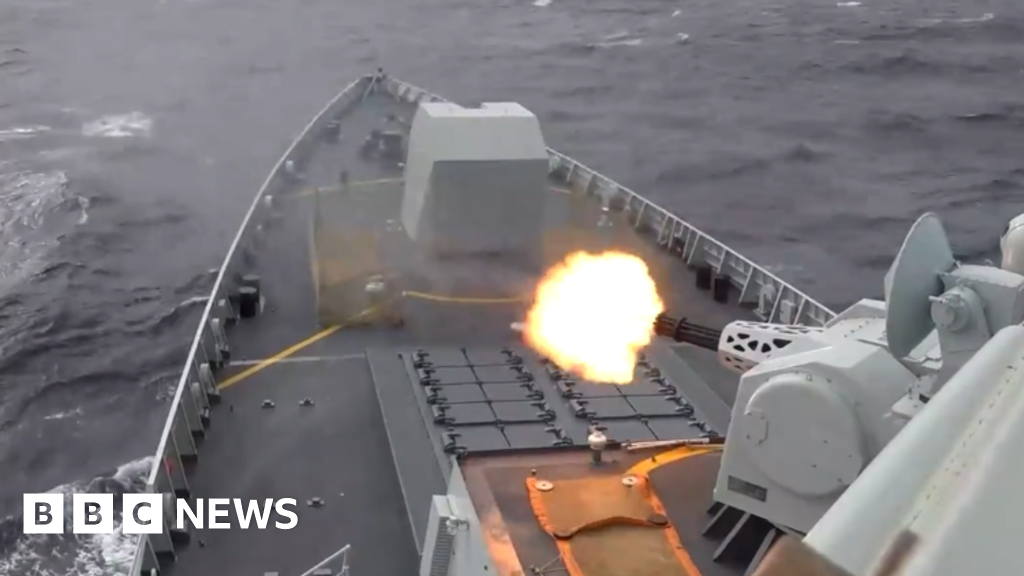
In a significant escalation of cross-strait tensions, the People’s Republic of China has initiated extensive military exercises encircling Taiwan, simulating a comprehensive blockade and assault on critical island infrastructure. These maneuvers, explicitly characterized by Beijing as a potent warning to "separatist forces," underscore China’s unwavering determination to assert its territorial claims over the democratically governed island. The coordinated deployment of the People’s Liberation Army’s (PLA) ground, naval, air, and rocket forces highlights the breadth and sophistication of China’s coercive capabilities, marking a critical juncture in the increasingly precarious geopolitical landscape of the Indo-Pacific.
Codenamed "Justice Mission 2025," these multifaceted drills encompass live-fire components and are strategically timed, occurring mere days after the United States finalized a substantial $11 billion arms package for Taiwan. This recent defense procurement, one of the largest in recent memory, drew immediate and forceful condemnation from Beijing, which responded by imposing sanctions on key American defense contractors. Concurrently, Taiwan’s proactive measures to bolster its defensive posture throughout the year have consistently drawn the ire of the Chinese Communist Party, which views such actions as a direct challenge to its "One China" principle and its long-standing ambition of "reunification," by force if necessary.
Taiwan’s presidential office swiftly denounced the Chinese military exercises, labeling them a direct affront to international norms and regional stability. The island’s Ministry of National Defense reported a robust Chinese military presence on Monday, detecting 89 aircraft, 28 naval warships, and numerous coastguard vessels operating in close proximity to Taiwan. In response, Taipei has activated its sophisticated missile defense systems and deployed its armed forces, maintaining a state of "high alert" to safeguard its sovereignty and protect its populace. The Chinese military’s Eastern Theater Command, responsible for operations in the sensitive Taiwan Strait, utilized its official Weibo platform to describe the exercises as a "shield of justice," issuing a stark warning: "All those plotting independence will be annihilated upon encountering the shield!" While preliminary drills commenced earlier, a major phase of the exercise was slated for a concentrated period from 08:00 to 18:00 local time on Tuesday, indicating a sustained and deliberate show of force.
A spokesperson for Beijing’s foreign ministry, Lin Jian, articulated the official stance, characterizing the drills as "severe punishment for separatist forces seeking independence through force" and admonishing "external forces" against any attempts to "use Taiwan to contain China." He further asserted that "any sinister schemes to obstruct China’s reunification are doomed to fail." This rhetoric reinforces China’s long-held position, codified in its anti-secession law, that while it prefers "peaceful reunification," it reserves the right to employ "non-peaceful means" to prevent Taiwan’s formal secession.
The current Taiwanese President, Lai Ching-te, is frequently accused by Beijing of pursuing "Taiwan independence." President Lai, however, consistently maintains that Taiwan is already a sovereign nation, negating any need for a formal declaration of independence. In a recent television interview, President Lai emphasized the imperative for Taiwan to "keep raising the difficulty so [China] can never meet the standard" for a successful invasion. He reiterated his administration’s commitment to "maintaining the status quo" and avoiding provocation, though he critically added that genuine peace can only be secured through "real strength." This nuanced position reflects the prevailing sentiment among the Taiwanese populace, where consistent opinion polls indicate a strong preference for the existing "status quo," eschewing both unification with China and a formal declaration of independence.
The ripple effects of these drills extend beyond the immediate military maneuvers. Taiwan’s Ministry of Transport has confirmed that both international and domestic flights will be rerouted to circumvent the designated danger zones, a logistical disruption anticipated to impact over 100,000 passengers, as reported by Reuters. Such operational interruptions underscore the significant economic and social costs imposed by these recurring displays of military power in one of the world’s busiest shipping lanes and air corridors.
This latest round of drills represents a continuation of a pattern observed since 2022, where Beijing has progressively intensified its military presence and exercises in the Taiwan Strait. These escalations have typically been triggered by events perceived by China as challenging its sovereignty, such as the visit by then-US House Speaker Nancy Pelosi to Taiwan in 2022 and President Lai Ching-te’s inauguration in 2024. For instance, China’s last live-fire exercise in April simulated strikes on critical ports and energy facilities, concurrently featuring a propaganda campaign that depicted President Lai as a "parasite." The current drills are particularly noteworthy as they mark the first under the leadership of Yang Zhibin, the new chief of the Eastern Theater Command, who assumed his role in October, potentially signaling a more assertive posture under his command.
Taiwan, in parallel, conducts its own extensive military exercises, such as the annual Han Kuang drills, which serve a dual purpose: preparing its civilian population for potential conflict and showcasing its defense capabilities to Beijing and the international community. This year’s Han Kuang exercise, spanning over ten days, was the largest and most protracted to date, reflecting Taiwan’s commitment to enhancing its self-defense. President Lai Ching-te, since assuming office, has consistently vowed to increase defense spending and fortify the island’s defense capabilities in response to the escalating tensions with Beijing. A notable initiative announced in October was the development of a dome-like air defense system designed to counter "hostile threats," a clear, albeit unexplicit, reference to potential aggression from mainland China.
Beyond the immediate cross-strait implications, these drills also aim to project Chinese military power and deterrence "outside the island chain," as explicitly stated by China’s military. This broader strategic objective has direct implications for regional dynamics, particularly with Japan. Sino-Japanese relations have deteriorated to their lowest point in years, exacerbated by recent comments from Japanese leader Sanae Takaichi. Last month, in response to a parliamentary inquiry, Takaichi suggested that Japan’s Self-Defense Forces might intervene if China were to attack Taiwan. This statement drew heated protests from Beijing, which subsequently issued travel warnings to its citizens regarding Japan. Furthermore, earlier this month, Japan formally protested after Chinese fighter jets reportedly locked radars on Japanese aircraft, while Beijing countered with accusations that Tokyo was "harassing" its forces during a training exercise. These incidents underscore the increasingly fraught security environment in the East China Sea and the potential for any escalation around Taiwan to draw in regional powers.
The "Justice Mission 2025" drills therefore represent more than just a military exercise; they are a potent diplomatic and strategic communication tool. They serve to reinforce Beijing’s non-negotiable stance on Taiwan’s sovereignty, demonstrate its escalating military capabilities, and test the resolve of both Taiwan and its international partners, particularly the United States and Japan. The increased frequency, scale, and explicit messaging of these drills raise significant concerns about regional stability and the potential for miscalculation in an already volatile geopolitical arena. The international community watches closely as this high-stakes confrontation continues to unfold, with profound implications for global trade, security, and the future of the Indo-Pacific.


 Ridwan Kamil
 Safa Marwah
 Aura Kasih