Lisa Mariana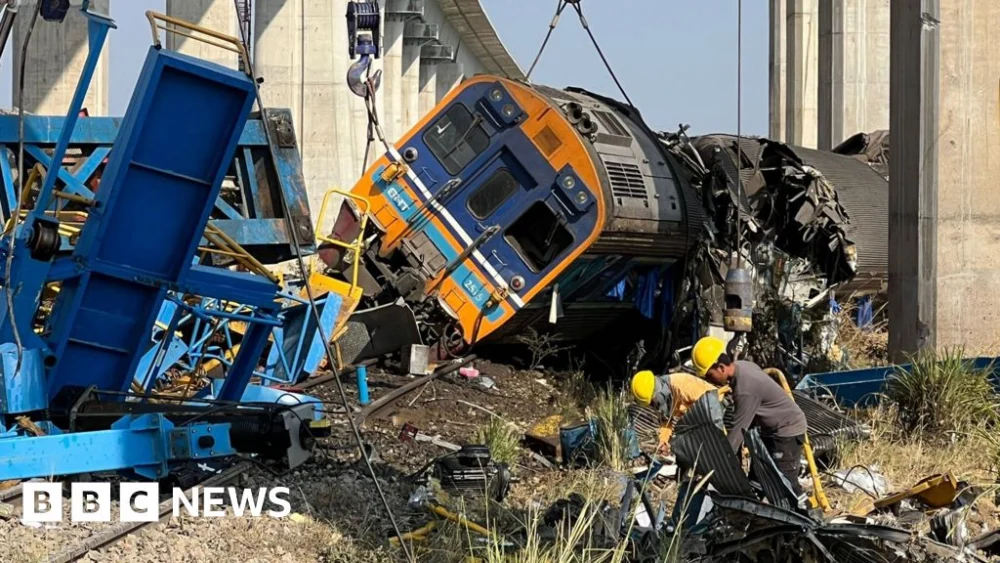
A devastating incident in Thailand’s northeastern region has resulted in at least 30 fatalities and scores of injuries after a colossal construction crane collapsed onto a passenger train, sending shockwaves through the nation’s burgeoning infrastructure development sector. The calamity, which unfolded during morning hours, has initiated a rigorous investigation into safety protocols and corporate responsibility, casting a shadow over a significant national rail project.
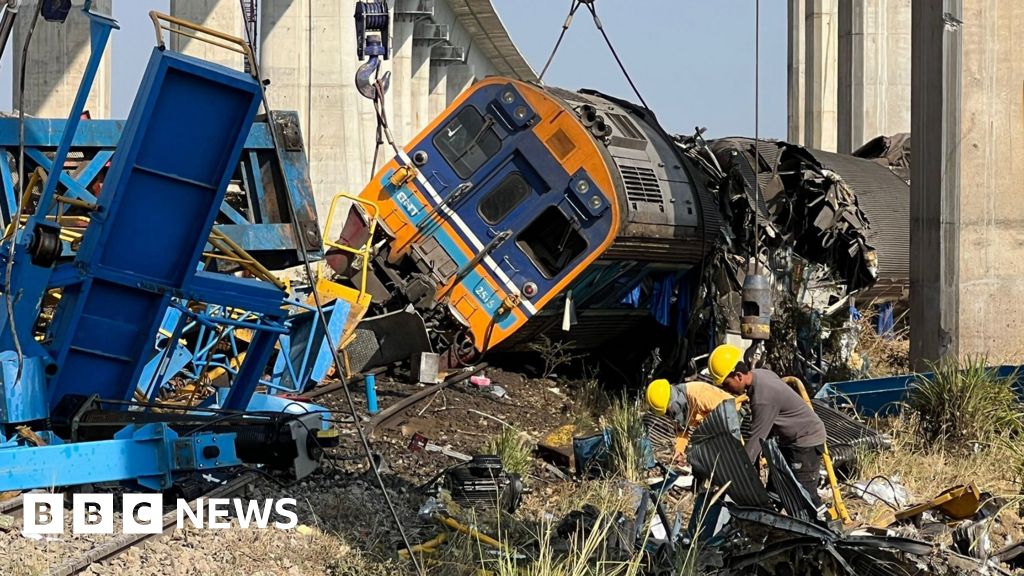
The tragic event occurred around 09:00 local time (02:00 GMT) as a train, identified as a State Railway of Thailand (SRT) service, was traversing its route from the capital, Bangkok, towards Ubon Ratchathani province. Eyewitness accounts and initial reports indicate that a heavy concrete section, being maneuvered by a large construction crane, plummeted onto the moving train, causing immediate and catastrophic damage. The impact led to the derailment of four carriages, with at least one subsequently erupting in flames, trapping passengers amidst the wreckage. Emergency services, including paramedics and rescue teams, rapidly converged on the scene, confronting a chaotic landscape of mangled metal and smoke as they worked to extract survivors.
The human toll of the disaster has been severe. Official figures confirm a death toll of at least 30 individuals, with 64 others sustaining injuries. Among the injured, seven individuals are reported to be in critical condition, necessitating intensive medical care. The demographic breadth of those affected underscores the indiscriminate nature of the tragedy, with victims ranging from a one-year-old child to an 85-year-old elder, highlighting the diverse cross-section of society utilizing the national rail network for daily commutes and travel. Approximately 195 passengers were believed to be on board the ill-fated train at the time of the collision, many of whom were students and workers journeying between districts for educational and professional commitments.
First-hand accounts from survivors paint a harrowing picture of the moments leading up to and immediately following the collapse. Thirasak Wongsoongnern, a member of the train staff, recounted to local media how he and his fellow passengers were violently propelled into the air upon impact, a testament to the sheer force unleashed by the falling crane. An eyewitness, Maliwan Nakthon, described to BBC Thai a terrifying sequence of events: "There were small pieces, like fragments of concrete, that started falling," she stated. "After those fell, the crane slowly slid down and hit. It struck hard, and then it came down and crushed the train." Nakthon further emphasized the suddenness of the catastrophe, noting, "The whole incident took less than one minute," illustrating the rapid and unavoidable nature of the disaster for those onboard.
In the immediate aftermath, the State Railway of Thailand (SRT) swiftly announced the commencement of a comprehensive investigation into the precise circumstances that led to the crane’s failure. Concurrently, the SRT has declared its intention to pursue legal action against the construction firm responsible for the operation of the crane. The company in question, Italian-Thai Development Public Company Limited (ITD), a prominent entity within Thailand’s construction sector, issued a statement expressing its profound regret over the incident. The firm also committed to providing compensation and relief to the families of those who perished and to those who sustained injuries, acknowledging its responsibility in the wake of the tragedy.
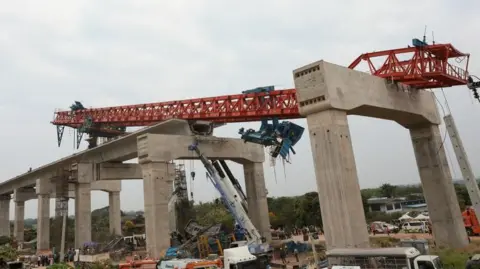
The construction project involved in the incident is identified as an overhead railway component of the US$5.4 billion Bangkok-Nong Khai High-Speed Rail (HSR) Development for Regional Connectivity. This ambitious endeavor, backed significantly by Chinese investment, aims to establish a crucial transportation artery linking Thailand’s capital with neighboring Laos, ultimately extending connectivity to a Chinese-built high-speed line already operational in southwestern China. The strategic importance of this railway cannot be overstated, as it forms a pivotal part of regional integration and economic development initiatives, facilitating trade, tourism, and movement across Southeast Asia. Italian-Thai Development Public Company Limited is specifically contracted for the construction of the Lam Takhong-Sikhio section of this extensive project, where the crane collapse occurred.
The ramifications of this accident extend beyond immediate casualties and property damage. Thai Prime Minister Anutin Charnvirakul, who visited the scene shortly after the incident, delivered a stern rebuke, asserting that "someone [must] be punished and held accountable" for the catastrophic failure. His comments underscored a pervasive concern that such accidents are invariably the result of preventable errors, stating, "Accidents like this can only happen due to negligence, skipped steps, deviations from the design, or the use of incorrect materials." This forceful declaration from the highest levels of government signals a zero-tolerance approach to lapses in safety and regulatory compliance within major infrastructure projects. The State Railway of Thailand has quantified the initial cost of damages to the train carriages alone at more than 100 million baht (approximately US$3.1 million), a figure that is expected to rise significantly once broader economic and social impacts are factored in.
The incident also brings into sharp focus Thailand’s persistent challenges with construction safety standards and their enforcement. The nation has a regrettable history of deadly construction accidents, often attributed to weak regulatory oversight and inadequate implementation of safety protocols. This latest calamity is not an isolated event but rather indicative of systemic vulnerabilities within the country’s rapidly expanding infrastructure landscape. Just last year, in 2023, a separate incident saw a freight train collide with a pick-up truck at a railway crossing in eastern Thailand, resulting in eight fatalities and four injuries. Furthermore, a protracted road improvement project connecting Bangkok to the southern regions of the country has tragically claimed approximately 150 lives over the past seven years through numerous accidents, illustrating a pattern of safety failures across various infrastructure initiatives.
Italian-Thai Development Public Company Limited, despite its prominent status as one of Thailand’s largest contractors, has faced scrutiny regarding its safety record in the past. Notably, the company was responsible for the construction of a high-rise building in Bangkok that partially collapsed in March of the previous year following an earthquake. That incident led to charges of professional negligence being filed against the company’s president, along with several designers and engineers involved in the project, though some of those charged have denied wrongdoing. This historical context raises critical questions about the efficacy of safety management systems within ITD and the broader regulatory framework governing construction in Thailand. Amidst the international context of the high-speed rail project, the Chinese embassy in Thailand issued a clarifying statement, reported by Chinese state media, confirming that no Chinese construction companies or workers were involved in the specific segment of the project where the crane collapse occurred.
The implications of this disaster are multifaceted, extending from immediate humanitarian concerns to long-term economic and policy considerations. The tragedy is likely to trigger heightened scrutiny of all ongoing and future infrastructure projects in Thailand, particularly those involving substantial foreign investment. There will be increased pressure on regulatory bodies to strengthen oversight, enforce existing safety standards more rigorously, and perhaps introduce new, more stringent regulations. Public confidence in the safety of major public works and transportation systems may also be eroded, necessitating robust and transparent actions from both government and industry to rebuild trust.
Economically, the incident will undoubtedly lead to delays in the high-speed rail project, incurring additional costs beyond the direct damage. The reputational damage to the involved companies and potentially to Thailand’s infrastructure development ambitions could also be significant. The legal proceedings against ITD will be closely watched, as they will set precedents for corporate accountability in major construction failures. Beyond the immediate compensation, there is an imperative for comprehensive support systems for the victims and their families, addressing not only financial losses but also psychological trauma.
This catastrophic event serves as a stark reminder of the critical importance of uncompromising safety standards and robust regulatory enforcement in large-scale infrastructure development. As Thailand continues its ambitious drive to modernize and expand its national infrastructure, the lessons learned from this tragedy must translate into tangible reforms to prevent future recurrences and safeguard the lives of its citizens. The call for accountability from the Prime Minister reflects a growing national demand for systemic improvements to ensure that progress does not come at the cost of human lives.




 Aura Kasih
 Safa Marwah
 Ayu Aulia