Ayu Aulia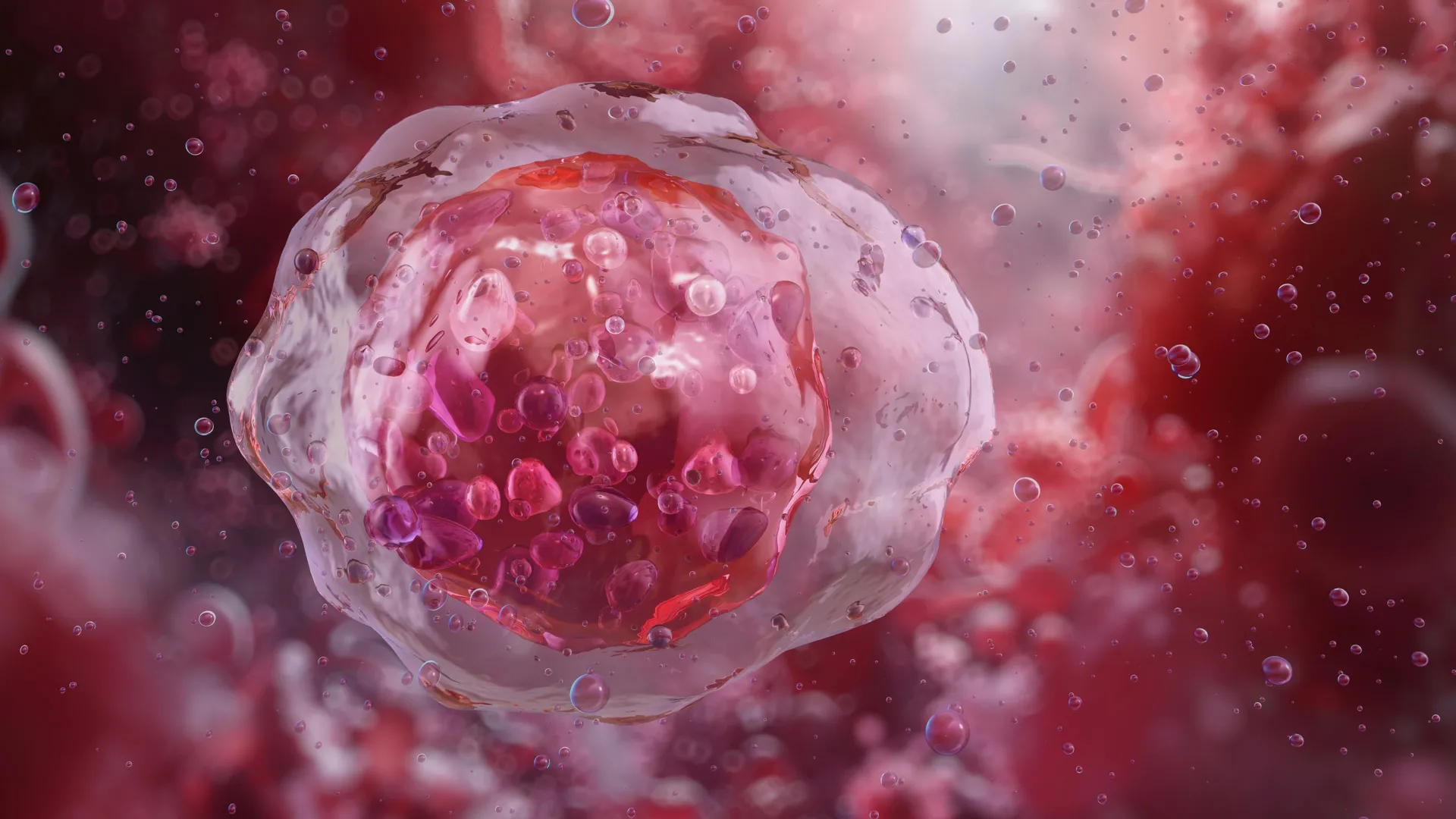
A groundbreaking artificial intelligence system, meticulously engineered to scrutinize the intricate morphology and internal architecture of blood cells, is poised to revolutionize the diagnostic landscape for hematological conditions such as leukemia. This advanced tool demonstrates an unprecedented capacity to discern pathological cellular deviations with a level of accuracy and consistency that surpasses conventional human assessment, promising to mitigate the incidence of missed or ambiguous diagnoses in clinical practice.
The innovative framework, designated CytoDiffusion, leverages the sophisticated capabilities of generative adversarial networks (GANs), a subset of generative AI technologies akin to those powering advanced image synthesis platforms. Unlike earlier computational vision systems that primarily identified gross patterns, CytoDiffusion delves into the granular, often imperceptible, variances in cellular presentation as observed under microscopic magnification. This nuanced approach allows for an exceptionally detailed analysis of cellular phenotypes, moving beyond superficial classification to an understanding of the subtle continuum of normal and abnormal cellular states.
Redefining Diagnostic Paradigms Beyond Superficial Recognition
Traditional medical AI solutions are predominantly designed for discriminative tasks, categorizing images into predefined illness or wellness profiles based on learned features. CytoDiffusion, however, fundamentally reorients this paradigm. Its creators have engineered it to develop a comprehensive internal model of the full spectrum of normal blood cell appearances. This foundational understanding enables the system to reliably flag any rare or unusual cells that diverge from this normalcy, signaling potential underlying pathologies. This foundational research, a collaborative endeavor involving leading institutions such as the University of Cambridge, University College London, and Queen Mary University of London, has been meticulously peer-reviewed and published in the esteemed journal Nature Machine Intelligence.
The meticulous identification of minute distinctions in the dimensions, contours, and internal organization of blood cells constitutes a cornerstone of accurate diagnosis for a multitude of blood-related disorders. Mastering this intricate skill typically necessitates years of dedicated clinical experience and specialized training. Even among highly seasoned medical professionals, subjective interpretations can lead to discrepancies in complex case reviews, highlighting an inherent variability in human perception and judgment. The challenge is exacerbated by the sheer volume of data involved; a single peripheral blood smear can present tens of thousands of individual cells, an overwhelming quantity for any human observer to thoroughly evaluate within practical clinical timeframes.
Simon Deltadahl, a primary architect of the study from Cambridge’s Department of Applied Mathematics and Theoretical Physics, elucidated the biological rationale underpinning this diagnostic necessity. "Our bodies are populated by an array of distinct blood cell types, each endowed with specific attributes and physiological functions," he explained. "For instance, leukocytes are specialized agents in the immune response. However, recognizing what constitutes an anomalous or diseased blood cell morphology under the microscope is absolutely critical for the accurate diagnosis of a wide range of diseases." The human cognitive and perceptual limitations in processing such vast cellular information represent a significant bottleneck in current diagnostic workflows.
Addressing the Scale and Subjectivity of Hematological Analysis
The logistical challenge inherent in blood smear analysis is universally acknowledged within the medical community. "The human capacity to exhaustively examine every cell within a blood film is simply non-existent," Deltadahl affirmed. "Our computational model offers a solution to automate this arduous process, effectively triaging routine cases and isolating any unusual findings for subsequent, focused human expert review." This capability promises to significantly enhance efficiency and reduce the cognitive burden on clinicians.
Dr. Suthesh Sivapalaratnam, a co-senior author of the study and a specialist at Queen Mary University of London, articulated the personal genesis of this technological pursuit. "As a nascent hematology physician, I was frequently confronted with a substantial backlog of blood films requiring analysis after a demanding day," he recounted. "During those late-night sessions, I became increasingly convinced that an AI system could perform this task with greater efficacy than I could." This firsthand clinical experience underscored the pressing need for automated assistance.
Unprecedented Data-Driven Foundation
The development of CytoDiffusion was predicated upon an extraordinary training regimen, utilizing a dataset comprising over half a million meticulously curated blood smear images obtained from Addenbrooke’s Hospital in Cambridge. This collection, recognized as the most extensive of its kind globally, encompasses a comprehensive array of common blood cell types, alongside rare exemplars and morphological features that frequently confound existing automated diagnostic systems.
Crucially, the AI’s learning methodology diverges from merely acquiring the ability to sort cells into predetermined, fixed categories. Instead, it constructs a nuanced, probabilistic model representing the entire continuum of how blood cells can manifest. This deep, generalized understanding confers a remarkable resilience against the inherent variability encountered in real-world clinical settings, such as differences in hospital protocols, microscopic equipment calibrations, and staining techniques. This robustness is a critical factor in its superior ability to detect both rare and pathologically altered cells, thereby enhancing its clinical utility and generalizability across diverse healthcare environments.
Elevating Diagnostic Confidence, Particularly in Leukemia Detection
In rigorous validation trials, CytoDiffusion demonstrated a significantly elevated sensitivity in identifying abnormal cells indicative of leukemia compared to prevailing automated systems. Furthermore, its performance matched or even surpassed that of current leading computational models, a remarkable feat given that it often achieved these results with substantially fewer training examples. A particularly salient feature of CytoDiffusion is its intrinsic capacity to quantify its own predictive confidence, providing clinicians with an essential metric of certainty for each diagnosis.
Deltadahl highlighted this critical attribute: "While our system exhibited a marginal superiority over human experts in terms of raw accuracy, its true distinction lay in its profound awareness of its own uncertainties. Our model would never assert certainty and subsequently be proven incorrect, a fallibility that humans occasionally exhibit." This ‘metacognitive’ ability – the capacity to discern the boundaries of its own knowledge – is a paramount advantage in clinical decision-making, where overconfidence can lead to diagnostic errors.
Professor Michael Roberts, a co-senior author from Cambridge’s Department of Applied Mathematics and Theoretical Physics, emphasized the real-world applicability of their evaluation methodology. "We rigorously benchmarked our method against a spectrum of challenges commonly encountered by medical AI in practical settings, including the analysis of previously unseen images, data acquired from disparate imaging apparatus, and the inherent ambiguities in diagnostic labels," he stated. "This multifaceted evaluation framework offers a comprehensive perspective on model performance, which we anticipate will be immensely valuable to the broader research community."
AI’s Profound Understanding: The Turing Test Revelation
A compelling demonstration of CytoDiffusion’s deep understanding of cellular biology emerged from its ability to synthesize photorealistic images of blood cells. These artificially generated images were so authentic that in a ‘Turing test’ scenario, a panel of ten highly experienced hematologists were unable to differentiate between the synthetic and genuine microscopic images, performing no better than random chance.
"That finding was genuinely astonishing to me," Deltadadahl confessed. "These are individuals who dedicate their professional lives to the meticulous examination of blood cells, and even they could not discern the synthetic from the authentic." This outcome not only underscores the remarkable fidelity of the generative AI but also suggests profound implications for medical education, synthetic data generation for training purposes, and the creation of standardized image sets for research.
Democratizing Data and Accelerating Global Research
In a significant contribution to open science and global health, the research team is making publicly available what they describe as the world’s largest repository of peripheral blood smear images, encompassing over half a million individual samples. This unprecedented release represents a strategic move to foster collaborative innovation.
"By openly sharing this invaluable resource, our aspiration is to empower researchers across the globe to develop and rigorously test novel AI models, thereby democratizing access to high-quality medical data and ultimately contributing to enhanced patient care worldwide," Deltadahl articulated. This initiative has the potential to accelerate breakthroughs in hematological diagnostics by providing a standardized, large-scale dataset for academic and industrial research alike.
Augmentation, Not Substitution: The Future of Clinical AI
Despite the demonstrably robust performance of CytoDiffusion, the researchers emphatically underscore that the system is conceived as a sophisticated assistive tool for trained medical professionals, rather than a replacement for their expertise. Its primary function is to augment clinical capabilities by rapidly identifying and flagging cases that warrant immediate attention, while efficiently processing the vast majority of routine samples.
Professor Parashkev Nachev, a co-senior author from UCL, articulated a broader philosophical perspective on the role of AI in healthcare. "The genuine utility of healthcare AI does not reside in merely approximating human expertise at a reduced cost, but rather in enabling diagnostic, prognostic, and prescriptive capabilities that transcend the limitations of both human specialists and simplistic statistical models," he posited. "Our research strongly indicates that generative AI will be pivotal to this mission, not only by enhancing the fidelity of clinical support systems but also by deepening their insight into the boundaries of their own knowledge. This ‘metacognitive’ awareness – the crucial understanding of what one does not know – is fundamental to sound clinical decision-making, and here we have compelling evidence that machines may possess a superior capacity for it than humans."
The development team acknowledges that further research endeavors are imperative to optimize the system’s operational speed and to rigorously validate its performance across more ethnically, genetically, and geographically diverse patient cohorts. Such validation is critical to ensure both the universal accuracy and ethical fairness of the diagnostic tool in varied clinical contexts.
This pioneering research received crucial financial and infrastructural support from a consortium of distinguished organizations, including the Trinity Challenge, Wellcome, the British Heart Foundation, Cambridge University Hospitals NHS Trust, Barts Health NHS Trust, the NIHR Cambridge Biomedical Research Centre, NIHR UCLH Biomedical Research Centre, and NHS Blood and Transplant. The collaborative work was executed under the aegis of the Imaging working group within the BloodCounts! consortium, an ambitious global initiative dedicated to advancing blood diagnostics through the strategic application of artificial intelligence. The foundational contributions of individuals like Simon Deltadahl, a Member of Lucy Cavendish College, Cambridge, exemplify the interdisciplinary nature of this transformative scientific endeavor.



 Aura Kasih
 Safa Marwah