Aura Kasih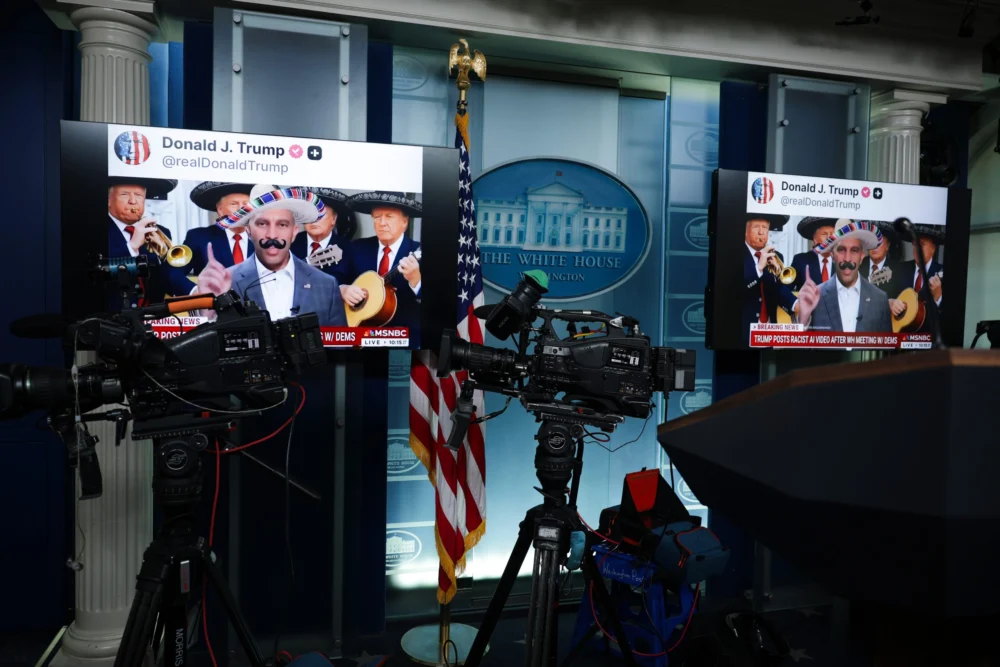
In an era defined by the relentless acceleration of information and the fragmentation of media consumption, the United States White House has embraced a potent, albeit controversial, strategy: the weaponization of internet memes as a primary tool for political communication. This approach, characterized by its speed, brevity, and often provocative nature, represents a significant evolution in how administrations engage with the public and attempt to control the narrative surrounding critical events. This analysis will delve into the mechanics and implications of this digital propaganda machine, exploring its strategic underpinnings, its impact on political discourse, and its potential long-term consequences for governance and public trust.
The recent use of meme-based responses by the Trump administration to significant geopolitical and domestic events has sparked considerable debate. In instances ranging from the controversial detention of a foreign leader to responses to law enforcement actions, the White House has opted for brief, often crude, digital content designed for rapid dissemination on social media platforms. Examples include the use of the acronym "FAFO" (Fuck Around and Find Out) in response to the detention of Nicolás Maduro, the leader of Venezuela, and the deployment of Buzzfeed-style listicles to frame incidents involving law enforcement and protesters. This pattern suggests a deliberate strategy to bypass traditional media gatekeepers and engage directly with a specific segment of the electorate through a language and format that resonates within online subcultures.
To fully grasp this phenomenon, it is essential to understand the concept of "rapid response" in political communications. This practice, which predates social media but has been profoundly amplified by it, involves the immediate shaping of narratives around breaking news. Communications strategists work to preemptively frame events, counter opposing viewpoints, and define public perception before competing narratives can take root. Lis Smith, a seasoned Democratic communications strategist, highlights the evolution of this field, noting its expansion from the 24-hour news cycle of cable television to the instantaneous, multi-platform environment of today. The objective is to manage the inherent chaos of information flow and exert influence over the public discourse, particularly during moments of crisis or significant policy pronouncements.
Smith’s experience, including her role in shaping Barack Obama’s 2012 presidential campaign’s social media strategy and her work with prominent Democratic candidates, provides valuable insight into the tactical deployment of digital platforms. She views platforms like X (formerly Twitter) as crucial for disseminating text-based rapid response communications, reaching a core audience of political elites, opinion leaders, and journalists. While other platforms may cater to specific ideological or demographic groups – such as Bluesky for a left-leaning audience or Rumble for a right-wing echo chamber – X remains a central nexus for influencing the broader political conversation. However, the effectiveness of any platform, including X, has been impacted by changes in verification policies and the overall fragmentation of online attention.
The strategic rationale behind the White House’s embrace of meme warfare extends beyond mere speed. Memes, by their nature, are designed to be easily digestible, shareable, and often emotionally resonant. They can distill complex political arguments into simplified, attention-grabbing formats, appealing to an audience that may be disengaged from traditional political analysis. This can be particularly effective in galvanizing a base and projecting an image of decisive, unyielding action. The "FAFO" retort, for instance, conveys a message of unwavering resolve and unapologetic engagement with perceived adversaries, a sentiment that can resonate strongly with supporters who value such a direct approach.

However, this strategy is not without its significant drawbacks and criticisms. The inherent nature of memes often leads to a flattening of political discourse, sacrificing nuance, complexity, and human empathy for the sake of virality and immediate impact. In the context of sensitive issues such as immigration enforcement, the use of memes can trivialize human suffering and alienate potential allies. When policies that have profound human consequences are reduced to humorous or cruel digital content, it risks eroding public sympathy and fostering a perception of callousness. This can be particularly detrimental when seeking to build broad consensus or appeal to moderate voters who may find such tactics distasteful or inhumane.
The effectiveness of meme warfare is further complicated by its audience specificity. While a meme may be instantly understood and appreciated by a particular online community, its meaning and impact can be lost on broader segments of the population. This creates a disconnect between the administration’s intended message and its reception by the general public, potentially leading to misunderstandings or even backlash. As Shane Gillis, a comedian and commentator, observed, even individuals who may align with the sentiment of a particular policy might prefer that their government approach serious issues with gravity rather than levity, particularly when human lives and well-being are at stake. This sentiment underscores a fundamental tension between the desire for viral engagement and the need for responsible, empathetic governance.
The rapid response mechanism, when employed effectively, seeks to fill the vacuum of information that emerges during breaking news events. By injecting their narrative into this void, political actors aim to shape how the public, the media, and opponents understand and react to unfolding situations. However, the Trump administration’s approach has been criticized for not only employing memes but also for disseminating information that is factually questionable, thereby compounding existing mistrust in government institutions. While a certain segment of the electorate may benefit from a general erosion of trust in official sources, this approach can ultimately undermine the credibility of the administration and its ability to communicate effectively with the press and other influential stakeholders.
The question of meme warfare’s efficacy in future electoral contests, such as midterm elections, is complex. While such tactics may energize a dedicated base, they may alienate the more moderate voters or older demographics who are crucial for broader electoral success. Many older voters, who may not be active consumers of meme culture, are less likely to be influenced by these digital artifacts. Furthermore, the perceived cruelty and lack of nuance inherent in meme-based messaging could prove to be a political liability for candidates seeking to appeal to a wider electorate. The argument can be made that prioritizing speed and virality over seriousness and empathy carries a significant political cost, potentially benefiting opponents who can capitalize on the perceived lack of maturity and compassion in the administration’s communication strategy.
Looking ahead, the White House’s reliance on digital propaganda, particularly meme warfare, presents a stark illustration of the evolving landscape of political communication. It highlights a strategic pivot towards engaging with the electorate on terms dictated by social media algorithms and online subcultures. While this approach can achieve rapid dissemination and resonate with a targeted audience, its long-term implications for reasoned political discourse, public trust, and the very nature of governance are significant and warrant continued scrutiny. The challenge for future administrations will be to balance the imperative of rapid engagement with the enduring need for nuanced, empathetic, and factually grounded communication, ensuring that the pursuit of viral attention does not come at the expense of substantive public service.
Beyond the immediate political arena, the trend of meme warfare raises broader questions about the role of technology in shaping civic society. The ability of digital content to bypass traditional media and directly influence public opinion represents a fundamental shift in power dynamics. It underscores the growing influence of platform owners and the architects of online communication strategies. As political actors become increasingly adept at leveraging these tools, the line between authentic public discourse and orchestrated digital propaganda becomes increasingly blurred. This necessitates a more critical and discerning approach from citizens, media organizations, and policymakers alike to navigate this complex information environment and safeguard the integrity of democratic processes. The future of political communication hinges on finding a sustainable balance between the immediacy of digital engagement and the enduring values of thoughtful deliberation and informed public discourse.



 Lisa Mariana
 Safa Marwah
 Ayu Aulia