Lisa Mariana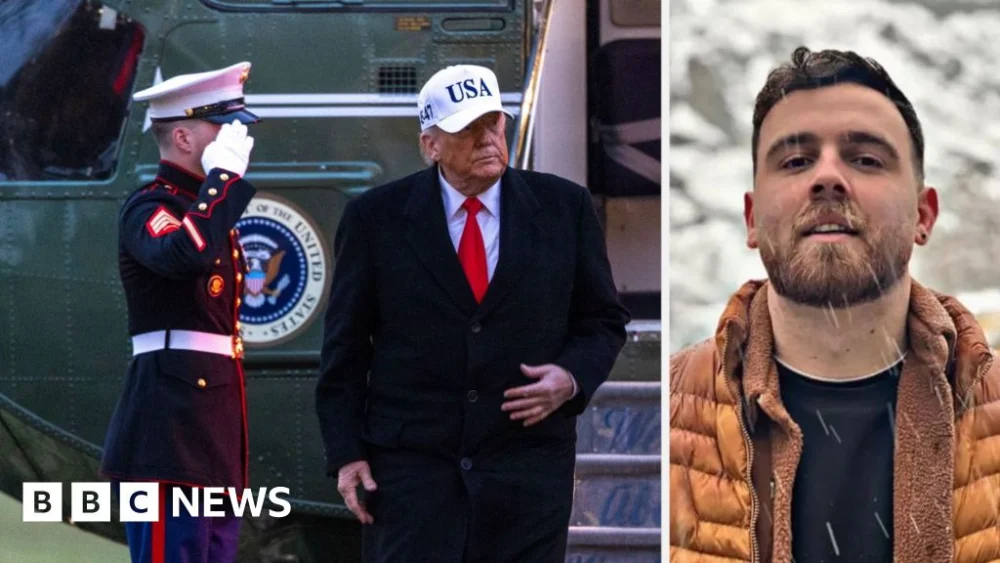
The United States has articulated a stern warning of severe repercussions should the Iranian government proceed with the execution of individuals arrested during recent widespread anti-government demonstrations, as reports detail a rapidly deteriorating human rights situation marked by significant fatalities and expedited judicial processes. This pronouncement by former President Donald Trump underscores a deepening international concern over Tehran’s increasingly brutal response to civil unrest, which has seen thousands detained and hundreds reportedly killed. The explicit threat of "very strong action" from Washington introduces a new layer of complexity to the already fraught relationship between the two nations, elevating the humanitarian crisis within Iran to a critical point on the global agenda.
Escalating Crisis and Diplomatic Rebuke
In a direct challenge to the Iranian judiciary, former President Trump declared that the United States would undertake "very strong action" if the Islamic Republic were to carry out executions of protesters. This statement, made during an interview with CBS News, directly addressed the perilous situation faced by detainees, emphasizing that such a move would trigger unspecified but significant American responses. The urgency of this warning is underscored by specific allegations, including the case of 26-year-old Erfan Soltani, whose family informed BBC Persian of an impending execution scheduled for Wednesday, following an arrest just days prior. Human rights organizations have corroborated the alarming speed of this judicial process, with representatives from the Hengaw Organization for Human Rights noting an unprecedented swiftness in such cases. The rapid sentencing of Soltani, reportedly a death penalty issued within merely two days of his detention, has been cited as a chilling illustration of the Iranian government’s intent to employ extreme measures to quell dissent and instill fear among the populace. This extraordinary pace in judicial proceedings, particularly concerning capital punishment, raises fundamental questions about due process and the rule of law within the Iranian legal system. It suggests a deliberate strategy to bypass standard legal safeguards, transforming the judiciary into an instrument of political suppression rather than a dispenser of justice.
The Anatomy of a Violent Crackdown
The scale of the Iranian authorities’ crackdown on dissent has prompted widespread alarm and condemnation. Reports from various human rights organizations paint a grim picture of the violence employed. The US-based Human Rights Activists News Agency (HRANA) has meticulously documented the deaths of at least 2,403 protesters, including 12 children, a figure reached despite the deliberate imposition of a near-total internet blackout across the country. Furthermore, the agency reported approximately 150 fatalities among government-affiliated personnel, indicating the intensity and widespread nature of the confrontations. In stark contrast, an Iranian official, while acknowledging around 2,000 deaths, attributed these casualties to "terrorists," a common government narrative used to delegitimize popular uprisings and deflect blame from state actors. This divergence in casualty figures highlights the profound information asymmetry and the severe challenges of independent verification within Iran, where state control over media and communication channels is pervasive.
The judicial response has been equally severe and unequivocally punitive. Iran’s Judiciary chief, Gholamhossein Mohseni Ejei, issued a categorical warning that those involved in the unrest would be "dealt with seriously and severely." Prosecutors have indicated that some detainees face charges of "enmity against God" (Moharebeh), a capital offense under Iranian law that carries the death penalty. This legal strategy serves not only to punish but also to deter, sending a clear message about the regime’s absolute intolerance for any challenge to its authority. The unprecedented speed of judicial proceedings, as exemplified by Soltani’s case, underscores a systemic intent to bypass standard legal procedures in favor of rapid, deterrent sentencing. This approach is designed to instill maximum fear and discourage further participation in protests, demonstrating the regime’s prioritization of stability over human rights.
Eyewitness accounts and unverified online footage further illuminate the gravity of the situation on the ground. Videos emerging from the Kahrizak Forensic Centre in Tehran purportedly showed numerous shrouded bodies and body bags, with one activist describing a harrowing scene where families were forced to search through piles of deceased individuals. Hospitals in the capital and other cities, according to medical professionals, have been overwhelmed, reportedly resembling "warzones" with severe shortages of supplies and blood, indicative of the high volume of casualties. An Iranian oncologist based in London relayed messages from colleagues in Tehran detailing hundreds of injured and dead, corroborating the widespread use of lethal force by security services. The sheer number of arrests, exceeding 18,434 according to HRANA, further illustrates the scale of the state’s repressive apparatus and its determination to quell dissent through mass detention.
Roots of Discontent: Iran’s Volatile Socio-Economic and Political Landscape
The current wave of protests, which has reportedly engulfed over 180 cities and towns across all 31 provinces, represents one of the most significant and geographically extensive challenges to Iran’s clerical establishment since the 1979 Islamic Revolution. While initially sparked by acute economic grievances—primarily the collapse of the national currency, rampant inflation, and the soaring cost of living—the demonstrations quickly broadened into fundamental demands for political reform and systemic change. This widespread discontent is a culmination of years of economic hardship exacerbated by stringent international sanctions, perceived government mismanagement, endemic corruption, and a pervasive lack of political freedoms and social liberties. The economic pressures have created a fertile ground for public frustration, eroding trust in the government’s ability to provide for its citizens.
Historically, Iran has witnessed periodic outbursts of protest, including the 2009 Green Movement, and major demonstrations in 2017-18 and 2019. However, the current unrest is distinguished by its unprecedented geographical breadth, the diverse demographic participation spanning various social strata, and the explicit targeting of the Supreme Leader, Ayatollah Ali Khamenei, with defiant slogans like "Death to the dictator." The invocation of "Reza Shah, may your soul rest in peace," referring to the founder of the Pahlavi dynasty, who was overthrown in the 1979 revolution, signifies a deeper yearning for a bygone era and a profound rejection of the current theocratic system. This extends beyond mere economic dissatisfaction to fundamental questions of national identity, governance, and the very legitimacy of the Islamic Republic, indicating a potential ideological shift among a significant segment of the population.
The Geopolitical Chessboard: US Stance and Iranian Defensive Posture
Former President Trump’s administration maintained a consistently confrontational posture towards Iran, marked by the unilateral withdrawal from the Joint Comprehensive Plan of Action (JCPOA) and the re-imposition of stringent economic sanctions. These measures, aimed at pressuring Tehran to alter its regional behavior and nuclear program, have profoundly impacted the Iranian economy, inadvertently fueling public discontent and contributing to the initial spark of the protests. Trump’s recent declaration of "very strong action" and the imposition of 25% tariffs on countries trading with Iran fit within this broader strategy of maximum pressure. His social media pronouncements, including pledges of "HELP IS ON ITS WAY. MIGA!!!" (Make Iran Great Again), clearly signal an intent to support the protest movement, albeit without specifying the precise means or extent of this support. The cancellation of meetings with Iranian officials until the "senseless killing of protesters STOPS" further isolates Tehran diplomatically, amplifying international pressure.
The Iranian government has vehemently rejected these external pressures, accusing the United States of attempting to "manufacture a pretext for military intervention." This narrative frames the protests not as genuine expressions of domestic grievances but as foreign-orchestrated destabilization efforts, a consistent theme in Tehran’s responses to internal dissent. Such accusations serve multiple purposes: to delegitimize the protest movement internally, to rally nationalist support against perceived foreign interference, and to deflect attention from the regime’s own internal failings and repressive tactics. The regime’s steadfast refusal to engage with US overtures, particularly under conditions of perceived coercion, underscores the deep-seated mistrust and the entrenched adversarial dynamic that defines the relationship between the two nations, making diplomatic resolution exceedingly challenging.
International Calls for Restraint and Accountability
Beyond the US, the international community has also voiced grave concerns over the human rights situation in Iran. Volker Türk, the UN High Commissioner for Human Rights, has unequivocally urged Iranian authorities to cease all forms of violence and repression against peaceful protesters. Türk specifically condemned the labeling of protesters as "terrorists" as an unacceptable justification for lethal force, emphasizing that such rhetoric often precedes severe human rights violations and serves to dehumanize victims. He expressed profound alarm over statements from Iranian officials hinting at the potential use of the death penalty through expedited trials, a practice that fundamentally violates international standards of due process, fair trial, and the prohibition of arbitrary deprivation of life. The UN’s call for the immediate restoration of full internet access and communication services highlights the critical role of information flow in both safeguarding human rights and enabling independent monitoring. The deliberate communication blackouts are recognized as a tool of repression, designed to obscure the true scale of the violence, prevent global awareness, and isolate the population from external support and information.
Information Warfare and the Challenges of Verification
The current crisis in Iran is playing out against a backdrop of severe information control and deliberate obfuscation. With a near-total internet shutdown that, at times, has exceeded 120 hours, and severe restrictions on international news organizations operating within the country, obtaining accurate, real-time information is exceptionally challenging. This deliberate obstruction of communication channels makes it arduous to gauge the true scale of the bloodshed and human rights abuses. Human rights organizations like HRANA and Hengaw play a crucial, albeit perilous, role in piecing together reports from families, activists, and leaked information, often at great risk to their sources. Their meticulously compiled data, while difficult to verify in every instance due to state censorship, provides the most comprehensive and credible insights into the unfolding tragedy. The emergence of videos from facilities like the Kahrizak Forensic Centre, despite pervasive censorship, underscores the persistence of citizen journalism and the inherent difficulty for authoritarian regimes to maintain a complete information blockade indefinitely. The limited success of satellite internet services, such as Starlink, in penetrating the blackout also points to evolving strategies in the information struggle. Reports of checkpoints and widespread phone inspections illustrate the pervasive surveillance and control mechanisms deployed by security forces to prevent information dissemination and suppress any independent reporting.
The Shifting Tides of Dissent and Ideological Challenge
The nature of the protest slogans themselves offers critical insights into the evolving political consciousness within Iran and poses a significant ideological challenge to the ruling establishment. The direct condemnation of Ayatollah Khamenei as a "dictator" marks a significant departure from earlier protests that often focused on specific government policies rather than the foundational legitimacy of the Supreme Leader and the concept of Velayat-e Faqih (Guardianship of the Islamic Jurist). Even more telling is the nostalgic invocation of "Reza Shah, may your soul rest in peace." This slogan, referring to the founder of the Pahlavi dynasty, who was overthrown in the 1979 revolution, suggests a deep disillusionment with the current system and a willingness to look beyond the revolutionary ideals that have governed Iran for decades. It reflects a yearning for secular governance, economic stability, and perhaps a more outward-looking national identity, challenging the very ideological pillars of the Islamic Republic. The widespread adoption of such slogans, documented in verified videos from cities like Arak, Tabriz, Urmia, and Khorramabad, indicates a national spread of this critical sentiment, moving beyond localized grievances to a unified demand for systemic change. The audible gunfire and stone-throwing in footage from Khorramabad underscore the violent confrontation between a determined populace and a repressive state, indicative of the high stakes involved for both sides.
Outlook: A Precarious Future for the Islamic Republic
The trajectory of the current unrest in Iran remains highly uncertain, fraught with potential for further escalation and profound consequences for both domestic stability and regional geopolitics. The regime’s demonstrated willingness to employ extreme violence, coupled with its use of expedited trials and capital punishment, signals a strategy of absolute suppression aimed at crushing the movement entirely. This approach, while potentially effective in the short term for reasserting control, risks further radicalizing the opposition, embedding deeper resentment within the populace, and potentially laying the groundwork for future, more violent confrontations. The international community faces a delicate balancing act: condemning human rights abuses and supporting democratic aspirations without providing the Iranian government with further pretexts to blame foreign interference for its internal challenges.
For the United States, the threat of "very strong action" must be carefully calibrated. While it signals moral support for protesters, concrete implementation could range from intensified sanctions and diplomatic isolation to more direct, but inherently risky, forms of intervention or support for opposition groups. The efficacy of such measures in altering the regime’s behavior, particularly its internal security apparatus, is debatable given Tehran’s long history of resilience against external pressure. The future of Iran hinges on the interplay between the persistence of the protest movement, the unwavering resolve of the clerical establishment, and the nature of the international response. The long-term viability of a system facing such widespread and fundamental challenges to its legitimacy is increasingly precarious, portending a period of continued instability and human rights concerns within the Islamic Republic. The world watches, recognizing that the outcome will have significant ramifications for regional stability, the future of human rights globally, and the evolving dynamics of state-society relations in authoritarian contexts.

 Aura Kasih
 Safa Marwah
 Ayu Aulia