Ayu Aulia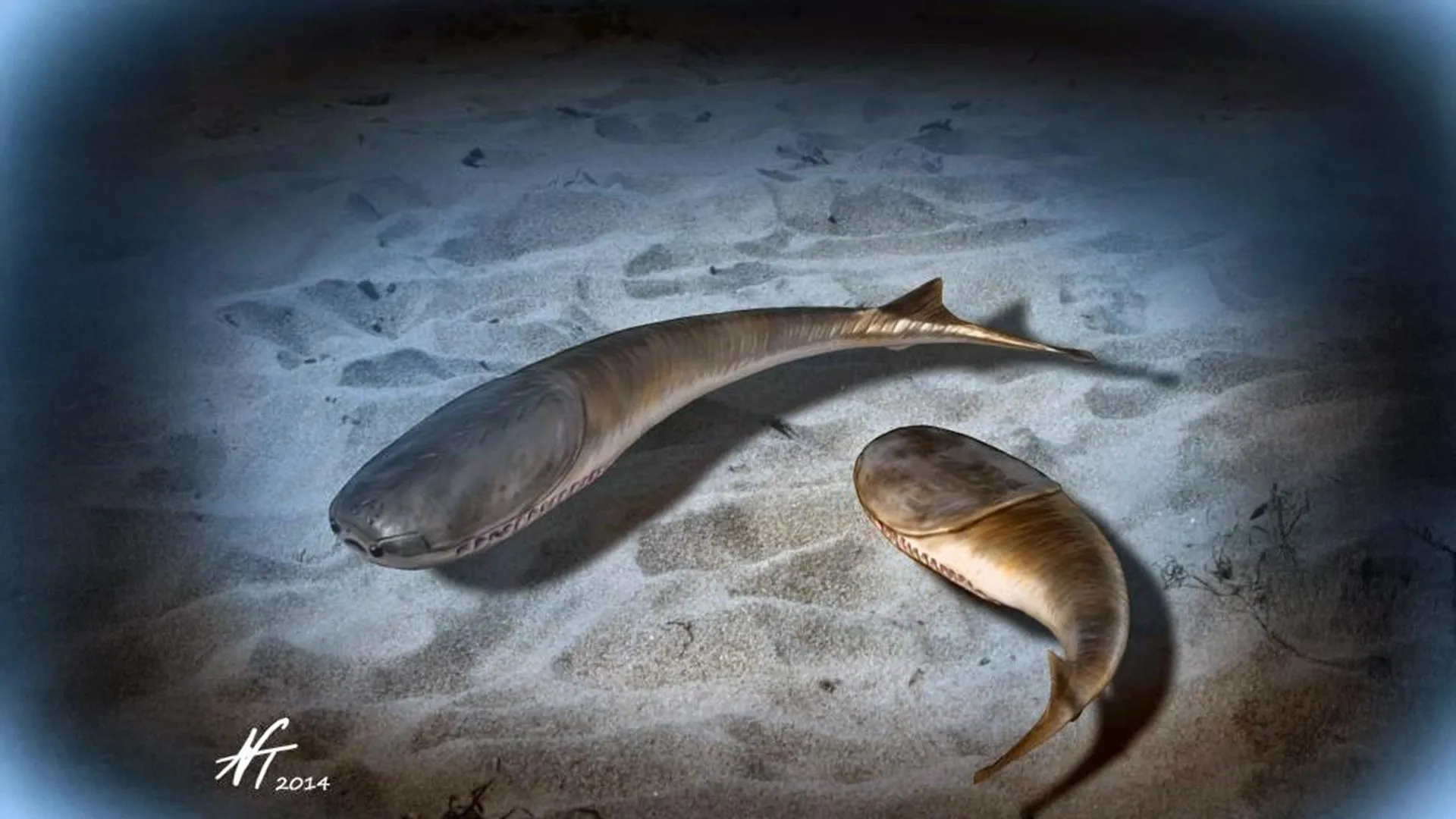
Approximately 445 million years ago, Earth experienced a profound environmental upheaval, known as the Late Ordovician Mass Extinction (LOME), which dramatically reconfigured planetary ecosystems and irrevocably altered the course of biological evolution, leading to the rise of jawed vertebrates. This devastating event, marked by rapid glaciation and subsequent ocean chemistry shifts, annihilated a vast majority of marine species but paradoxically created the ecological conditions necessary for the explosive diversification of gnathostomes, or jawed fishes, a lineage that includes all modern vertebrates, including humans. Recent scientific inquiry leveraging extensive paleontological data has illuminated how this ancient catastrophe acted as a pivotal "reset" button, enabling specific groups to exploit newly available ecological niches and ultimately reshape life’s trajectory.
Earth’s Verdant Past: The Ordovician Apex
To fully grasp the magnitude of the Late Ordovician extinction, one must first envision the world that preceded it. The Ordovician period, spanning roughly from 486 to 443 million years ago, was a time of immense marine biodiversity, often referred to as the "Great Ordovician Biodiversification Event." The planet’s landmasses were configured vastly differently from today, dominated by the colossal supercontinent Gondwana situated across the Southern Hemisphere. In contrast to modern polar regions, the Ordovician poles were ice-free, contributing to a global "greenhouse climate" characterized by warm, stable temperatures and high sea levels. These conditions fostered expansive, shallow epicontinental seas that teemed with life, acting as fertile cradles for an extraordinary array of marine organisms.
The oceans themselves were alien landscapes compared to contemporary marine environments. Towering, complex structures built by sea sponges formed vast underwater forests, providing habitat and sustenance. The seafloor was a bustling metropolis of trilobites, arthropods encased in segmented exoskeletons, scuttling among dense thickets of brachiopods and bryozoans. Enormous, predatory nautiloids, some reaching lengths of five meters with pointed, chambered shells, patrolled the open waters, alongside formidable sea scorpions that could grow to human size. Conodonts, eel-like creatures with large eyes and complex feeding apparatuses, occupied various ecological roles. Amidst this profusion of diverse invertebrates, the early ancestors of jawed vertebrates were present but remained relatively inconspicuous, minor players in a complex food web dominated by other forms. Terrestrial life, meanwhile, was in its infancy, limited to rudimentary plant forms akin to modern liverworts and primitive arthropods clinging to coastal margins.
The Onset of Catastrophe: A Dual Extinction Event
While the precise ultimate triggers for the Late Ordovician Mass Extinction remain a subject of ongoing scientific debate, the paleontological record unequivocally documents a profound bifurcation in life forms before and after the event. The extinction unfolded not as a single, sudden cataclysm, but as a complex, two-phased crisis that progressively dismantled marine ecosystems.
The initial phase marked a dramatic and rapid shift from the prevailing warm greenhouse conditions to a frigid "icehouse climate." This global cooling event saw the rapid expansion of massive glaciers across Gondwana, locking up immense volumes of Earth’s water. The direct consequence was a precipitous global drop in sea levels, causing vast shallow seas—the very nurseries of Ordovician biodiversity—to recede or vanish entirely. This habitat destruction was compounded by radical alterations in ocean chemistry. Cooler temperatures increased oxygen solubility in surface waters but likely led to sluggish deep-ocean circulation, promoting anoxia (lack of oxygen) in deeper basins and altering nutrient cycling. Species adapted to warm, stable conditions and broad, shallow habitats faced widespread collapse, leading to the first wave of extinctions.
After several million years, a brief period of ecological recovery began as some surviving species adapted to the colder, more restricted environments. However, this reprieve was short-lived. The climate reversed course once again, triggering the second and arguably more devastating phase. Rapid glacial melting released vast quantities of fresh, warmer water into the oceans. This influx not only further disrupted thermal stratification but also introduced waters often rich in sulfur and severely depleted in oxygen, creating widespread euxinic (anoxic and sulfidic) conditions. Marine species that had either survived the initial cold pulse or begun to recover found themselves overwhelmed by this new, hostile environment, leading to the final and most severe wave of extinctions. Collectively, these two phases resulted in the annihilation of approximately 85% of all marine species, making LOME one of the five largest mass extinctions in Earth’s history.
Refugia: Sanctuaries for Future Dominance
Amidst this planetary devastation, surviving vertebrate lineages found refuge in isolated pockets of biodiversity. These "refugia" were geographically confined areas, often separated by deep ocean basins or other environmental barriers, which acted as havens from the worst effects of the environmental cataclysm. Within these sheltered environments, a critical evolutionary dynamic unfolded: jawed vertebrates, previously minor components of the global marine fauna, began to gain a decisive advantage.
To meticulously reconstruct this pivotal period, a research team from the Okinawa Institute of Science and Technology (OIST) undertook an exhaustive synthesis of paleontological data. Their work involved compiling an extensive fossil database, drawing upon two centuries of discoveries from the late Ordovician and early Silurian periods. This monumental effort allowed them to map the distribution, diversity, and evolutionary trajectories of various groups within these refugia. By reconstructing the ecological communities within these isolated sanctuaries, researchers could quantitatively measure changes in genus-level diversity over millions of years. Their analysis revealed a clear and striking pattern: following the mass extinction pulses, there was a steady and significant increase in the diversity of jawed vertebrates. This demonstrated that the LOME, despite its destructive power, directly fueled a subsequent surge in speciation for this particular group after a lag of several million years.
Biogeography and the Genesis of Jaws
The power of this comprehensive fossil database extended beyond mere diversity metrics; it enabled the first quantitative examination of biogeographical shifts before and after a major mass extinction event. By tracking the geographical distribution of species, the researchers could pinpoint key refugia that served as evolutionary crucibles for later vertebrate diversification.
A compelling example arises from fossil evidence found in what is now South China. This region yielded some of the earliest complete fossil remains of jawed fishes, species closely related to modern sharks. These ancient gnathostomes appear to have remained concentrated within these stable, isolated refugia for millions of years, slowly diversifying and adapting to the unique conditions. It was only much later, after extensive evolutionary refinement within these protected zones, that these early jawed vertebrates acquired the physiological and anatomical adaptations necessary to transcend the deep ocean barriers and colonize new, expansive environments.
The study’s insights offer a nuanced perspective on a fundamental question in evolutionary biology: whether complex anatomical innovations, such as jaws, first evolve to exploit new ecological niches, or if existing niches are filled, leading to subsequent diversification. The evidence from the Late Ordovician points strongly to the latter scenario. As jawed vertebrates found themselves confined to smaller, geographically restricted areas, they encountered ecosystems largely stripped of their previous occupants. The mass extinction had created an abundance of "open roles" or vacant niches, previously occupied by now-extinct jawless species, conodonts, and various arthropods. This ecological release provided an unparalleled opportunity for the nascent jawed vertebrates to rapidly diversify, filling these available roles. This pattern is analogous to the adaptive radiation observed in Darwin’s finches on the Galápagos Islands, where different beak shapes evolved to exploit diverse food sources, reflecting a rapid specialization into available ecological niches.
An Ecological Reset, Not a Blank Slate
While jawed fishes thrived and diversified within their South China refugia, jawless vertebrates continued to persist and even flourish in other parts of the world, dominating open ocean environments for an additional 40 million years. These jawless groups, encompassing a wide array of reef fishes, developed alternative, specialized mouth structures. The precise reasons why jawed vertebrates ultimately outcompeted and largely replaced these diverse jawless forms once they expanded beyond their refuges remain an area of ongoing investigation. However, the study clearly indicates that the LOME did not simply erase life and initiate evolution from a pristine, blank slate.
Instead, the event acted as an "ecological reset." Early vertebrates, specifically the jawed forms, moved into and adapted to ecological roles that had been previously occupied by other, now-extinct groups such as conodonts and arthropods. This process led to the rebuilding of familiar ecosystem structures, albeit populated by new species. This recurring pattern, where environmental shifts trigger extinction, followed by the restoration of ecosystem functionality through convergent evolution, is referred to by the research team as a "diversity-reset cycle." Similar patterns of ecological reconstruction, converging on comparable functional designs, appear repeatedly throughout the Paleozoic era following other extinction events driven by analogous environmental pressures.
The Enduring Legacy: Tracing Modern Life to Ancient Survivors
The findings underscore the profound and lasting impact of ancient environmental disruptions on the trajectory of life. By meticulously integrating data on geographical location, morphological characteristics, ecological roles, and overall biodiversity, scientists can now piece together how early vertebrate ecosystems recovered and reassembled themselves after one of Earth’s most significant environmental catastrophes.
This comprehensive understanding elucidates not only why jaws evolved as a critical innovation but also why jawed vertebrates ultimately came to dominate global ecosystems. Furthermore, it explains why the vast diversity of modern marine life, including the lineage leading to humans, traces its ancestry back to these resilient survivors of the Late Ordovician extinction, rather than to the previously dominant and diverse forms like conodonts and trilobites. Revealing these long-term macroevolutionary patterns and deciphering their underlying processes is a cornerstone of evolutionary biology, offering critical insights into the resilience and adaptability of life on a constantly changing planet. Further research will undoubtedly delve into the specific genetic and developmental mechanisms that underpinned this rapid diversification, as well as the intricate ecological interactions that allowed jawed vertebrates to eventually achieve global supremacy.



 Aura Kasih
 Safa Marwah