Lisa Mariana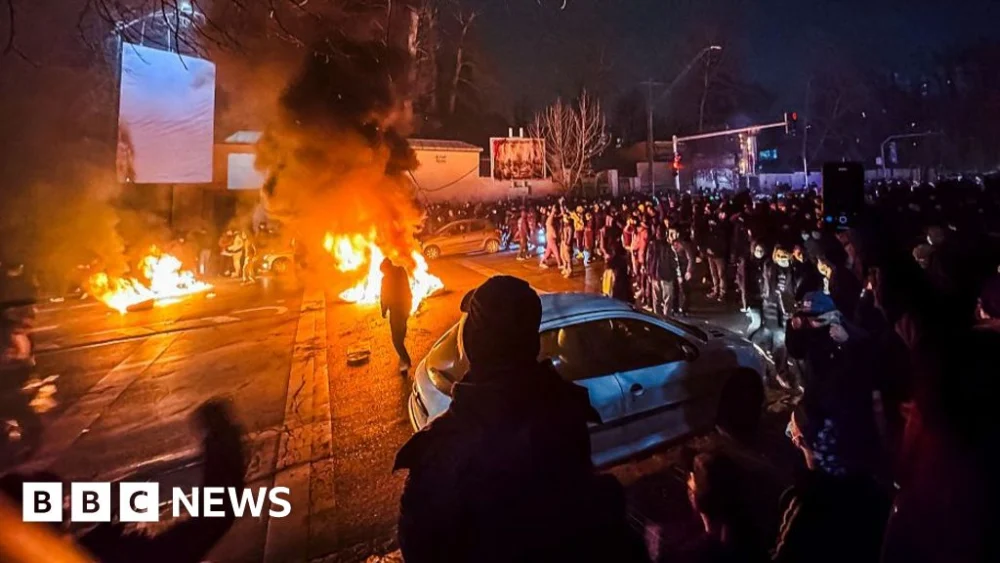
A profound and rapidly intensifying wave of civil unrest continues to sweep across Iran, as citizens in over a hundred cities and towns openly challenge the authority of the clerical establishment, defying a state crackdown marked by increasing violence and a growing casualty toll. Reports from inside the country, corroborated by verified visual evidence and eyewitness testimonies, indicate a significant escalation in the government’s efforts to quell the widespread dissent, even as protesters pivot from economic grievances to direct calls for an end to the current political order.
The genesis of this latest eruption of popular anger lies in profound economic distress, particularly soaring inflation that has severely impacted the livelihoods of ordinary Iranians. However, what began as localized demonstrations against economic hardship has rapidly metastasized into a broader movement demanding fundamental political change, with protesters now explicitly calling for the overthrow of Supreme Leader Ayatollah Ali Khamenei and the entire clerical system. This shift signifies a deepening crisis of legitimacy for the Islamic Republic, pushing the boundaries of previous protest movements.
Escalation of State Repression and Humanitarian Crisis
In response to the escalating defiance, the Iranian government has intensified its repressive measures. Official rhetoric from figures such as Iran’s attorney general, who declared that protesters would be considered "enemies of God" – a charge carrying the death penalty – signals a stark increase in the severity of potential penalties for dissent. Despite these dire warnings, citizens have continued to take to the streets, often confronting security forces in direct clashes.
The human cost of this crackdown has been severe and continues to mount. Unverified reports suggest that hundreds have been killed or wounded within the past few days, a figure independently echoed by human rights organizations and medical personnel. Sources within Iran, including staff from multiple hospitals, describe overwhelming conditions, with emergency rooms struggling to cope with the influx of injured individuals and morgues reaching capacity. Accounts detail direct shots to vital organs, particularly the heads and hearts of young protesters, with many succumbing to their injuries before or upon arrival at medical facilities. Human Rights Activists in Iran (HRANA) reported over 100 fatalities, including security personnel, since the protests began in late December, with BBC Persian confirming the identities of at least 26 deceased, including six children. Amnesty International has also raised grave concerns, analyzing "distressing reports" of intensified unlawful use of lethal force.
Iranian police officials, while acknowledging confrontations, have sought to deflect blame for fatalities, attributing a "significant proportion" of deaths to "trained and directed individuals" rather than government forces. This narrative, however, is met with skepticism given the overwhelming evidence of state-sanctioned violence. The detention of over 2,500 individuals since December 28 further underscores the breadth of the government’s dragnet.
Information Blackout and Verification Challenges
A critical component of the regime’s strategy to contain the unrest has been a severe and unprecedented internet shutdown. Implemented since Thursday, this blackout extends beyond merely restricting access to the global internet, significantly limiting the domestic intranet as well. Internet researchers describe this as a more comprehensive and restrictive shutdown than even that imposed during the "Women, Life, Freedom" uprising in 2022. This deliberate obfuscation makes it exceedingly difficult for international observers and news organizations, largely barred from reporting directly from inside Iran, to obtain and verify information.
Nonetheless, a limited but growing body of verified video footage and eyewitness accounts has managed to emerge, painting a vivid picture of the clashes. Verified videos from Tehran’s Gisha district depicted protesters occupying streets, while footage confirmed by BBC Verify showed confrontations between security forces and demonstrators in Mashhad, Iran’s second-largest city. These clips captured masked protesters taking cover amidst bonfires and wheelie bins, a vehicle engulfed in flames, and the chilling sound of multiple gunshots. Other videos showed large groups of protesters in Punak Square and Heravi district, chanting slogans against the clerical establishment. The complete disruption of digital communication highlights the desperate measures taken by the authorities to control the narrative and prevent the coordination of further protests, although it also underscores the resilience of those attempting to bypass these restrictions, potentially through high-risk methods like Starlink satellite internet.
International Reactions and Geopolitical Implications
The escalating crisis in Iran has drawn significant international attention and concern. US President Donald Trump, commenting on the situation, expressed support for the protesters, stating that the US "stands ready to help" as Iran "is looking at FREEDOM." While he did not elaborate on the nature of this assistance, US media outlets, including The New York Times and Wall Street Journal, reported that Trump had received preliminary briefings on potential military options regarding Iran. These discussions, though described as not indicating an "imminent threat," add a layer of geopolitical tension to the internal unrest, especially in light of previous US airstrikes on Iranian nuclear facilities.
Iran’s response to these external comments has been sharp. Its parliament speaker issued a warning that any US attack on Iran would render Israel and all US military and shipping bases in the region legitimate targets, highlighting the potential for regional destabilization if the situation escalates further. The UK Foreign Secretary, Yvette Cooper, also weighed in, emphasizing that those speaking out against the Iranian government should not face "the threat of violence or reprisals."
Adding another dimension to the international discourse, Reza Pahlavi, the exiled son of Iran’s last monarch, who resides in the US and has been a symbolic figure for some protesters, issued a video statement. He expressed solidarity with the demonstrators, claiming they were not alone and that President Trump had acknowledged their bravery. Pahlavi also made unverified claims of a "severe shortage of mercenaries" within the Islamic Republic’s security forces and widespread disobedience among personnel, urging continued but cautious protest. His calls for a return to Iran carry historical resonance, linking the current unrest to a broader historical struggle against the Islamic Republic.
Historical Context and Future Trajectories
The current wave of protests represents the most widespread challenge to the Iranian government since the 2022 "Women, Life, Freedom" uprising. That movement, sparked by the death in custody of Mahsa Amini, a young Kurdish woman detained for allegedly improperly wearing her hijab, resulted in over 550 deaths and 20,000 detentions over several months, according to human rights groups. The recurring nature and increasing intensity of these protests underscore a deep-seated and persistent societal discontent that the regime has struggled to contain through repression alone.
The shift in protester demands from specific grievances to an outright call for an end to clerical rule signals a more existential threat to the Islamic Republic. While the government’s capacity for brutal suppression remains formidable, the sustained defiance in the face of such severe consequences suggests a fundamental change in the public mood. The regime’s reliance on increasingly harsh measures, including the internet shutdown and the threat of capital punishment, may temporarily quell visible dissent but risks further alienating the populace and exacerbating underlying tensions.
The immediate future of Iran remains highly uncertain. The government faces a precarious balance: crushing the protests risks international condemnation and further radicalizing the opposition, while showing weakness could embolden dissent. The ongoing information blackout further complicates the assessment of the protests’ true scale and impact. As dawn breaks over Iran each day, the trajectory of this evolving crisis will hinge on the sustained courage of the protesters, the unwavering resolve of the state, and the delicate balance of regional and international pressures. The outcome will undoubtedly have profound implications not only for Iran but for the wider Middle East.


 Aura Kasih
 Safa Marwah
 Ayu Aulia