Lisa Mariana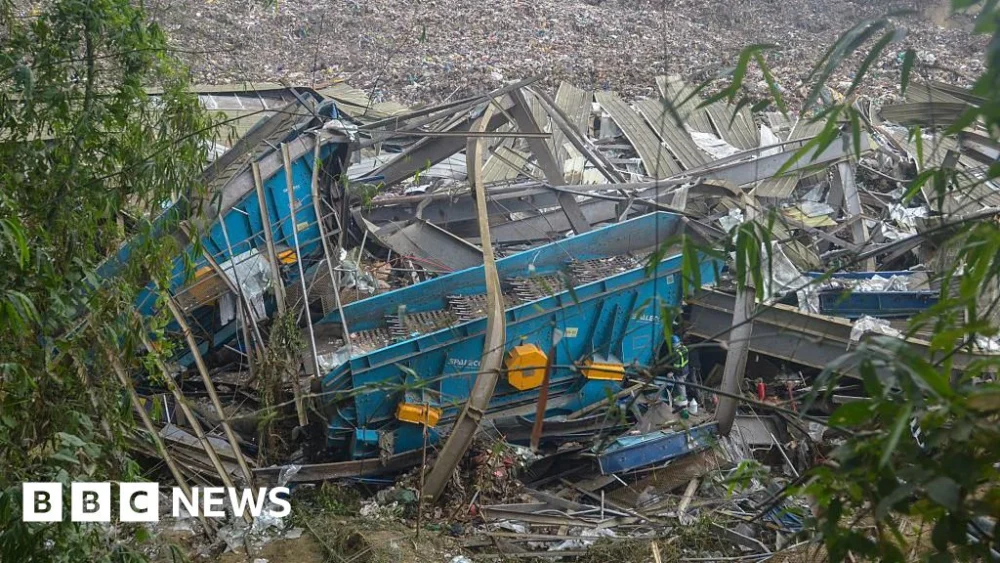
A devastating waste slide at a major disposal facility in the central Philippine province of Cebu has initiated a desperate, round-the-clock rescue operation, as emergency personnel contend with unstable terrain and hazardous conditions in their urgent quest to locate dozens of individuals believed to be entombed in the debris. The calamitous event, which transpired earlier this week, has already resulted in confirmed fatalities and numerous injuries, casting a stark light on the critical vulnerabilities within the region’s waste management infrastructure and the perilous livelihoods sustained by its informal economy.
The incident unfolded on Thursday at the privately operated Binaliw landfill, a substantial site spanning approximately 15 hectares (37 acres) in Cebu City. Officials have confirmed that approximately 110 individuals were present at the facility when the massive accumulation of refuse unexpectedly gave way, triggering a catastrophic landslide. In the immediate aftermath, a multi-agency response was swiftly mobilized, involving local disaster risk reduction and management councils, police, fire services, and community volunteers. As of Saturday, Mayor Nestor Archival reported that specialized detection equipment had registered indications of human activity within specific sections of the rubble, injecting a fragile glimmer of hope into the arduous recovery efforts. This crucial development has prompted an intensified focus on these areas, necessitating the deployment of heavier machinery, including a more powerful 50-ton crane, to carefully navigate the treacherous landscape of compacted waste and structural remnants.
The human toll of the disaster continues to mount, with four fatalities officially recorded and a further twelve individuals having received medical treatment for injuries sustained during the collapse. However, the most pressing concern remains the fate of an estimated thirty or more workers who are still unaccounted for. These individuals, predominantly laborers engaged in the informal sector of waste collection and sorting, were engaged in their daily activities when the ground beneath them gave way. Their families now endure an agonizing vigil, gathering near the perimeter of the disaster zone, clutching onto the slender hope that their loved ones might yet be found alive amidst the suffocating mass of refuse. The emotional weight of this waiting period is palpable, as relatives grapple with uncertainty and the profound fear of loss. One distraught spouse, Jerahmey Espinoza, whose husband remains missing, articulated the prevailing sentiment: "We’re still hopeful that he’s alive, but they haven’t seen him or located him ever since the disaster happened."
The operational environment for rescue teams is exceptionally challenging, marked by inherent dangers that significantly impede progress. The immense volume of intermingled waste and demolished structures presents an unstable and constantly shifting surface, posing a continuous threat of secondary collapses that could endanger rescuers themselves. Furthermore, the decomposition of organic matter within landfills generates noxious gases, primarily methane, which not only present a respiratory hazard but also carry the risk of ignition or explosion. The heterogeneous nature of the debris, comprising everything from domestic refuse to industrial waste, complicates excavation, requiring meticulous manual effort interspersed with the strategic deployment of heavy machinery. The sheer scale of the displaced material necessitates a methodical, painstaking approach, making the search a race against time where every hour diminishes the prospects of survival. As Cebu City Councillor Dave Tumulak, who chairs the city’s disaster council, underscored, "We are racing against time, that’s why our deployment is 24/7."
The underlying causes of this tragic incident are currently under investigation, but preliminary assessments point towards systemic deficiencies in waste management practices. Councillor Joel Garganera, a local legislator, previously indicated that the collapse was likely a direct consequence of substandard operational procedures. He described a method where operators had reportedly been excavating sections of the natural terrain, presumably for earth materials, while simultaneously accumulating vast quantities of waste to construct new, artificial elevations of refuse. This practice, if confirmed, fundamentally undermines the engineering principles vital for stable landfill operation. Modern landfill design emphasizes systematic cell construction, precise compaction, and careful slope management to ensure structural integrity and prevent catastrophic failures. The creation of unstable, unengineered waste mountains without proper geotechnical assessment or layering techniques significantly elevates the risk of slides, especially when exacerbated by external factors such as heavy rainfall or seismic tremors, although the immediate trigger for this specific collapse remains to be definitively established.
The Philippines, an archipelagic nation experiencing rapid urbanization and population growth, faces immense challenges in managing its burgeoning waste output. Landfills, like the one in Binaliw, are ubiquitous across major urban centers such as Cebu, which serves as a vital economic and logistical hub for the Visayas region. However, the sheer volume of municipal solid waste often overwhelms existing infrastructure and regulatory frameworks. Many facilities operate under less-than-ideal conditions, often struggling with inadequate funding, limited technical expertise, and inconsistent enforcement of environmental and safety regulations. The socio-economic context further complicates the issue: a significant portion of the urban poor relies on waste picking as a primary source of income, working in hazardous conditions within these landfills, often without proper safety equipment or formal employment protections. This informal economy, while providing a crucial livelihood for many, also places vulnerable populations directly in harm’s way when such disasters strike.
The Binaliw landfill collapse serves as a grim reminder of the broader environmental and public health implications associated with poorly managed waste disposal sites. Beyond the immediate danger of physical collapse, such facilities are significant sources of environmental degradation. They can leach toxic contaminants into groundwater, pollute nearby waterways, and release potent greenhouse gases, particularly methane, contributing to climate change. The incident is likely to trigger heightened scrutiny of waste management policies, not just in Cebu but across the entire nation. It could prompt a re-evaluation of landfill design and operational standards, a tightening of regulatory oversight, and a stronger emphasis on sustainable waste reduction, recycling, and resource recovery initiatives.
Looking ahead, the immediate priority remains the recovery of those still missing and the provision of support to the affected families. Concurrently, a thorough and transparent investigation into the collapse is imperative to ascertain precise accountability and to identify the specific operational failures that led to this tragedy. The findings of such an inquiry will be crucial in informing future policy decisions, potentially leading to stricter construction and management protocols for waste disposal sites, enhanced monitoring mechanisms, and more robust safety provisions for workers. This catastrophe underscores the urgent need for comprehensive, integrated waste management strategies that prioritize both environmental sustainability and human safety, ensuring that such preventable disasters are averted in the future and that the pursuit of economic development does not come at the unacceptable cost of human lives and ecological integrity. The long-term implications for waste management practices in the Philippines will depend significantly on the lessons learned and the reforms implemented in the wake of this devastating event.




 Aura Kasih
 Safa Marwah
 Ayu Aulia