Lisa Mariana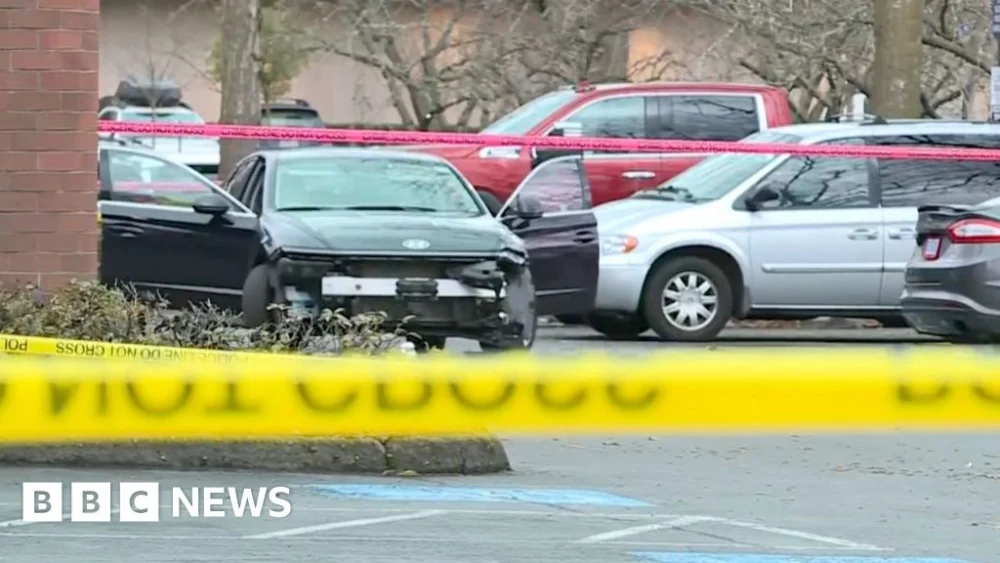
A significant incident unfolded in Portland, Oregon, resulting in injuries to two individuals during an encounter with United States federal agents, an event that has immediately ignited intense public discussion and heightened scrutiny of federal law enforcement activities across American cities.
The confrontation, which occurred in the early afternoon hours local time, involved personnel from the Department of Homeland Security (DHS) and reportedly stemmed from a targeted traffic stop. According to official statements released by DHS, the event transpired at approximately 2:19 PM local time, equivalent to 10:19 PM GMT. The agency detailed that federal agents initiated a stop involving a vehicle whose occupants included an individual identified as a Venezuelan national believed to be affiliated with a transnational criminal organization. During the attempted stop, the driver of the vehicle reportedly weaponized the car, endeavoring to ram the federal personnel. In response to this perceived threat, an agent discharged a firearm. The vehicle subsequently fled the scene, with both the driver and passenger escaping the immediate area of the incident.
The individuals wounded, a man and a woman, were later located several blocks away from the initial confrontation point. Emergency services were summoned, and Portland Police officers, who were not directly involved in the shooting itself but responded to reports of gunfire, administered immediate medical aid, including the application of a tourniquet. Both individuals were subsequently transported to a local medical facility, where their current conditions remain undisclosed. The identities of the wounded parties have not been publicly released by authorities as the investigation is in its nascent stages.
This Portland incident arrives just a day after another high-profile shooting involving federal agents occurred in Minneapolis, Minnesota, where an agent fatally shot Renee Nicole Good under similar circumstances, with agents alleging she also attempted to run them over with a vehicle. That event has already triggered widespread protests and amplified calls for accountability and transparency regarding federal law enforcement operations within urban centers. The back-to-back occurrences have intensified a national dialogue concerning the scope of federal authority, the use of force protocols, and the often-fraught relationship between federal agencies and local communities.
The Department of Homeland Security’s statement elaborated on the specific targeting of the vehicle’s passenger, identifying the individual as a Venezuelan national who is an undocumented immigrant, reportedly linked to the notorious Tren de Aragua transnational criminal enterprise. This organization is known for its involvement in various illicit activities, including human trafficking, particularly prostitution rings, and is also implicated in a recent shooting incident within Portland. DHS asserted that agents clearly identified themselves to the vehicle’s occupants, at which point the driver’s actions escalated the encounter, leading to the agent’s defensive discharge of a firearm. The agency’s communication, disseminated via social media platform X, underscored the perceived danger to the agents involved.
Portland Police Chief Bob Day addressed the public, acknowledging the palpable emotional tension and heightened public sensitivity, particularly in the aftermath of the Minneapolis shooting. He urged the community to maintain calm as investigators meticulously gather facts and piece together the sequence of events. Chief Day emphasized that local police officers were not direct participants in the shooting, but their role in the subsequent response and ongoing investigation is critical.
Nathan Vasquez, the District Attorney for Portland, was present at the scene of the shooting, signaling the gravity of the incident and the commitment of local legal authorities to a thorough and impartial investigation. Vasquez publicly pledged to oversee the process, ensuring that all evidence is meticulously preserved and that a comprehensive understanding of the events is achieved. His comments implicitly address the concerns around investigative integrity, especially in light of the controversy in Minneapolis, where federal authorities chose not to include local investigators in the probe of Renee Nicole Good’s death. This decision in Minneapolis has drawn criticism and raised questions about transparency and independent oversight, further highlighting the imperative for a robust and inclusive investigative approach in Portland.
The mayor of Portland, Keith Wilson, issued a strongly worded statement condemning what he characterized as "horrific violence" and drawing a direct parallel to the Minneapolis incident. Mayor Wilson called for an immediate cessation of all immigration enforcement operations by federal agents within Portland until the conclusion of a full and exhaustive investigation into the recent shooting. He articulated a broader critique of federal law enforcement tactics, asserting that "federal militarization undermines effective, community-based public safety" and runs contrary to the fundamental values espoused by the region. This stance reflects a deep-seated apprehension in Portland regarding the presence and operational methodologies of federal agencies, a sentiment that has historically manifested in significant public demonstrations.
Federal Law Enforcement Operations in Urban Environments: Context and Controversy
The involvement of federal agents in domestic law enforcement actions, particularly those resulting in the use of deadly force, consistently sparks debate regarding jurisdictional boundaries, inter-agency cooperation, and accountability. Agencies under the Department of Homeland Security, such as Homeland Security Investigations (HSI), Immigration and Customs Enforcement (ICE), and Customs and Border Protection (CBP), possess broad mandates to enforce federal laws, including those pertaining to immigration, national security, and transnational crime. Their operations can involve undercover work, surveillance, and direct enforcement actions, often in collaboration with or parallel to local police departments. However, when these operations lead to violent encounters within city limits, they often intersect with local community concerns about police brutality, civil liberties, and the militarization of law enforcement.
The legal framework governing the use of force by federal agents is rooted in constitutional standards, primarily the Fourth Amendment’s protection against unreasonable searches and seizures, as interpreted by Supreme Court precedents such as Tennessee v. Garner (1985). This ruling dictates that deadly force against a fleeing suspect is permissible only when the officer has probable cause to believe that the suspect poses a significant threat of death or serious physical injury to the officer or others. Each federal agency also maintains specific, often more restrictive, internal policies on the use of force, which typically emphasize de-escalation and the principle of using only the force necessary to achieve a lawful objective. The question of whether these protocols were followed rigorously is central to any subsequent investigation.
The Threat of Transnational Organized Crime: Tren de Aragua
The DHS statement’s reference to the Tren de Aragua criminal organization provides critical context for the federal interest in the targeted individuals. Originating in Venezuela, Tren de Aragua has evolved from a local prison gang into a formidable transnational syndicate. Its operations span across multiple countries in Latin America, including Colombia, Peru, and Chile, and increasingly, its illicit networks have established footholds within the United States. The gang is known for its extreme violence, sophisticated operational structures, and diversified criminal portfolio, which includes drug trafficking, extortion, kidnapping, arms trafficking, human smuggling, and widespread human trafficking for sexual exploitation. The specific mention of a "prostitution ring" aligns with the established operational profile of Tren de Aragua.
Federal agencies like HSI are specifically tasked with investigating and dismantling such complex criminal enterprises due to their national security implications, the widespread harm they inflict, and their ability to exploit international borders. The targeting of individuals associated with Tren de Aragua underscores the seriousness with which federal authorities view the proliferation of this particular threat within American communities. However, the methods employed in combating these threats, especially when they spill into public confrontations, invariably raise questions about public safety and civil liberties.
Community Relations, Public Trust, and the Call for Accountability
The statements from Portland’s local leadership reflect a broader tension that has long characterized federal-local interactions in the city. Portland has a well-documented history of social activism and protests, often directed at federal authority, particularly during periods of perceived overreach or controversial policy implementation. Mayor Wilson’s call for federal immigration agents to halt operations and his critique of "federal militarization" resonate deeply within a community that has previously witnessed significant federal law enforcement presence during protests, which at times led to clashes and accusations of excessive force.
The demand for an inclusive and transparent investigation is a direct response to this history and the recent events in Minneapolis. The decision by federal authorities in Minneapolis to exclude local investigators from their probe has been widely criticized by civil liberties advocates and local officials, who argue that such exclusions undermine public trust and the impartiality of the investigative process. The presence of Portland DA Nathan Vasquez at the scene and his explicit commitment to a thorough and complete investigation, with full preservation of evidence, can be seen as a deliberate effort to preempt similar criticisms and assure the public of a diligent and unbiased inquiry.
The perception of accountability is paramount for maintaining public trust in law enforcement. When federal agencies operate within local jurisdictions, the lines of accountability can sometimes appear blurred. This incident, occurring alongside the Minneapolis shooting, underscores the urgent need for clear protocols for inter-agency cooperation, transparent investigative processes, and robust mechanisms for oversight. Without these, the risk of further eroding public confidence in both federal and local law enforcement agencies increases significantly.
Implications and Future Outlook
The Portland shooting, occurring in such close proximity to the Minneapolis incident, is poised to intensify the national debate surrounding the role, tactics, and accountability of federal law enforcement agencies in domestic contexts. The immediate aftermath will undoubtedly focus on the ongoing investigations. Both internal reviews by the involved federal agency and external oversight by the Department of Justice will be initiated. Locally, the Portland Police Department and the District Attorney’s office will conduct their own investigations into the shooting, particularly concerning the circumstances of the two individuals who were wounded and any potential local charges that may arise. The coordination, or lack thereof, between these multiple investigative bodies will be a key factor in how the public perceives the fairness and thoroughness of the process.
Potential legal ramifications for the federal agent involved could range from exoneration based on a justified use of force, to internal disciplinary actions, or in rare cases, criminal charges, depending on the findings of the investigations. Similarly, the driver and passenger of the vehicle could face charges related to assault on federal officers, flight from law enforcement, or their alleged involvement with the Tren de Aragua organization.
From a policy perspective, these incidents may prompt a re-evaluation of federal engagement strategies in urban areas, particularly those with a history of strained relations with federal authorities. Calls for more explicit memoranda of understanding (MOUs) between federal and local agencies, clearer guidelines on the use of force, and enhanced transparency in operations and investigations are likely to gain momentum. The political landscape in Portland, characterized by its progressive leanings and history of anti-federal sentiment, suggests that local officials will continue to advocate for greater local control and oversight over federal operations within their city.
The social ramifications could include further protests and demonstrations in Portland and potentially other cities, fueled by concerns about federal overreach and police accountability. The incidents contribute to a broader narrative about systemic issues within law enforcement and the need for comprehensive reforms. The long-term impact will depend significantly on the transparency and perceived justice of the investigative outcomes, and whether these events lead to meaningful policy changes that address the underlying tensions between federal authority and community expectations.




 Aura Kasih
 Safa Marwah
 Ayu Aulia