Aura Kasih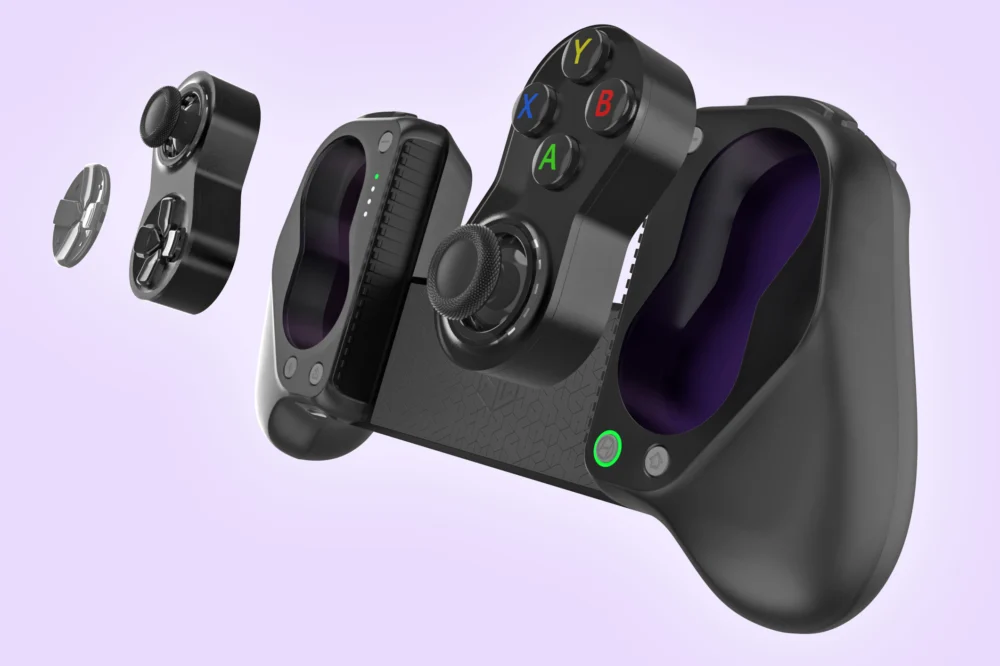
Hyperkin, in a significant strategic collaboration with GameSir, has unveiled the X5 Alteron, an innovative clamp-on style wireless controller poised to redefine user customization and versatility in the gaming hardware landscape. This new peripheral shares a foundational design philosophy with the GameSir G8 Plus, released in 2024, featuring an expandable telescopic mechanism engineered to securely accommodate a range of mobile devices, including smartphones and tablets, as well as specific iterations of the Nintendo Switch console, effectively supplanting its native Joy-Con controllers. However, the X5 Alteron distinguishes itself through a groundbreaking modular architecture, empowering users to interchange a majority of the front-facing control elements with an array of alternative layouts, button configurations, and joystick modules, thus offering an unprecedented level of personalized gaming input.
While official release dates and pricing remain undisclosed, the initial unveiling showcased a substantial and diverse collection of optional control modules, catering to a broad spectrum of player preferences and historical gaming engagements. This modularity extends to the fundamental layout of the controller, allowing for the selection of either symmetrical or asymmetrical thumbstick arrangements, the modification of action button placement, quantity, and sequencing, and even the customization of the D-pad’s tactile feel and aesthetic. A particularly noteworthy aspect of the X5 Alteron’s modular potential is the inclusion of specific modules designed to meticulously replicate the control schemes of iconic legacy consoles, such as the Nintendo 64 and the GameCube. This feature holds significant appeal for enthusiasts engaging with classic titles through Nintendo Switch Online, promising a more authentic and immersive retro gaming experience. Furthermore, the availability of a trackpad module suggests a sophisticated integration with PC gaming and broader device control applications, potentially emulating mouse functionality.
The X5 Alteron’s connectivity via Bluetooth establishes its utility not only as a mobile gaming accessory but also as a standalone controller for various gaming platforms, including home consoles and personal computers. This wireless capability, however, necessitates a proactive approach to battery management, with USB-C charging being the standard for replenishment. The inclusion of batteries inherently contributes to the overall weight of the controller, a factor that designers likely considered during the ergonomics development phase. Beyond the primary input methods, the X5 Alteron incorporates advanced features such as Hall effect analog triggers, offering a distinct tactile response and the option for a reduced actuation travel, which can be advantageous for fast-paced gaming scenarios demanding rapid inputs. Complementing these are integrated rumble motors, designed to deliver nuanced force feedback effects, thereby enhancing player immersion by translating in-game actions into physical sensations.
The genesis of the X5 Alteron can be viewed within the broader context of the evolving gaming peripheral market, which has seen a significant surge in demand for adaptable and personalized hardware. As gaming ecosystems become increasingly fragmented, with players engaging across multiple platforms and device types, the need for controllers that can seamlessly transition and cater to diverse control schemes has become paramount. Hyperkin, a company with a history of producing licensed and innovative gaming accessories, and GameSir, a recognized leader in mobile gaming peripherals, have strategically leveraged their respective strengths to address this market gap. The X5 Alteron represents a sophisticated answer to the perennial challenge of optimizing control inputs for an ever-expanding library of games, from contemporary AAA titles to cherished retro classics.
The modular design of the X5 Alteron is not merely a feature; it is a fundamental paradigm shift in how users interact with their gaming hardware. By allowing for the physical replacement of key components, the controller transcends the limitations of fixed configurations. This approach democratizes controller customization, moving it beyond the realm of software remapping to tangible hardware alterations. The implications for accessibility are profound. Players with specific physical needs or preferences can now tailor a controller to their unique requirements, potentially opening up gaming to a wider audience. For instance, the ability to swap thumbstick positions or alter button sizes and spacing can significantly enhance playability for individuals who find standard controller layouts challenging.

From a performance perspective, the inclusion of Hall effect sensors in the analog triggers is a significant technological advancement. Unlike traditional potentiometers, Hall effect sensors utilize magnetic fields to detect trigger position, which translates to increased durability and precision. The absence of physical contact in the sensing mechanism eliminates wear and tear, ensuring consistent performance over extended periods of use. The adjustable trigger travel further refines this functionality, allowing players to fine-tune their input sensitivity, a critical factor in competitive gaming where milliseconds can make a difference. The rumble motors, while a staple in modern controllers, are expected to be implemented with a level of sophistication that complements the overall premium feel of the X5 Alteron, providing impactful and responsive haptic feedback.
The strategic decision to offer modules that emulate legacy Nintendo controllers for use with Nintendo Switch Online is particularly astute. The Nintendo 64 and GameCube controllers are renowned for their distinct ergonomics and button layouts, which are integral to the authentic experience of playing games designed for those platforms. Standard modern controllers often struggle to accurately replicate these nuances, leading to a less immersive or even frustrating retro gaming experience. By providing dedicated modules, Hyperkin and GameSir are directly addressing a passionate segment of the gaming community, offering a tangible solution for a long-standing desire among retro gaming enthusiasts. This move not only enhances the value proposition of the X5 Alteron but also positions it as a must-have accessory for anyone serious about preserving and enjoying the legacy of these iconic consoles.
The potential for third-party module development also presents an intriguing future outlook for the X5 Alteron. If Hyperkin and GameSir establish an open ecosystem for module creation, it could foster a vibrant community of developers and designers, leading to an even wider array of customization options. This could include specialized modules for specific game genres, unique aesthetic designs, or even modules incorporating advanced features like adaptive triggers or specialized haptic feedback technologies. Such a strategy would not only extend the lifespan of the X5 Alteron but also create a sustainable ecosystem around the core product, fostering brand loyalty and continuous innovation.
The integration of a trackpad module hints at a broader vision for the X5 Alteron, extending its utility beyond traditional gamepad functions. While its primary focus appears to be gaming, the inclusion of a trackpad suggests an aspiration to bridge the gap between gaming controllers and general-purpose input devices. This could enable users to seamlessly switch between gaming and productivity tasks on a connected PC or tablet without needing to disconnect and reconnect different peripherals. This multi-functional approach aligns with the growing trend of convergence in consumer electronics, where devices are increasingly expected to perform multiple roles efficiently.
The wireless nature of the X5 Alteron, facilitated by Bluetooth connectivity, offers a significant advantage in terms of cable management and freedom of movement. This is particularly beneficial for mobile gaming, where portability and a clutter-free setup are highly valued. The ability to connect to a variety of devices also means that users are not tied to a single ecosystem, allowing for greater flexibility in their gaming choices. However, as with any wireless peripheral, battery life and signal stability are critical considerations. The success of the X5 Alteron will partly depend on the longevity of its battery and the robustness of its wireless connection, especially in environments with significant wireless interference.
In conclusion, the Hyperkin X5 Alteron represents a forward-thinking approach to gaming peripheral design, emphasizing modularity, customization, and versatility. Its ability to adapt to diverse gaming needs, from modern mobile titles to classic console experiences, coupled with its potential for future expansion through third-party modules, positions it as a significant contender in the high-end gaming controller market. The collaboration between Hyperkin and GameSir appears to be a potent combination of expertise, promising a product that not only meets but anticipates the evolving demands of the global gaming community. The true impact of the X5 Alteron will become clearer upon its official release and wider adoption, but the foundational concept signifies a pivotal step towards truly personalized and adaptable gaming hardware.


 Lisa Mariana
 Safa Marwah
 Ayu Aulia