Lisa Mariana
Following a reported decisive intervention in Venezuela, culminating in the alleged apprehension of its head of state, the foreign policy trajectory of a renewed Trump administration appears to be defined by an assertive, unilateralist posture, raising questions about which other nations might become focal points of Washington’s intensified strategic attention. This period marks a re-evaluation of international engagement, characterized by a potent blend of national security imperatives, economic interests, and a reinterpretation of hemispheric dominance, all under the banner of what President Trump has termed the "Donroe Doctrine." This updated framework, a direct allusion to the 19th-century Monroe Doctrine, signals a commitment to affirming U.S. influence, particularly within the Western Hemisphere, but its operational scope and potential implications for global stability extend far beyond traditional geographical confines.
The "Donroe Doctrine" represents more than just a rhetorical flourish; it suggests a fundamental shift in the U.S. approach to sovereign nations deemed to be either threats to American interests or within its perceived sphere of influence. This re-energized foreign policy ethos prioritizes swift, decisive action, often bypassing multilateral frameworks, and is driven by a blend of economic leverage, security concerns, and a willingness to challenge established diplomatic norms. As the international community grapples with the implications of the Venezuelan operation, a deeper examination of other nations previously flagged by the administration offers critical insights into potential future flashpoints and the broader contours of U.S. global engagement.
Greenland: A Strategic Arctic Frontier
The vast, resource-rich Arctic island of Greenland has emerged as an unexpected, yet strategically significant, point of interest for the U.S. administration. Despite currently being an autonomous territory within the Kingdom of Denmark, the U.S. has openly expressed a desire for its acquisition, citing compelling national security rationales. The existing Pituffik Space Base (formerly Thule Air Base) already underscores Greenland’s military importance, but the administration’s broader ambition stems from a confluence of emerging geopolitical factors.
Foremost among these is the immense wealth of rare earth minerals beneath Greenland’s ice sheet. These critical elements are indispensable for modern technology, ranging from smartphones and electric vehicles to advanced military hardware. China currently dominates global rare earth production, a strategic vulnerability for the U.S. that Greenland’s resources could potentially mitigate. Beyond minerals, Greenland’s geographical position is paramount. Situated at the crossroads of the North Atlantic and Arctic Ocean, it commands vital sea lanes. As climate change accelerates the melting of polar ice, new shipping routes through the Arctic are becoming increasingly viable, promising to revolutionize global trade and military logistics. Control over Greenland would grant the U.S. unparalleled strategic leverage in this increasingly important region, allowing it to project power and monitor activities in an area experiencing heightened interest from Russia and China.
Greenland’s Prime Minister, Jens Frederik Nielsen, has unequivocally rejected any notion of annexation, framing the U.S. proposition as a "fantasy." His emphasis on dialogue through proper channels and respect for international law highlights the inherent complexities. Any forceful attempt by the U.S. to assert control over Greenland would not only violate fundamental principles of national sovereignty and self-determination but would also precipitate an unprecedented crisis within NATO, an alliance built on mutual defense and shared democratic values. Such a move would pit the U.S. against a fellow member state, Denmark, severely undermining the transatlantic alliance and creating deep fissures within the Western security architecture. The economic and strategic motivations for the U.S. are clear, but the diplomatic and geopolitical costs of pursuing such an ambition unilaterally would be immense, potentially reshaping global alliances for decades.
Colombia: A Shifting Alliance in a Volatile Region
In the wake of the Venezuelan operation, direct warnings from President Trump to Colombian President Gustavo Petro signal a significant deterioration in what has historically been a robust bilateral relationship. Colombia, a nation rich in oil, gold, silver, emeralds, platinum, and coal, has long been a key strategic partner for the U.S. in South America, particularly in the realm of counter-narcotics efforts. However, the rise of a left-wing government under President Petro has introduced new tensions.
The primary point of contention revolves around the drug trade, specifically cocaine production and trafficking. The U.S. administration has escalated its interdiction efforts in the Caribbean and eastern Pacific, asserting, without publicly disclosed evidence, that these operations are targeting drug shipments. Simultaneously, Washington has accused President Petro’s government of failing to curb the power of cartels, leading to the imposition of sanctions against him in October. This marked a stark departure from decades of close cooperation, where Colombia received substantial annual military assistance from the U.S. to combat drug organizations.
President Trump’s recent public statements, including accusations of Colombia being "run by a sick man who likes making cocaine and selling it to the United States" and the ominous declaration, "He’s not going to be doing it for very long," coupled with an open willingness to consider military action, signify a profound shift. The U.S. has historically provided aid and training but has largely refrained from direct military intervention in Colombia. The prospect of such an operation, particularly given Colombia’s sovereign status and its historical role as an ally, would represent a dramatic escalation, challenging international norms and potentially destabilizing the entire Andean region. It would also force other regional powers to reconsider their alliances and positions vis-à-vis U.S. hegemony.
Iran: Persistent Adversary Beyond the Hemisphere
While Iran falls outside the geographical purview of the "Donroe Doctrine," its continued prominence in U.S. foreign policy rhetoric underscores a broader, global commitment to challenging perceived adversaries. The Islamic Republic is currently facing widespread anti-government protests, and the U.S. administration has issued stern warnings against any violent suppression of these demonstrations. President Trump’s threat of being "hit very hard by the United States" if more protesters are killed indicates a readiness to intervene, at least rhetorically, in Iran’s internal affairs.
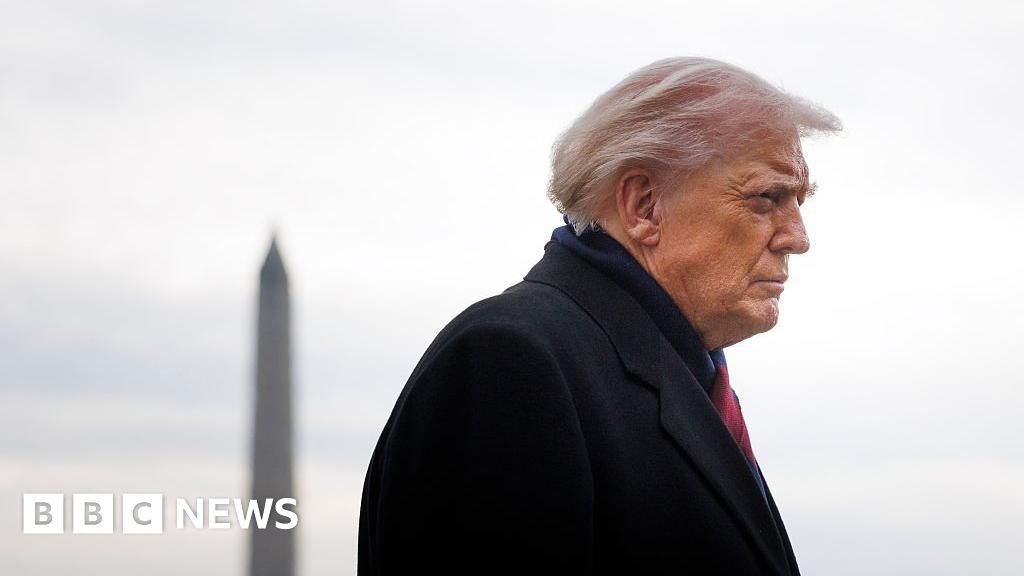
This latest warning follows previous U.S. actions against Iran, including reported strikes on its nuclear facilities last year, which were part of a larger escalation that culminated in a 12-day conflict involving Israel. The enduring concern over Iran’s nuclear program remains a central tenet of U.S. and Israeli security policies. Recent reports from a meeting between President Trump and Israeli Prime Minister Benjamin Netanyahu at Mar-a-Lago suggest that the potential for new strikes against Iran in 2026 was a significant topic of discussion.
The administration’s stance on Iran reflects a consistent hardline approach, characterized by economic sanctions, military posturing, and support for regional rivals. The potential for U.S. intervention, whether kinetic or through intensified sanctions and covert operations, remains high, particularly given the ongoing domestic unrest. Any direct U.S. military action against Iran, or even perceived support for regime change, would have profound and unpredictable consequences for the entire Middle East, potentially drawing in other regional and global powers and triggering a wider conflict with devastating humanitarian and economic repercussions. The complex interplay of nuclear proliferation concerns, regional power dynamics, and internal political stability makes Iran a perpetual high-stakes arena for U.S. foreign policy.
Mexico: The Southern Border’s Enduring Challenge
Mexico, the U.S.’s southern neighbor, has been a perennial focus of the Trump administration’s agenda, particularly regarding border security, immigration, and drug trafficking. The foundational promise of "Build the Wall" from 2016 has evolved into a more expansive, and at times provocative, policy approach. A symbolic, yet politically charged, executive order signed on the first day of the administration’s second term renamed the Gulf of Mexico the "Gulf of America," signaling a heightened assertion of U.S. interests and perceived ownership over shared geographical features.
The administration continues to assert that Mexican authorities are not doing enough to stem the flow of illicit drugs and undocumented immigrants into the U.S. President Trump’s recent statements highlight the ongoing frustration, describing drugs as "pouring" through Mexico and acknowledging the formidable strength of Mexican cartels. The repeated offer to deploy U.S. troops on Mexican soil to combat these cartels, however, has been consistently and publicly rejected by Mexican President Claudia Sheinbaum, who emphasizes national sovereignty and the illegality of foreign military action within Mexico’s borders.
The tension surrounding border security and cartel activity carries significant implications for the robust economic relationship between the two nations, underpinned by the United States-Mexico-Canada Agreement (USMCA). Any unilateral U.S. military action or further aggressive rhetoric could severely strain diplomatic ties, disrupt cross-border trade, and potentially provoke a strong nationalist backlash within Mexico. The challenge lies in balancing U.S. security concerns with respect for Mexican sovereignty and the intricate web of economic and social connections that bind the two countries. The situation demands a nuanced approach, but the administration’s rhetoric suggests a preference for assertive action, raising the specter of increased friction and potential unilateral measures.
Cuba: Awaiting Collapse or Engineering Change?
The island nation of Cuba, located just 90 miles off the coast of Florida, has been under a U.S. embargo since the early 1960s, making it a persistent symbol of Cold War-era geopolitical rivalry. Its close historical ties with Venezuela, particularly the arrangement where Venezuela supplied a significant portion of Cuba’s oil in exchange for medical personnel, have been a crucial economic lifeline. With the reported removal of Nicolás Maduro from power in Venezuela, Cuba faces a precarious economic future.
President Trump’s assessment that Cuba is "ready to fall" and that direct U.S. military intervention might not be necessary reflects a strategic calculation that the island’s economic vulnerabilities, exacerbated by the loss of Venezuelan support, could lead to internal collapse. "Cuba now has no income," he noted, underscoring the severe economic pressures Havana is likely to face. This stance suggests a preference for a strategy of intensified economic pressure and isolation, allowing internal dynamics and the weight of the embargo to trigger regime change, rather than direct military action.
This perspective aligns with the long-standing advocacy of figures like U.S. Secretary of State Marco Rubio, himself the son of Cuban immigrants, who has consistently championed regime change in Cuba. His warning that "When the president speaks, you should take him seriously" indicates a clear message to the Cuban government about their precarious position. The potential collapse of the Cuban government, whether through internal upheaval or economic implosion, would undoubtedly reshape the geopolitical landscape of the Caribbean, posing both opportunities and significant humanitarian and migratory challenges for the U.S. and the broader region. The U.S. strategy appears to be one of calculated patience, observing the unfolding crisis while maintaining maximum pressure, rather than immediate, overt military action.
Conclusion: A New Era of Assertiveness
The administration’s actions and rhetoric, particularly in the aftermath of the Venezuelan operation and the articulation of the "Donroe Doctrine," signal a distinct shift towards a more assertive, and potentially unilateral, foreign policy. This approach prioritizes what are perceived as core U.S. national security and economic interests, often with a reduced emphasis on multilateral consensus or traditional diplomatic protocols. The nations identified – Greenland, Colombia, Iran, Mexico, and Cuba – represent diverse challenges, from resource acquisition and counter-narcotics to geopolitical rivalry and regime change.
Each potential flashpoint carries significant implications, not only for the targeted nations but also for global stability, international law, and the intricate web of alliances and economic relationships that define the contemporary world order. The pursuit of these ambitions, particularly through coercive or military means, risks alienating allies, empowering adversaries, and potentially triggering unforeseen consequences across multiple theaters. As the administration’s second term unfolds, the international community will be closely observing whether these assertive postures translate into further direct interventions, diplomatic crises, or a fundamental reordering of global power dynamics, ushering in an era of heightened geopolitical uncertainty.



 Aura Kasih
 Safa Marwah
 Ayu Aulia