Ridwan Kamil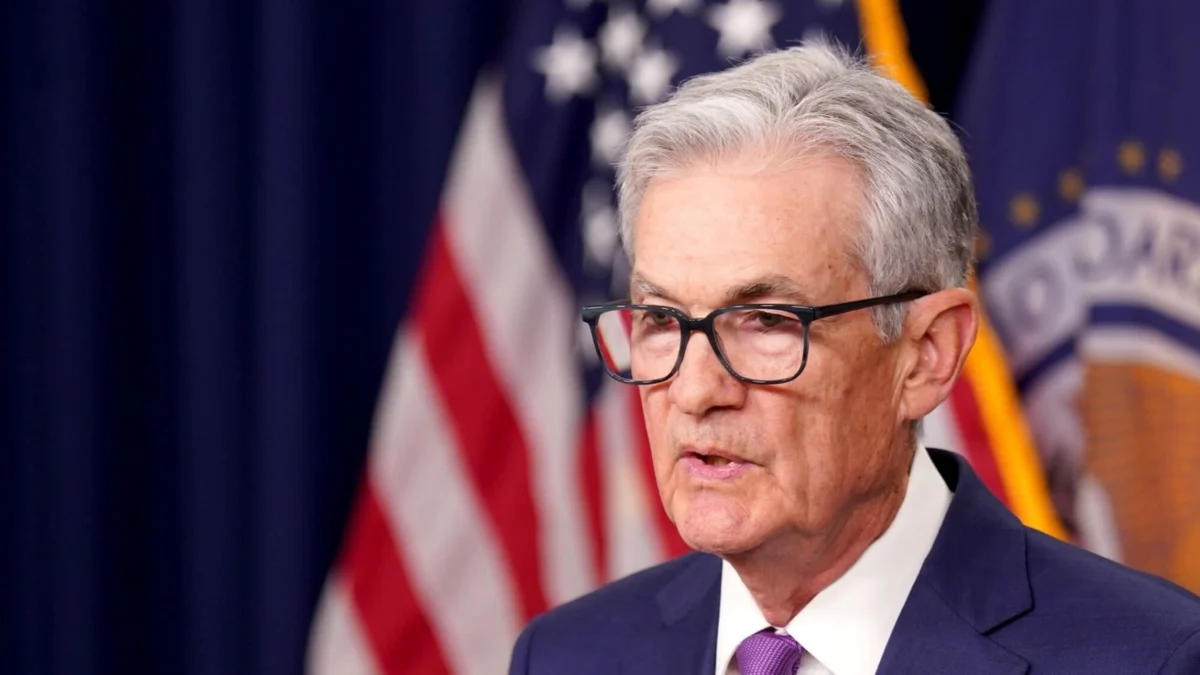
In a robust defense of the U.S. central bank’s operational framework, Federal Reserve Chair Jerome Powell underscored the indispensable nature of the institution’s independence and the unwavering commitment to its core principles of integrity and impartiality, particularly in the face of recent pointed criticisms from prominent political figures.
The recent pronouncements from Federal Reserve Chair Jerome Powell serve as a significant reaffirmation of the central bank’s foundational principles of independence and integrity, particularly as it navigates a landscape increasingly marked by external political pressures. These statements arrive at a critical juncture, where the efficacy and autonomy of monetary policy decision-making are implicitly or explicitly being questioned by influential voices within the political sphere. Powell’s emphasis on these pillars of the Federal Reserve’s structure is not merely a rhetorical flourish but a strategic reinforcement of the institutional safeguards designed to insulate monetary policy from short-term political considerations, thereby preserving its capacity to foster long-term economic stability.
The historical context surrounding the Federal Reserve’s establishment is crucial to understanding the significance of Powell’s remarks. Created in 1913, the Federal Reserve was designed to be a bulwark against the volatile financial panics that had plagued the young nation. A key tenet of its design was to provide a degree of insulation from the immediate pressures of partisan politics, allowing monetary policy to be guided by economic data and analysis rather than the electoral cycle. This independence was intended to foster credibility and enable the central bank to make difficult, potentially unpopular decisions in pursuit of its dual mandate: maximizing employment and maintaining stable prices. The efficacy of this model has been debated throughout the Fed’s history, but its fundamental structure has remained largely intact, a testament to the perceived benefits of a technocratic approach to monetary management.
Recent years have witnessed an intensification of scrutiny directed at the Federal Reserve and its leadership. These critiques, often emanating from political figures who perceive the central bank’s policies as detrimental to specific economic outcomes or constituent interests, pose a distinct challenge to the institution’s operational autonomy. When such criticisms become sustained or personally targeted, they risk undermining public confidence in the Federal Reserve’s impartiality and its ability to execute its mandate effectively. Chair Powell’s strong articulation of the Fed’s commitment to independence and integrity can be interpreted as a direct response to these pressures, a deliberate effort to shore up the institution’s public standing and reinforce the rationale behind its operational independence.
The concept of "independence" for a central bank is multifaceted. It encompasses several key dimensions. Firstly, it refers to independence in the formulation and implementation of monetary policy. This means the central bank should be free to set interest rates, manage the money supply, and employ other tools at its disposal based on its assessment of economic conditions, without direct instruction or interference from the executive or legislative branches of government. Secondly, it involves independence in its institutional structure and governance, ensuring that its leadership and decision-making bodies are insulated from undue political influence. This often includes long, staggered terms for governors and board members, designed to prevent a wholesale replacement of policy-makers with each change in political administration. Finally, it implies a degree of operational and financial autonomy, allowing the Fed to fund its operations and maintain its infrastructure without being beholden to annual budgetary appropriations that could be leveraged for political pressure.
"Integrity," in the context of the Federal Reserve, speaks to the ethical underpinnings of its operations and the transparency with which it conducts its business. It means acting with honesty, avoiding conflicts of interest, and adhering to established rules and principles. For the Federal Reserve, integrity is inextricably linked to its credibility. If the public and financial markets perceive the Fed as acting with integrity, its policy pronouncements and actions will carry greater weight, and its efforts to manage economic expectations will be more effective. Conversely, any erosion of perceived integrity can lead to increased market volatility, a loss of confidence in the currency, and a diminished capacity for the Fed to achieve its economic objectives.
The specific nature of the attacks alluded to by Chair Powell, while not detailed in the provided context, likely relate to criticisms regarding interest rate policy, quantitative easing or tightening, and the overall economic performance under the Fed’s stewardship. Such critiques often arise during periods of economic stress, such as high inflation or sluggish growth, when the Fed’s actions are under intense public and political scrutiny. Politicians may advocate for policies that prioritize immediate economic relief or specific industry support, which can sometimes be at odds with the Fed’s longer-term objectives of price stability and sustainable employment. The challenge for the Fed is to maintain its course, guided by its economic analysis, while also communicating its rationale effectively to the public and policymakers to prevent misunderstandings or undue pressure.
Powell’s emphasis on these principles is critical for several reasons. Firstly, it serves to reassure financial markets. Global capital flows are sensitive to perceptions of stability and predictability. A central bank perceived as independent and operating with integrity provides a crucial anchor in an uncertain economic environment. Market participants rely on the Fed’s commitment to its mandate to make investment decisions, and any doubt about this commitment can lead to increased risk premiums and reduced investment.
Secondly, it reinforces the Fed’s credibility with the public. In a democratic society, the Federal Reserve is a powerful institution, and its actions have a profound impact on the lives of ordinary citizens. Maintaining public trust is essential for the smooth functioning of the economy and for the legitimacy of the Fed’s policy decisions. When the Fed is seen as acting in the public interest, rather than in service to partisan agendas, its policies are more likely to be accepted and effective.
Thirdly, it bolsters the morale and effectiveness of the Federal Reserve’s own staff. The economists and professionals who work at the Fed are dedicated to applying rigorous analysis to complex economic challenges. Their work is most effective when they believe their insights and recommendations are being considered objectively, free from political interference. Powell’s defense of independence and integrity signals his commitment to protecting this environment.
The implications of this stance extend beyond the immediate political discourse. The global financial system is increasingly interconnected, and the policies of major central banks, particularly the Federal Reserve, have ripple effects worldwide. A strong, independent Federal Reserve acting with integrity contributes to global financial stability. Conversely, a politicized or compromised central bank can introduce significant instability into the international economic order.
Looking forward, the Federal Reserve faces a continuing challenge in balancing its mandate with the realities of the political landscape. The digital age and the speed of information dissemination mean that political commentary and pressure can be amplified and disseminated rapidly. Maintaining a clear and consistent communication strategy, emphasizing data-driven decision-making and the long-term economic benefits of its policies, will be crucial. Furthermore, continuing to foster transparency about its processes and decision-making frameworks can help to build understanding and trust among the public and policymakers alike.
The notion of "independence" is not absolute and is subject to ongoing debate. Critics sometimes argue that the Fed is too insulated, lacking sufficient accountability to elected representatives, or that its policies inadvertently favor certain economic groups over others. These are legitimate points of discussion in a democratic society. However, the crucial distinction lies between constructive dialogue and criticism aimed at improving the institution’s functioning, and attacks that seek to undermine its fundamental autonomy and integrity for political gain.
Chair Powell’s strong defense suggests that the Federal Reserve perceives the current level of political pressure as potentially crossing a threshold that threatens its core operational capabilities. By highlighting "independence and integrity," he is not only defending the institution but also educating the public and policymakers on the essential conditions required for effective monetary policy. The long-term health of the U.S. economy, and by extension, global economic stability, relies on a central bank that can make decisions based on sound economic principles, shielded from the short-term fluctuations of political expediency. His commitment to these foundational values is a signal that the Federal Reserve intends to continue its mission with its established principles firmly in place, even amidst challenging external environments. The success of this endeavor will depend not only on the Fed’s resolve but also on the broader understanding and appreciation of the vital role an independent central bank plays in fostering a stable and prosperous economy.


 Aura Kasih
 Safa Marwah
 Ayu Aulia